
It’s late. You’re in the call room, scrolling through Match data and Reddit threads, and you’re noticing something you can’t quite name.
The ENT residents all kind of… look the same. The ortho crew walks around like a uniformed tribe. Ophtho? Half of them seem to have parents who are physicians and Step scores in the stratosphere.
On paper, it’s “holistic review.” In reality, there are quiet, unspoken filters that decide who gets into ENT, Ortho, and Ophtho before the interview even starts.
Let me walk you through what actually happens behind those closed-door rank meetings. Because the biases are real. They’re just not printed in the brochure.
The Archetypes Programs Are Really Looking For
Let’s start with the uncomfortable truth: most programs in these three fields walk into application season already holding a mental template of “their type.”
They do not say this out loud. They couch it in “fit,” “culture,” and “team dynamics.” But listen carefully when faculty talk in the workroom. You’ll hear it.
In a typical closed-door discussion, with the dean’s diversity talking points safely out of earshot, you’ll hear versions of:
- “He’s very ortho.”
- “She’s exactly the kind of ENT resident we like.”
- “This guy feels ophtho-ish—quiet but ridiculously sharp.”
Those aren’t compliments. Those are codes for archetypes.
Here’s the inside version of what those archetypes often look like.
| Specialty | Unspoken Archetype |
|---|---|
| ENT | Extroverted, polished, ‘surgical but social’ |
| Ortho | Aggressive worker, athletic, thick-skinned |
| Ophtho | Cerebral, meticulous, slightly reserved |
Do exceptions match? Of course. But it’s uphill.
In ENT: The “Surgical Extrovert”
ENT loves the “small surgical field, big personality” type.
Faculty bias quietly toward:
- Extroverted, comfortable talking to attendings and patients
- Polished, well-spoken, borderline “sales” energy
- Strong letters from known ENT names (“I’d take anyone she vouches for” is an actual quote I heard in a rank meeting)
If you’re quieter, more cerebral, more “let me think first, speak later,” you’ll often be described as:
- “Nice, but I’m not sure about their presence.”
- “Seems a little flat.”
- “I just didn’t get a sense of who they are.”
That’s code for: not their stereotype of ENT.
In Ortho: The “Workhorse Athlete”
The ortho bias is so strong it’s practically a caricature.
There is an unspoken checklist:
- Tall, confident, often athletic background
- Gives off “I’ll stay late and not complain” vibes
- Talks about sports injuries, teamwork, lifting, grit
If you’re smaller, quieter, or not projecting that “I live in the gym” energy, some attendings instantly downgrade you as “maybe they won’t handle the physical grind.”
Never mind that half the job is mental. The bias is persistent.
One PD actually said in a meeting: “He seems soft. I don’t know if he’ll survive trauma nights.” There was no data backing that. Just vibe.
In Ophtho: The “Quiet Genius”
Ophtho worships the clean CV.
The quiet biases:
- Strong preference for very high Step 2 scores even after Step 1 went Pass/Fail
- Research-heavy background, often multiple ophtho pubs
- Polite, somewhat reserved, “non-chaotic” personalities
If you’re expressive, loud, or visibly stressed, they’ll label you as “a little much.”
One faculty comment I wrote down once: “Fantastic scores, but their energy feels more EM than ophtho.” That was not said as a compliment. That was a veto.
The Background Bias: Who Feels “Familiar” to Them
Here’s something you already suspect but don’t get told plainly: faculty gravitate toward trainees that remind them of… themselves. Or their co-residents. Or their kids.
That’s where class, gender, race, and school prestige slide in the back door.
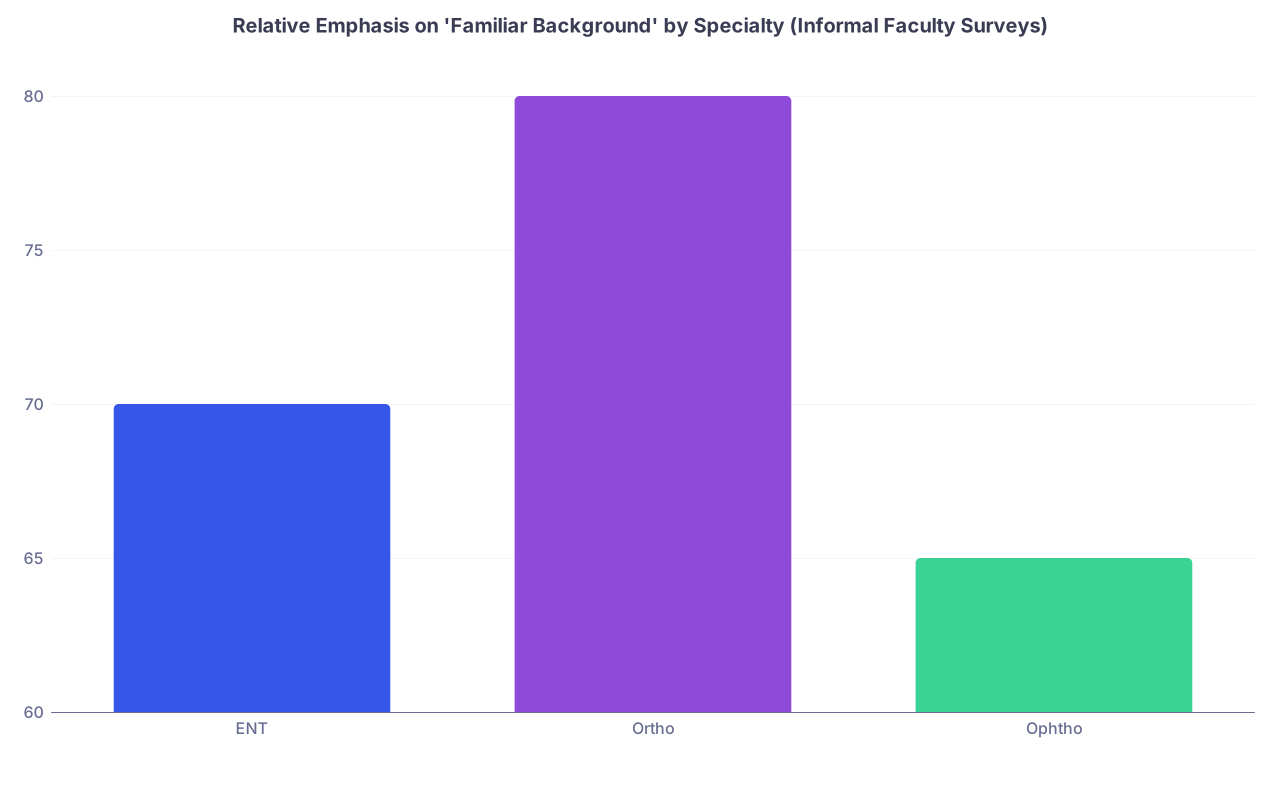
| Category | Value |
|---|---|
| ENT | 70 |
| Ortho | 80 |
| Ophtho | 65 |
Those numbers aren’t official, obviously. But they’re honest. Ask older faculty off the record, you’ll hear the same.
Home Institution and “Known Quantities”
ENT, Ortho, and Ophtho are notorious for strong home-institution bias.
Why?
Because these programs fear “bad fits” more than they value taking a risk. A weak resident lingers in the department for 5+ years. That terrifies them.
So they:
- Love their own students (“We know what we’re getting.”)
- Love students from “peer” institutions (Ivy, big-name research places)
- Are indifferent or suspicious toward unknown schools
You’ll hear: “We’ve never had anyone from there, I’m not sure how to interpret their grades.”
Translation: We’re not going to stick our neck out.
Family in Medicine (and in the Specialty)
You know all those “My dad’s an ENT” or “My aunt’s an orthopedic surgeon” one-liners that applicants almost feel awkward mentioning?
Programs love that.
Why? They think it de-risks you. It signals:
- You know what the lifestyle actually is
- You’re less likely to quit
- You probably had mentorship, so you’ll be “higher yield”
No one writes “legacy preference” into the rubric. But I’ve heard this dozens of times:
“She’s an ophtho kid, she knows the drill.” “Both his parents are surgeons; he’ll be fine with the hours.” “He grew up in an ENT household—of course he gets it.”
And if you’re first-gen, no physicians in the family, attended a lower-ranked med school? You start one or two notches down, and you have to claw your way up by being undeniably strong.
The Metrics Game: How Numbers Are Quietly Weaponized
Programs swear they’re “not using hard cutoffs.” Technically true. Functionally false.
There are three layers to the bias with metrics in these fields.

Step Scores: The Silent Gatekeeper
ENT, Ortho, Ophtho all love high Step 2 scores, especially now that Step 1 is Pass/Fail.
You’ll never see the exact number in a brochure, but internally, you’ll hear things like:
- “Below 245 is tough for us unless they’re our student.”
- “We like to see 250+ for ophtho unless there’s a story.”
- “This score is fine for community ortho, but not for us.”
Is that fair? No. Is it reality? Yes.
For a typical mid-to-upper-tier program in these fields:
| Specialty | Competitive Range Mentioned in Meetings |
|---|---|
| ENT | 245–255+ |
| Ortho | 245–255+ |
| Ophtho | 250–260+ |
If you’re below their mental threshold, they don’t always “reject” you. They just push you into the “nice but unlikely to rank high” pile. Which, functionally, is the same thing.
Research: Not All Pubs Are Equal
Here’s the cruel part. Programs say “we value research,” but what they actually mean is:
“We value research with people we know and trust.”
A first-author paper with a big-name attending in ENT at a top-20 program will wipe out three generic case reports with unfamiliar mentors from a small place.
The bias is not toward productivity in general. It’s toward:
- recognizable names on your letters
- recognized journals
- familiar institutions
I heard a PD say: “He has 10 pubs, but I do not know a single name on them. I’m more reassured by her 3 working with [big-name faculty].”
Honors, AOA, and School Prestige
Let me be blunt. In ENT, Ortho, Ophtho, coming from a brand-name school is like walking in with a verified checkmark over your head.
Faculty assume:
- Your honors actually mean something
- Your letters are calibrated against strong peers
- You’ve worked in a competitive environment already
Coming from a newer or lower-ranked school? You need stronger objective signals (scores, research, letters) to offset the background doubt.
No one says “We penalize low-ranked schools.” They say, “Hard to assess.”
But the result is identical.
The Rotations and Away Electives: Where Personality Bias Hits Hard
Here’s the part students consistently underestimate: away rotations do not just showcase your skills. They showcase your type.
And these three specialties are brutally type-sensitive.

| Step | Description |
|---|---|
| Step 1 | Do Away Rotation |
| Step 2 | Faculty Observe Fit |
| Step 3 | Strong Letters and Rank Boost |
| Step 4 | Polite Letter, Low Rank |
| Step 5 | Resident Feedback |
| Step 6 | Matches Archetype |
Resident Feedback: The Real Gatekeepers
You think the PD drives the rank list. Residents actually do more damage than you realize.
On ENT, Ortho, and Ophtho services, residents are treated as the frontline “fit screen.” At the end of an away, the PD or chair will ask:
“So what do you think of them? Could you see them as your co-resident?”
The answers are rarely about operative potential or test scores. They’re about vibe.
Common resident comments that sink people:
- “Kind of awkward.” (ENT, Ophtho)
- “Doesn’t take feedback well.” (All three)
- “Low energy, seems disinterested.” (Ortho especially)
- “Just didn’t click with the team.”
The bias here? Residents unconsciously select for people similar to themselves. If the current class is mostly outgoing, athletic, extroverted dudes, guess who gets viewed as “fitting in”?
Exactly.
Gender Biases: Still Very Much Alive
Nobody will say this on the record, but let’s not pretend:
- Ortho has a long-standing male-dominated culture. Women still get questioned quietly on “physicality” and “assertiveness.”
- ENT and Ophtho skew slightly better, but there are still old-guard attendings who default to seeing men as leaders and women as support.
In one ortho meeting I sat through, an attending said, “She’s great, but I worry about how she’ll handle call and kids later.” Nobody said that about any of the men. Same lifestyle, same career stage. Different expectations.
You cannot fix that from your side. You can only out-perform and build such strong support from key faculty that those biases get overruled.
Communication Style: The Tiny Things That Change Your Rank
Another quiet bias: how you talk.
These specialties swim in hierarchy. How you speak to residents, scrub techs, and attendings during an away tells them whether they’ll enjoy being trapped in an OR with you at 2 a.m. for a revision case.
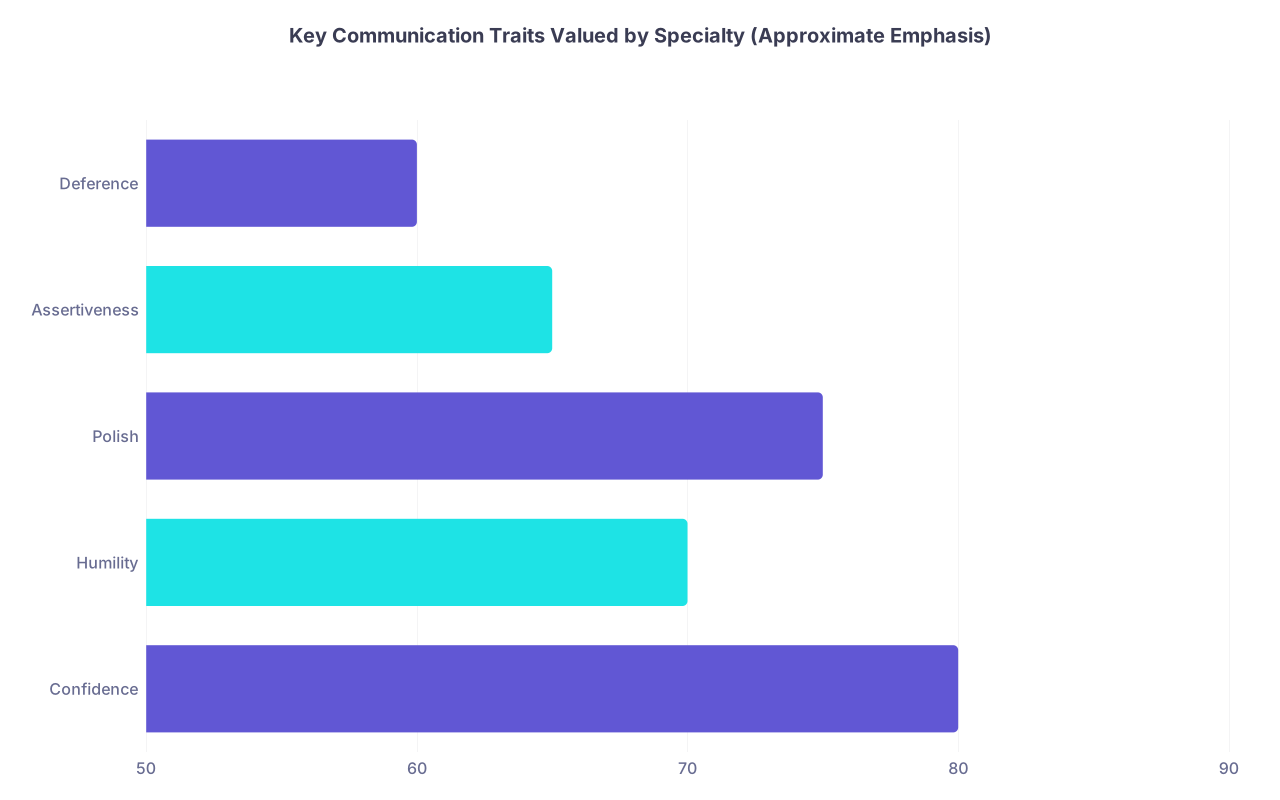
| Category | Value |
|---|---|
| Confidence | 80 |
| Humility | 70 |
| Polish | 75 |
| Assertiveness | 65 |
| Deference | 60 |
Specific biases I see over and over:
- Confident but not cocky: If you’re too deferential, they call you “timid.” Too assertive and you’re “difficult.”
- Fluent English and polish: International grads or accents can be (unfairly) perceived as “less sharp” even with the same scores.
- Humor: ENT and Ortho in particular use humor as a social test. If you don’t understand the banter, some residents see you as “not one of us.”
Watch a strong applicant on an ENT away: they chat normally with attendings, ask 1–2 high-yield questions per case, banter lightly with residents, and never, ever act like a know-it-all.
Now contrast that with someone who answers every pimp question perfectly but doesn’t read the room and comes off stiff. Guess who gets the higher rank.
Hint: not the one with all the right answers.
What You Can Actually Do About These Biases
You’re not going to brute-force your way through bias with a single extra research poster. But you can play a smarter game.
This is where the “insider” part matters.
1. Know Which Rooms You’re Walking Into
ENT at a big academic center with heavy head and neck? Expect:
- Strong bias toward research track record
- Preference for extroverted, polished, academic types
Community-heavy Ortho program serving blue-collar trauma? Expect:
- Worship of work ethic
- Less obsession with high-tier research, more with “no drama, no laziness”
Ophtho programs tied to big universities? Expect:
- Quiet, cerebral, low-drama personalities preferred
- Heavy emphasis on scores and letters from known people
Your job is not to fake being someone else. Your job is to pick programs where your natural style doesn’t constantly fight the local culture.
2. Build Relationships with the Right People Early
These specialties are small. Names matter.
If you want ENT, Ortho, or Ophtho, your real move is in MS2–MS3:
- Attach yourself to 1–2 faculty who are known in the field.
- Become the person they naturally think of when someone asks, “Got any good students this year?”
- Earn the kind of letter that says, “I would take this student in my own program without hesitation.”
That line—“I would take them here”—is gold. I’ve watched it instantly bump people up the rank list.
3. Use Away Rotations as Live Auditions, Not Just Tryouts
On your away:
- Show up absurdly early. Not performatively, but consistently.
- Take unsexy tasks off residents’ plates without being asked twice.
- Read the room. If everyone is grinding, do not be the chatty tourist.
Your goal is simple: by week two, residents should be saying, “It would be great if they matched here.”
If a resident ever says that to a PD, you’re in very good shape.
Who Gets Hurt the Most by These Quiet Biases
Let’s stop pretending this hits everyone equally.
The people who get hit hardest:
- First-gen, lower-income students without physician parents
- Students from newer or lower-ranked med schools
- IMGs and FMGs
- People who do not match the “typical” personality template for the field
- Women and underrepresented minorities in historically male-dominated programs (especially Ortho)
Does that mean you’re doomed? No.
But you can’t play the same game as the student from Hopkins with an ortho dad and three home letters. You have to be mathematical about where you spend your effort:
- One or two really strategic aways > four random ones
- One killer letter from a big name > six generic ones
- Targeted list of realistic programs > blind mass-application to 80
You’re not fighting the bias by ignoring it. You’re working around it by understanding exactly where it hits and where it doesn’t.
How Rank Meetings Really Sound
Let me paint the scene.
It’s February. Conference room. Printed rank lists. Spreadsheets on the big screen.
They go candidate by candidate. And it is not some objective holistic algorithm. It’s a negotiation.
You’ll hear:
- “He’s from our med school. I know him. He’ll be solid.”
- “Her scores are a little lower than our usual, but she crushed the away and the residents loved her.”
- “This guy has 260s and 12 pubs. I know he’s a little awkward, but this is a top-tier brain.”
- “We already have three similar personalities in the incoming class. I don’t want another.”
There’s your bias. Right there.
In ENT, Ortho, and Ophtho, they think in terms of lineups, not just individuals. They’re trying to “balance” the class. Which means if you’re too similar—or too different—from whoever they took last year, that changes your fate.
You never see any of this. You just see “Congratulations, you have matched” or “We regret to inform you…”
FAQs
1. If I don’t match the typical ‘personality’ for a specialty, should I give up on it?
No. But you do need to be honest about how far you are from their usual archetype.
If you’re an introvert aiming for ENT or Ortho, you don’t have to turn into a fake extrovert. You do need to demonstrate:
- You can communicate clearly with patients and teams
- You have enough presence not to disappear in the OR
- Residents enjoy working with you
You might lean more toward programs known to be “kinder,” smaller, or less bro-y. Choosing the right programs can matter as much as trying to reshape your personality.
2. How much can a strong away rotation really overcome weaker metrics?
In these fields? A lot—but not everything.
A stellar away can absolutely:
- Overcome slightly below-average Step 2 scores for that specialty
- Counterbalance a lower-ranked med school
- Get you ranked higher than “stronger-on-paper” applicants the team didn’t like
It usually cannot completely erase:
- Very low Step 2 scores
- Major professionalism red flags
- A history of failing exams or clerkships without a clear story and recovery
Think of the away as your chance to move yourself up 20–30 spots on a list, not teleport from “never” to “lock.”
3. I don’t have a home ENT/Ortho/Ophtho program. Am I already behind?
You’re behind in access, not in ability.
You lack the automatic home-field advantage and built-in letter writers. That just means you have to:
- Plan earlier (identify 1–2 external mentors by early MS3 if you can)
- Use VSLO aways very strategically at places that actually take outside students into their match
- Over-prepare for those rotations so you look indistinguishably good from the home students
Programs do match applicants without home departments every year. They just tend to be the ones who are very deliberate, very prepared, and backed by strong letters from recognized people.
You’re in a rigged game, but it’s not unwinnable. ENT, Ortho, and Ophtho are small, political, type-sensitive specialties where reputation, archetype, and unspoken comfort matter almost as much as scores.
If you understand those quiet biases, you stop taking every rejection as a referendum on your worth. You start seeing it as signal: this was not your room.
Your job now is to find the rooms where your story, your style, and your skill set do not feel like a risk to them—but like exactly what they were hoping would walk through the door.
With that clarity, you’re a lot better positioned to shape your application, choose your aways, and read your chances honestly. The next step is translating all of this into a concrete game plan—who you email, where you rotate, and how you present yourself. That’s the part where strategy beats wishful thinking. But that’s a story for another day.