
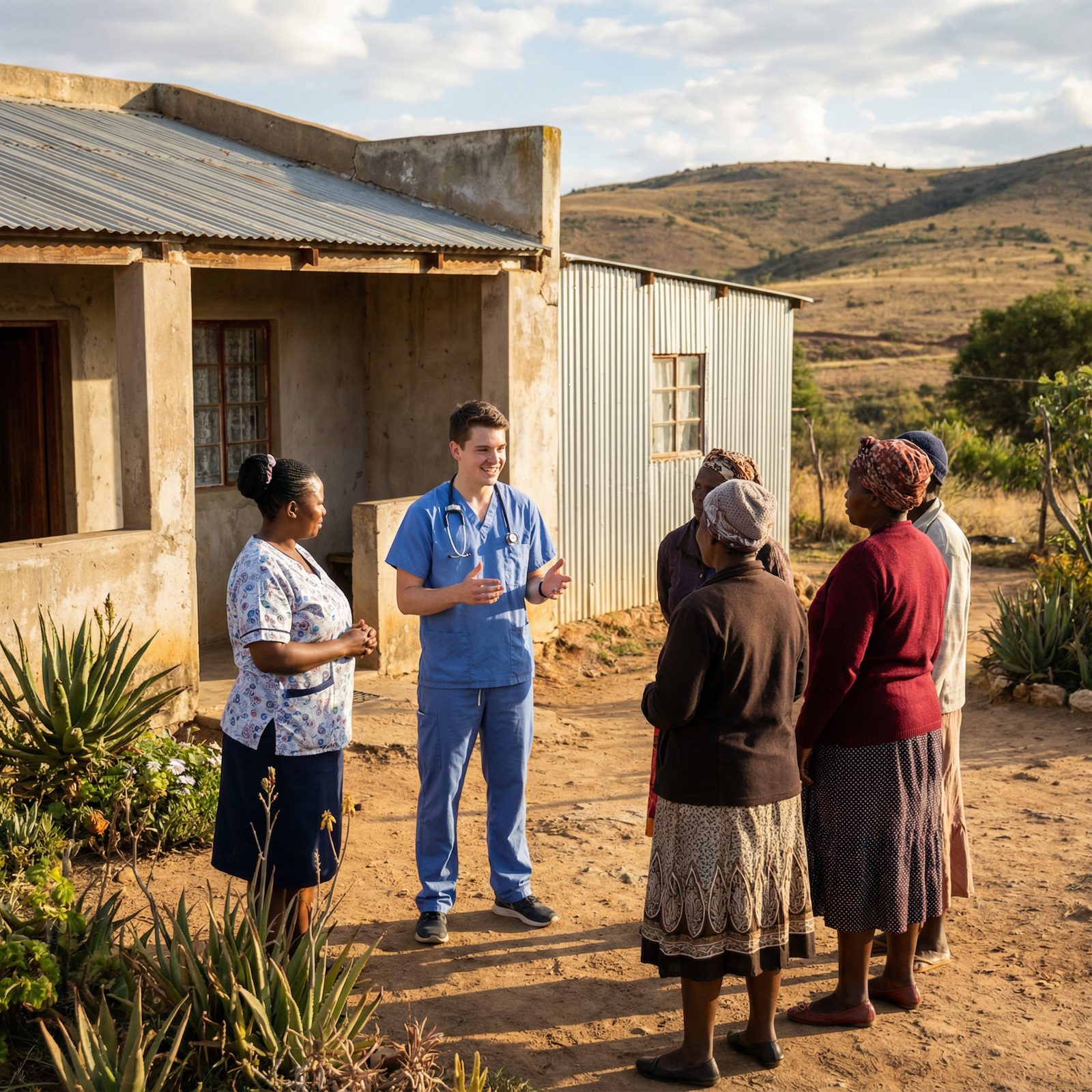
You are six months from finishing residency. It is 9:30 p.m., you just signed your last discharge summary, and your co-resident casually says, “I’m signing a one‑year contract in Malawi next July.” You have had “I want to work abroad” in the back of your mind for years. Suddenly it is not theoretical anymore. If you are serious, you are already a little behind.
This is the point where vague interest needs to become a disciplined, ethical timeline.
Below is how I would structure your final 18 months, month by month and then week by week as you get close, so your first long‑term global health assignment is:
- Clinically appropriate for your level
- Ethically defensible (not a “voluntourism” vanity project)
- Logistically sane
18–12 Months Before Departure: Decide If You Should Go At All
At this point you should be in the second half of your penultimate year of residency, or the very start of your final year, with at least a year before you plan to leave.
Month 18–16: Reality check and intent
At this point you should:
Clarify your “why” (and kill bad reasons early).
Sit down and write, in one page:- Why you want to work abroad
- What skills you actually bring
- What you are not qualified to do
If the page is mostly versions of “I want to see interesting pathology,” you are not ready. The goal should be capacity building, not personal thrill.
Assess your clinical readiness.
Ask yourself, and an attending who will be blunt:- Can you manage common emergencies in your field without backup?
- Are you safe with limited imaging, labs, and subspecialty support?
- Can you supervise more junior clinicians competently?
If the answer is “not yet,” then your first step is not leaving the country. It is tightening your clinical foundation.
Map your realistic departure window.
- Most residents leave 3–12 months after graduation.
- If you are going into fellowship, you may have a single 3–6 month gap.
- If you are going straight to practice, you may negotiate part‑time or sabbatical start.
Decide whether this is:
- A 6–12 month assignment (most common and most educational), or
- A 2–3 year commitment (rare, but higher-impact).
Talk to the people who will feel the impact.
- Program director: “In about a year, I plan to do a 6–12 month position overseas. I want your advice on timing and letters.”
- Partner/family: not “Wouldn’t it be cool if…” but “I will be gone these months unless we decide together to change course.”
Month 15–12: Choose the type of assignment, not the country
At this point you should narrow down the general model of work you want. The biggest ethical mistakes come from choosing a place before you choose a model.
You are deciding between things like:
- Faculty‑affiliated hospital rotation (e.g., an academic partner site)
- Long‑term contract with a mission or NGO hospital
- Research or implementation project with field‑based time
- Emergency response / humanitarian deployment (not recommended as your first move post‑residency unless you have prior field experience)
| Model Type | Typical Length | Who You Work For | Pros | Cons |
|---|---|---|---|---|
| Academic partner site | 3–12 months | Home institution | Good supervision, structure | Less autonomy, slower pace |
| Mission/NGO clinical post | 6–24 months | Faith-based/NGO org | High impact, continuity | Resource constraints, burnout |
| Research/implementation | 6–24 months | University/NGO | Systems impact, CV value | Less clinical time |
| Humanitarian deployment | 1–6 months | MSF, ICRC, similar | Intense learning | High stress, instability |
At this stage you should:
- Make a short list of 3–5 organizations or programs that match your specialty and interests.
- Email one actual human at each (not a web form) asking for:
- Minimum experience required
- Usual commitment length
- Current or past residents you can talk to
If an organization cannot name a clear local partner or cannot articulate how you will be supervised, cross them off. That is a red flag for unethical “fly‑in” care.
12–9 Months Before Departure: Commit to a Path and Start Paperwork
This is usually the first quarter of your final year.
Month 12: Pick a primary option and a backup
At this point you should:
Choose one main organization/program.
Not five. One. With:- Clear role description (not “just come help”)
- Named site and local leadership
- Written expectations, including whether you are staff, consultant, or trainee, and who you report to
Identify a backup plan.
Global health placements fall through all the time. Political unrest, funding collapse, leadership change. Have:- A second organization at a similar timeline, or
- A domestic job/fellowship option you would accept if the international plan dies.
Loop your program leadership in formally.
If you still need letters, credentialing forms, or schedule tweaks, now is the time:- Ask for a strong, specific letter focused on adaptability, ethics, and autonomy.
- Ensure your final year schedule does not stack your most demanding rotations against intensive application work.
Month 11–9: Application and documentation heavy‑lift
Most solid organizations will have a nontrivial selection and vetting process. At this point you should be:
- Completing full applications with:
- Personal statement focused on long‑term commitment and humility, not “saving” anyone
- CV that separates global health work, language skills, and teaching experience
- Providing:
- 2–3 reference letters (at least one from residency leadership)
- Procedure logs and case numbers if needed (surgery, OB, EM)
- Proof of board eligibility timeline
Ethically, you should:
- Be explicit about your competence limits in your application. If you are not comfortable doing solo C‑sections, say so. Inflating your skills abroad is not “being flexible.” It is dangerous.
From the organization side, you should expect:
- Interviews with both:
- Someone at the sending organization
- Someone at the host site (or at least a senior person who knows it well)
If nobody from the host country/health system is involved in selecting you, question whether this is actually a partnership or just export.
9–6 Months Before Departure: Licensure, Visas, and Money
This is where people underestimate timelines and get burned. Government processes do not care that you just finished nights.
Month 9–7: Plan your legal and financial scaffolding
At this point you should:
Clarify your legal status abroad.
You must know:- Will you hold local medical licensure, or work under someone else’s?
- Are you officially employed by the host institution, or seconded from your home institution?
- What visa category you will use (work, volunteer, research, student)?
If an organization says, “You can just come on a tourist visa and we’ll sort it out,” walk away. That is unethical and unsafe for you and the patients.
Start licensure/registration processes.
Many countries require:- Certified copies of medical school diploma, residency certificate
- Verification letters from medical council or ECFMG
- Criminal background checks
- Sworn translations
These can take 3–6 months. Start now, not “after boards.”
Build a realistic budget and funding plan.
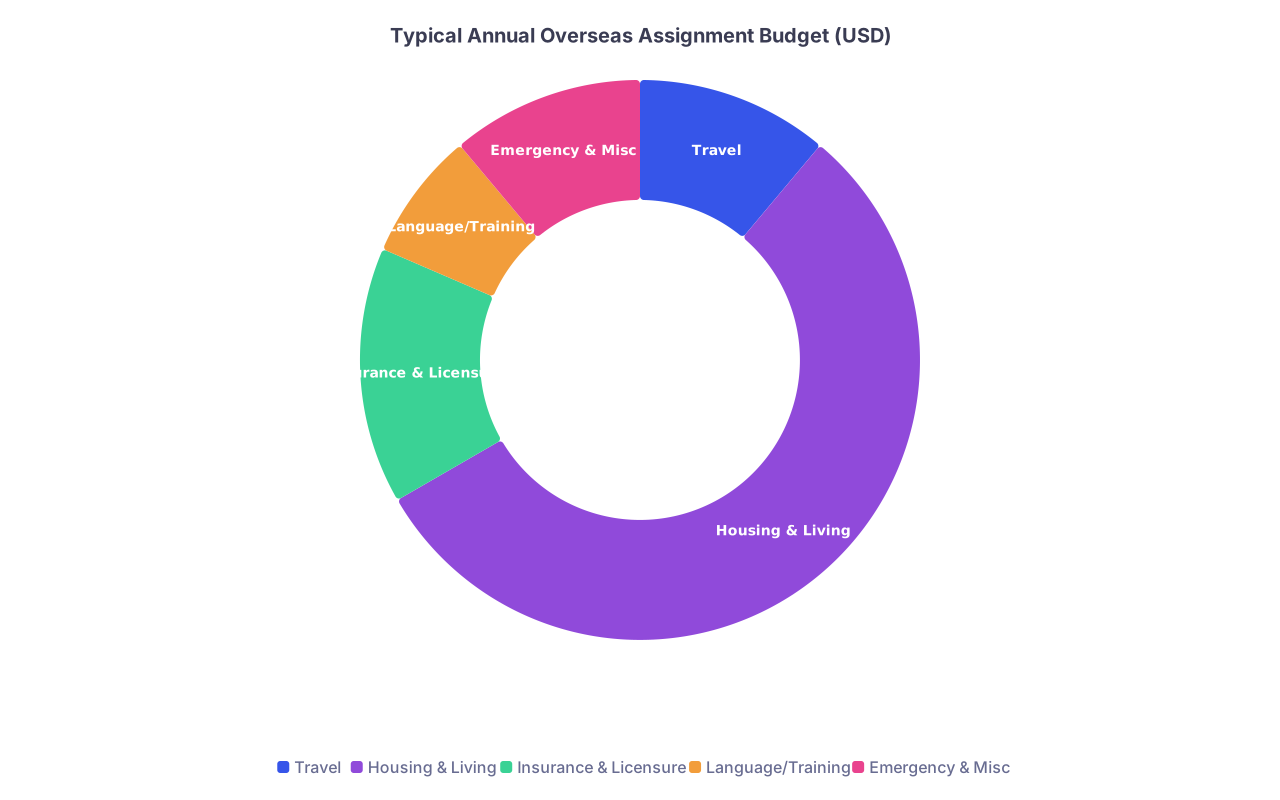
| Category | Value |
|---|---|
| Travel | 3000 |
| Housing & Living | 15000 |
| Insurance & Licensure | 4000 |
| Language/Training | 2000 |
| Emergency & Misc | 3000 |
At this stage:
Make a 12‑month budget that includes:
- Flights (initial + one emergency return)
- Housing and food (underestimate safety and you will regret it)
- Local transport
- Health, evacuation, malpractice insurance
- Visa and licensure fees
- Language courses
Line up income/funding:
- Some NGOs provide stipends; many do not.
- Small grants (Fogarty, ASTMH, specialty societies) can cover partial costs.
- Personal savings. If your plan depends on GoFundMe to pay basic living expenses, reconsider your timing.
- Clarify home‑country professional status.
- Will your specialty board allow a gap year before taking boards?
- Can you maintain your US/European license and hospital privileges while abroad?
- Will an employer hold a position for you?
Get these answers in writing. Future HR departments have short memories.
Month 7–6: Insurance, risk, and ethics review
At this point you should:
Secure proper insurance.
Minimum:- International health insurance with medical evacuation
- Professional liability coverage that is valid in the host country (often tricky)
- Disability insurance if you do not already have it
Do an explicit ethical risk review.
Sit down with:- A mentor in global health who has done long‑term field work
- Or an institutional global health office / ethics committee
Walk through:
- Situations where you might be asked to work beyond your competence
- Pressure to falsify documentation, “move” drugs, cut queues for VIPs
- How you will handle not having treatments you are used to (ICU, chemo, expensive antibiotics)
Write down your non‑negotiables. Not theoretical. Sentences like:
- “I will not perform X procedure without a trained supervisor, even if I am the only doctor on site.”
- “I will not prescribe medications from unregulated sources.”
These are easier to defend when you decided them months earlier, not at 2 a.m. with a shouting relative in your face.
6–3 Months Before Departure: Skills, Language, and Role Clarity
Now you are in the steep part of the curve. Final months of residency plus prepping to live and work in a different system. This is where people either get structured or drown.
Month 6–5: Specific skill and language preparation
At this point you should:
Identify 5–10 “must‑have” clinical skills for your site.
Directly ask your host supervisor:- “What are the top emergencies I will see?”
- “What skills do you wish previous visitors had before arriving?”
Then, on your side:
- Schedule extra time on:
- POCUS in EM/IM
- Obstetric emergencies for FM/OB residents
- Basic orthopedics/wound management for almost everyone
- Log a minimum number of independent cases before you go.
Commit to language basics.
If the working language is not one you already speak comfortably:- Start weekly classes, in‑person or online.
- Focus first on:
- History‑taking phrases
- Explaining procedures and consent
- Pain, bleeding, pregnancy, mental status questions
You do not need fluency by departure, but you do need the humility to try.
Clarify teaching vs. service expectations.
Many sites want you more as a clinician‑educator than a super‑subspecialist.Ask:
- How many hours per week are clinical vs teaching vs admin?
- Are you expected to supervise trainees? At what level?
Then design a rough teaching plan:
- 3–5 core topics you can teach well using local guidelines, not just UpToDate printouts.
Month 4–3: Housing, safety, and personal logistics
At this point you should:
Lock in housing and on‑the‑ground contacts.
- Who meets you at the airport?
- Where do you sleep the first week?
- What is the safe route between housing and hospital?
Complete your health preparations.
- Vaccines (hepatitis, typhoid, yellow fever, etc.)
- Malaria prophylaxis, if relevant
- Dental and vision check (you do not want a crown done in the middle of nowhere by surprise)
Do a structured security briefing.
This should cover:- Political context and recent instability
- Areas to avoid
- How to respond to arrest, harassment, or assault
- Curfew expectations
If your sending organization does not provide this, push for it, or find another program.
- Have hard conversations with family/partner.
Topics you avoid now will explode later:- Communication plan (frequency, methods)
- Worst‑case plans if you get sick or need to leave early
- Financial contingency if you are injured
3 Months–Departure: Week‑by‑Week Checklist
Now the pace picks up. You are finishing residency, maybe sitting boards, packing your life, and trying not to leave a disaster for the colleagues who stay.
12–9 Weeks Before Departure
At this point you should:
- Confirm exact start date, role description, and supervisor in writing.
- Finalize visa application with all documentation.
- Arrange for:
- Mail forwarding or trusted person to handle paperwork at home
- Storage or sublet of your apartment
- Pause or adjust student loan payments if possible (some NGOs qualify for PSLF; clarify now)
Ethically, you should:
- Negotiate your workload. If the site plans for you to be the only physician covering an entire district hospital, say no. You are not a savior. You are a guest clinician.
8–5 Weeks Before Departure
Weekly targets:
Week 8: Boards and licensing.
- Sit your board exam if scheduled around now.
- Ensure your home‑country license is renewed through your entire overseas period.
Week 7: Educational prep.
- Build a set of teaching talks in PowerPoint + printed handouts that do not rely on high‑speed internet.
- Align content with national guidelines of the host country (not just US/UK protocols).
Week 6: Protocols and formulary.
- Obtain the local drug formulary or standard treatment guidelines.
- Make yourself a compact reference (PDF or printed) to avoid recommending drugs the hospital does not have.
Week 5: Exit interviews and expectations.
- Meet with your global health mentor and program director.
- Be explicit: “If I run into an ethical or safety issue, how can I reach you? What do you expect me to report back on?”
This is also where you confront the “mission creep” risk. Do not let people project their fantasy project onto your limited time.
4–2 Weeks Before Departure
At this point you should:
Week 4: Pack with discipline.
Focus on:- Personal items: limited, culturally appropriate clothes, headlamp, small medical kit for yourself, not a suitcase of expired meds.
- Work items: stethoscope, good penlight, small reference books, a backup drive with offline resources.
Do not show up with random donated equipment the hospital did not ask for. Abandoned ventilators and broken ultrasound machines are the graveyard of good intentions.
Week 3: Final cultural and ethics prep.
- Read 1–2 serious books or reports on the history, politics, and health system of your host country.
- Review a short course on global health ethics if available (many universities have open modules).
- Write down your goals for the first 3 months that are behavioral, not just clinical. Example: “Listen more than I talk,” “Understand how referrals work before changing anything.”
Week 2: Clean exits.
- Finish all notes, sign off on all QI projects, hand over patients carefully.
- Thank your nurses and staff. They are the ones who taught you the practical parts of medicine; do not ghost them.
Final 7 Days: Daily Focus
Here is where I go almost day‑by‑day. Your brain will be swiss cheese; lists keep you ethical.
Day –7 to –5
At this point you should:
Confirm:
- Flight details, pickup at airport, first night housing.
- Who to call if your baggage is lost or your flight is delayed.
Share:
- Your full itinerary and local contacts with one trusted person at home and one mentor.
- A scanned folder (in the cloud) with passport, visa, medical license, insurance policies.
Day –4 to –3
Focus on:
Mental reset:
- Accept that you will not be the hero. You will be the confused outsider for a while. That is good.
- Re‑read your non‑negotiables and ethical boundaries.
Communication:
- Test your messaging apps with your host contact.
- Clarify what is acceptable use of WhatsApp or similar for patient communication (HIPAA analogs may differ, but you still have ethical duties).
Day –2
At this point you should:
Double‑check:
- Medications, glasses, personal health needs for at least 3 months.
- Cash in useful denominations for the first week.
Say real goodbyes:
- Do not just text. Have one or two real conversations with people who matter. It helps when you hit the “what am I doing here” wall a month in.
Day –1
You stop tinkering.
- Pack your bag once, then remove 20%. You will live lighter.
- Sleep. Seriously. Showing up exhausted and emotionally fried is unfair to your new colleagues and your patients.
First 2 Weeks On Site: How You Behave Ethically
Quick timeline once you land, because this determines whether you are an asset or an expensive liability.
Week 1
At this point you should:
Spend more time observing than changing anything.
Learn:
- Ward routines
- Referral patterns
- Which local clinicians everyone actually listens to
Explicitly ask:
- “What have previous foreign doctors done that was helpful?”
- “What did they do that was frustrating or harmful?”
Then avoid repeating the latter. Simple.
Week 2
- Start taking a normal share of clinical work, but keep your mouth shut about “improvements” unless asked.
- Begin your teaching sessions, but always anchor them in local guidelines and resources.
Your ethical compass here is simple:
If it would look extractive, arrogant, or reckless to a local junior doctor, do not do it.
Key Points to Walk Away With
- At 12 months out, you should decide whether you are truly ready for long‑term work abroad, or whether you need more training first.
- At 9–6 months, you should have one primary placement, legal/visa processes underway, and a realistic financial and safety plan.
- In the last 3 months, your focus should shift from paperwork to concrete skills, teaching prep, ethical boundaries, and a clean exit from your home program so you arrive as a competent, humble colleague—not a well‑meaning disaster.


