
Global health is not an infectious disease hobby. It is a systems problem, and systems do not care what specialty you matched into.
The idea that “global health is for future ID or IM people” is one of the most persistent, lazy myths floating around med schools and residency programs. I’ve heard some version of it on literally every campus:
- “I’m going into ortho, so global health doesn’t really fit.”
- “Global stuff is more for primary care people.”
- “I like global health, but I’m competitive for derm, so it’s not really aligned.”
That’s not just wrong—it’s backwards. The specialties that think global health “isn’t for them” are often where the need is greatest and the ethical pitfalls are biggest.
Let me walk through what the data and real-world practice actually show, and why “global health = ID + primary care” is a myth you should stop repeating.
Myth #1: “Global health means tropical diseases, so it’s basically ID and primary care”
This is the classic one. Someone did a 2‑week rotation in Uganda, rounded on TB and HIV, and now believes global health is infectious disease.
Let’s start with how global health is actually defined in the academic world. Not by vibes, by publications and program structures.
Global health, in serious programs, is about:
- Health equity across populations
- Systems, policy, and resource allocation
- Structural determinants: poverty, conflict, climate, migration
- Implementation: how you deliver care where infrastructure is fragile
In other words, the unit of analysis is not “patient with malaria” but “why is this health system failing a million people at once?”
In major journals—The Lancet Global Health, BMJ Global Health, etc.—a massive chunk of papers are not about infectious disease. You see:
- Trauma systems and injury prevention
- Surgical access and perioperative mortality
- Maternal mortality and obstetric emergencies
- Mental health services in conflict zones
- Oncology in low-resource settings
- Cardio-metabolic disease and stroke systems
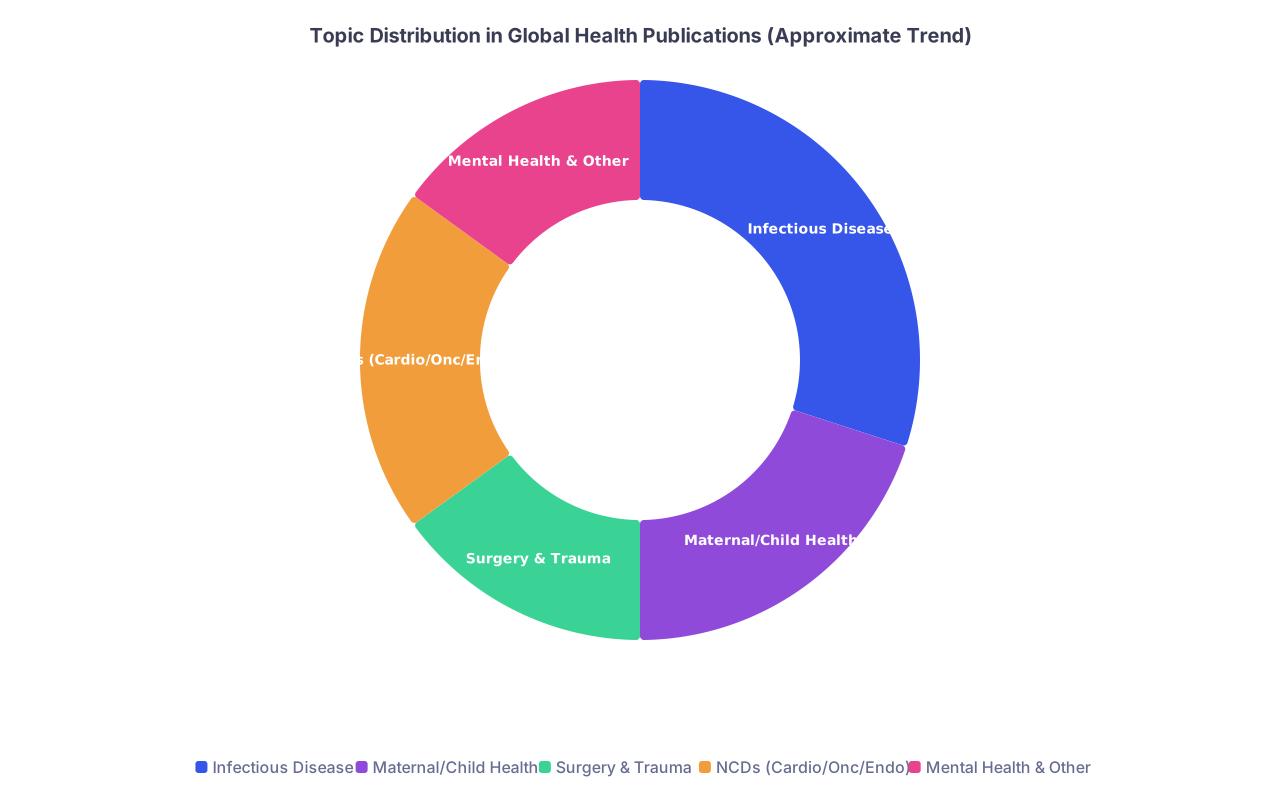
| Category | Value |
|---|---|
| Infectious Disease | 30 |
| Maternal/Child Health | 20 |
| Surgery & Trauma | 15 |
| NCDs (Cardio/Onc/Endo) | 20 |
| Mental Health & Other | 15 |
That chart is approximate, but it’s directionally correct: ID is big, but it’s not the majority, and it’s shrinking as non-communicable disease and injury eat more of the global burden.
Look at what kills and disables people globally. Not a guess—Global Burden of Disease data. Top contributors are ischemic heart disease, stroke, road injuries, COPD, diabetes, low back and neck pain, depression, neonatal disorders, maternal causes. It’s a bad day for the “global health = ID” narrative.
If your mental model of global health is still “tropical medicine elective and a few HIV clinics,” you’re stuck in a 1990s charity-brigade fantasy, not in current global practice.
Myth #2: “Procedural specialties don’t belong in global health”
I see this a lot from surgical subspecialists and EM folks who quietly like global work but have been told, explicitly or implicitly, that “it’s not really for them.”
This is not just wrong, it’s mathematically absurd.
Surgery, anesthesia, and obstetrics alone account for an enormous portion of preventable morbidity and mortality worldwide. The Lancet Commission on Global Surgery famously highlighted that 5 billion people lack access to safe, affordable surgical and anesthesia care when needed. That’s not an infectious disease problem. That’s everyone problem.
Look at some real specialty–specific global gaps:
- Orthopedics: Road traffic injuries are among the top causes of death and disability worldwide. Fracture care, external fixation, clubfoot correction, limb salvage—these are global health interventions.
- OB/GYN: Cesarean sections, management of postpartum hemorrhage, ectopic pregnancy, fistula repair. If you think global maternal mortality is an ID issue, you haven’t stepped onto an L&D ward in a low-resource setting.
- Anesthesia: Shortage of anesthesiologists, lack of safe monitoring, perioperative mortality far higher than in high-income settings. The “anaesthesia crisis” has its own literature.
- Emergency medicine: Prehospital care, triage systems, sepsis protocols, trauma response, disaster medicine. EM is global health whether it wants to be or not.
- Neurosurgery, ENT, plastics, urology, ophthalmology? All with established global initiatives, fellowships, and NGOs begging for people who understand both specialty and ethics.
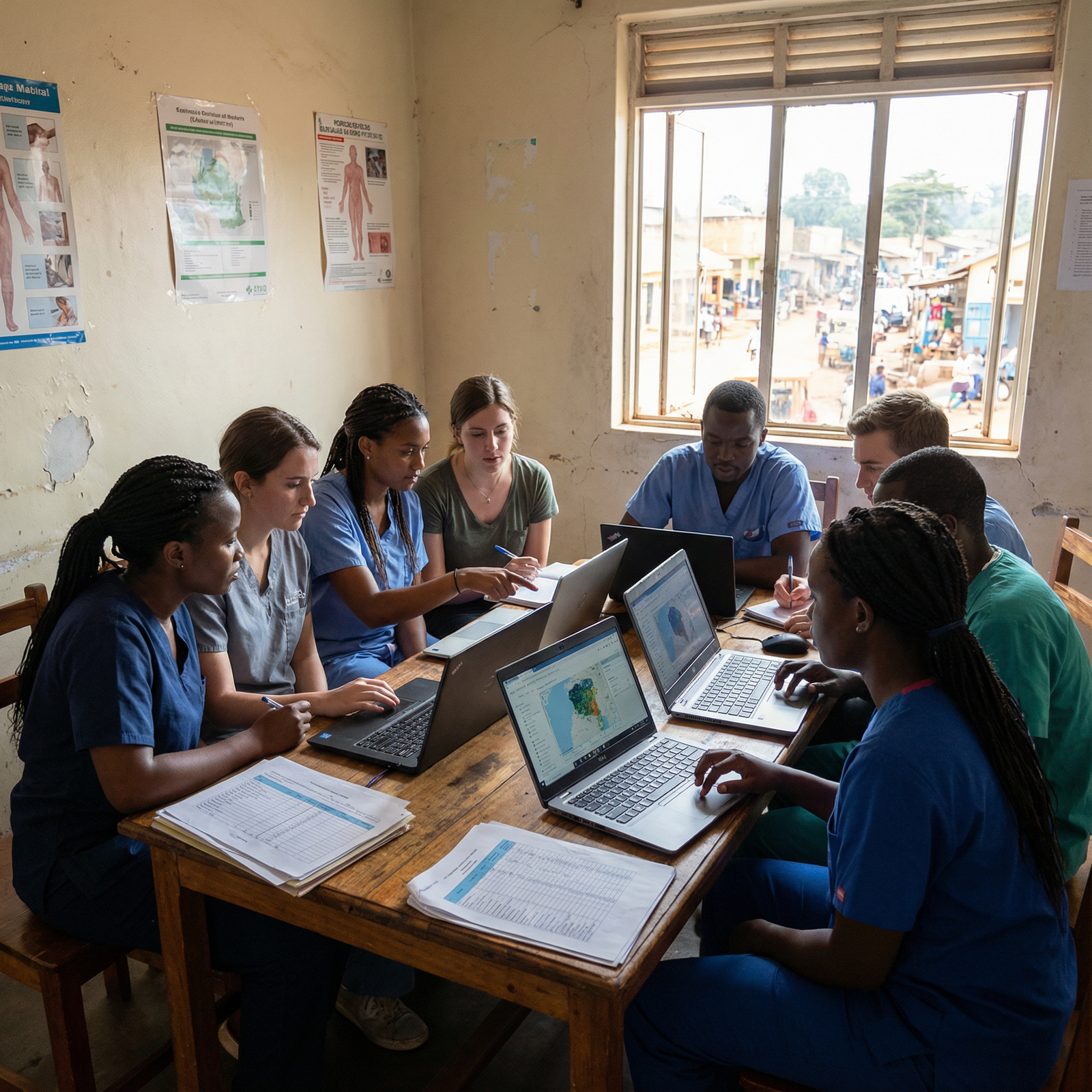
The strongest global surgery programs (Harvard, UCSF, Toronto, UCT, etc.) are built on this: not “let’s send a few residents to do cool cases,” but “let’s understand surgical systems, measures of safety, workforce, financing, and task-sharing.”
If you’re in a procedural specialty and think global health is outside your lane, you’re not being humble. You’re ignoring data.
Myth #3: “Only certain specialties can build a legitimate global health career”
Here’s a more subtle version: people accept that “sure, other specialties can go on trips,” but believe that a serious, sustained global health career is only realistic for IM, pediatrics, or family medicine.
Again, no.
Look at who’s leading global health centers and big consortia. It’s a mix: surgeons co-directing global surgery centers, psychiatrists leading global mental health initiatives, anesthesiologists driving safe anesthesia campaigns, OB/GYNs running maternal health partnerships.
Many institutions now offer global health tracks or pathways across multiple residencies. It’s bifurcated between places that understand global health as cross-cutting and those still stuck in “ID owns this.” The first group is growing.
| Specialty | Common Global Focus Area | Example Credential/Track |
|---|---|---|
| General Surgery | Global surgery & trauma | Global Surgery Fellowships |
| OB/GYN | Maternal health & fistula care | Global Women’s Health Tracks |
| Psychiatry | Global mental health | Global Mental Health Fellowships |
| Anesthesia | Safe anesthesia & perioperative care | Global Anesthesia Programs |
| Emergency Med | Injury, prehospital, disasters | EM Global Health Fellowships |
None of this is theoretical. Residents and attendings in these fields are:
- Getting protected time through academic global health roles
- Splitting appointments between home institutions and partner sites
- Publishing on health systems, implementation science, and outcomes
- Leading WHO working groups and national policy initiatives
Do IM and ID still dominate? Sure, in raw numbers. They’ve had a head start, and they align with HIV/TB/malaria funding streams that shaped the early global health landscape. But the monopoly is gone.
The deeper truth: global health is now much closer to “public health + whatever you’re trained in” than “ID with extra stamps in your passport.”
Myth #4: “Short-term trips during training are harmless and automatically ‘good’”
Now for the uncomfortable part. A lot of “global health interest” in training programs is built around short-term electives, 2–6 weeks, where trainees fly in, see “interesting” pathology, and leave.
Everyone acts like this is obviously good. For learning. For the community. For the CV.
The evidence is… not on your side.
Study after study on short-term medical missions and electives in low-resource settings shows predictable problems:
- Burden on host institutions: Local staff spend time supervising visitors instead of caring for patients or training their own students.
- Scope-of-practice creep: Trainees doing procedures or making decisions they’d never be allowed to touch at home.
- Disrupted continuity: Pop-up clinics that vanish, fragmented records, no follow-up.
- Teaching extraction: Visiting trainees get rich clinical learning; local learners get sidelined from interesting cases.
- Misaligned priorities: Programs built around what visitors want to see, not what the local health system actually needs.
Ethically grounded global health work is obsessed with reciprocity, long-term partnership, and local leadership. Not “I want to see cool pathology before fellowship.”
If your version of “global health” is:
- No clear objectives agreed upon with the host
- No long-term relationship with the site
- No attention to supervision, scope, continuity, or host benefit
Then it’s not global health. It’s global tourism with scrubs on.

| Step | Description |
|---|---|
| Step 1 | Interest in global health |
| Step 2 | Risk of short term harm |
| Step 3 | More likely ethically sound |
| Step 4 | Is there a long term partnership |
| Step 5 | Is host led and requested |
| Step 6 | Clear roles and supervision |
I’m not saying don’t go. I’m saying stop pretending that any international clinical experience, by itself, is virtuous. Ethics and power dynamics do not vanish when you cross a border.
Myth #5: “If it’s not low-income overseas work, it’s not ‘real’ global health”
Another trap: People treat “global health” as shorthand for “doing medicine in a visibly poor country.” Preferably with dirt roads in the photo.
This is lazy thinking.
Global health is about cross-border determinants and inequities. That includes:
- Refugee and migrant health in high-income countries
- Indigenous health in settler states (US, Canada, Australia, New Zealand)
- Cross-border tobacco, food, and pharma policy
- Climate-driven displacement and heat-related illness
- Pandemic preparedness and vaccine distribution fairness
A trauma surgeon working on firearm injury prevention in the US is doing work that maps directly to global injury priorities. A psychiatrist working with refugees in Germany is doing global health. An endocrinologist addressing insulin access in US safety-net clinics is absolutely operating in a global health frame.
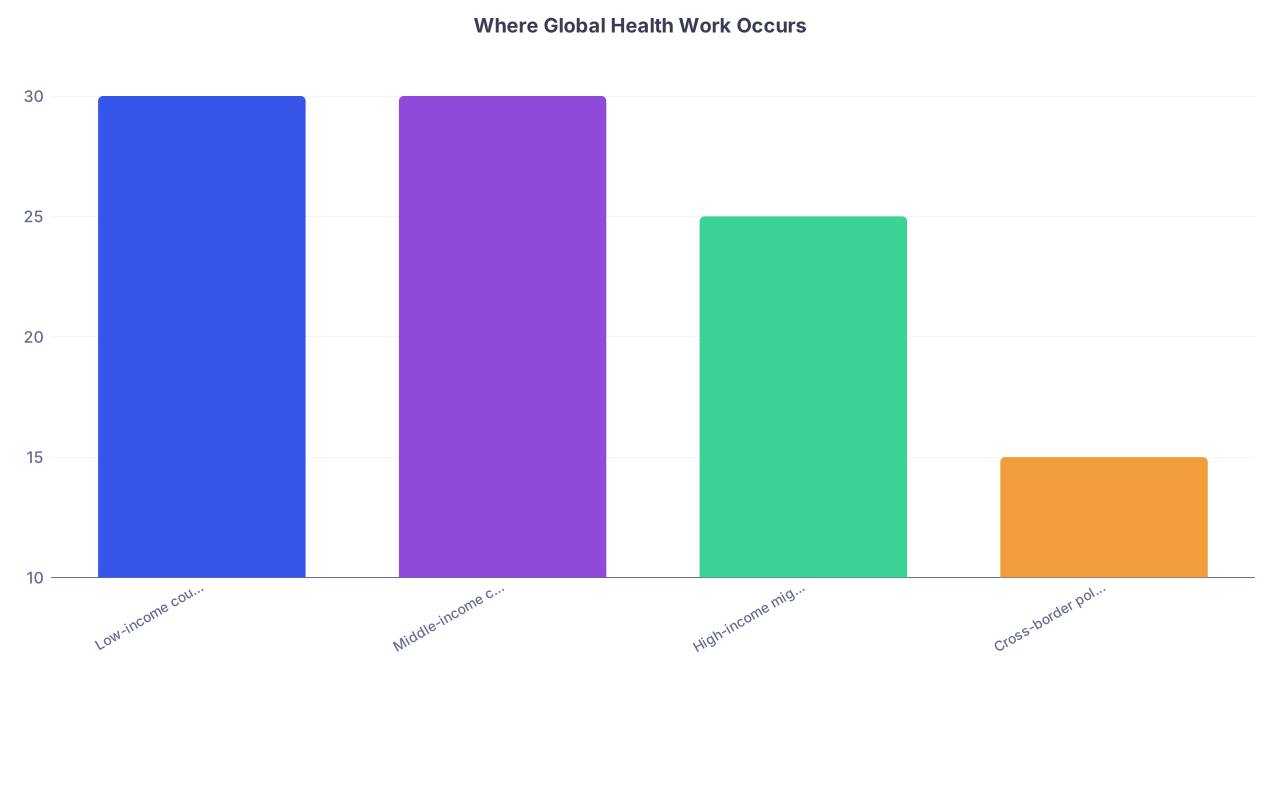
| Category | Value |
|---|---|
| Low-income countries | 30 |
| Middle-income countries | 30 |
| High-income migrant/undocumented populations | 25 |
| Cross-border policy/advocacy | 15 |
That bar chart is approximate, but again, directionally correct: a substantial portion of serious global health work never leaves high-income countries.
If your interest is equity, structural violence, and who gets left behind in any system, you don’t have to leave your city. You just have to stop thinking of “global” as “far away and photogenic.”
Myth #6: “Global health experience in a ‘non-global’ specialty is a waste or a CV gimmick”
Here’s the cynical line I hear from some program directors and residents:
“Sure, global health sounds nice, but if you’re going into, say, radiology or derm, it’s basically a hobby. It won’t matter academically and might even look like you’re not serious.”
This is where the data on competencies and outcomes punches back.
Exposure to well-designed global health training is associated with:
- Increased comfort with resource stewardship and cost-conscious care
- Stronger understanding of social determinants of health
- Better cultural humility and communication with diverse patients
- More interest in serving underserved populations at home
- More interest in public/academic or safety-net career tracks
None of those are “ID skills.” They’re physician skills.
I’ve sat in on hiring meetings where the most compelling part of an applicant’s file—for anesthesia, radiology, surgery—was a track record of thoughtful, ethical global or cross-cultural work tied to systems thinking and quality improvement.
The key is the how, not the hashtag:
- Did you work with local partners on a quality or systems project?
- Did you publish or present something that shows rigorous thinking?
- Did you stick with one site or issue over time, or just collect stamps?
- Can you talk about power, ethics, and humility without slipping into savior language?
When those boxes are checked, no serious academic leader is going to roll their eyes at global health just because your specialty isn’t “traditional” for it. Quite the opposite.
So what does this actually mean for you?
Let me be very direct.
If you care about global health and you are not going into ID, IM, or peds, you have three options:
- You can swallow the myth, decide “it’s not for me,” and walk away.
- You can treat it as charity tourism and accumulate a few pretty photos and awkward stories.
- You can treat it as a legitimate, systems-level part of your specialty and train yourself accordingly.
The third option requires more work and more honesty:
You’ll need to learn the basics of global health ethics and decolonial critique, so you do not reproduce the exact patterns the field is trying to get out of. You’ll have to accept that your role may be more about teaching, systems design, capacity-building, or research than about “doing big cases.” You’ll need to understand that leadership should be local, and your prestige or technical skill does not entitle you to run anything.
You’ll also need to be realistic about time and structure: global health careers are hard to build off the side of your desk. They usually require institutional buy-in, protected time, and actual deliverables beyond “I’m passionate.”
But none of this is specialty-locked. What matters is whether you bring rigor, humility, and staying power.
Global health is, by definition, interdisciplinary. It needs surgeons, psychiatrists, dermatologists, pathologists, radiologists, anesthesiologists, EM docs, neurologists, oncologists, OB/GYNs, and yes, ID and IM. It’s the only honest way to respond to a world where trauma, NCDs, mental health, and maternal health are as central to the burden of disease as HIV or TB.
The bottom line
Three points, no fluff:
Global health is not synonymous with infectious disease or primary care. The data and the burden of disease are clear: surgery, trauma, maternal health, mental health, oncology, and NCDs are central, and every specialty is implicated.
Your specialty does not disqualify you from serious global health work; your mindset and methods do. If you show up ethically, with long-term commitments and systems thinking, ortho or derm can be just as “global” as ID.
Short-term, unstructured, host-unled trips are not automatically good. The future of global health—if it’s worth anything—is long-term partnership, local leadership, and specialty-specific systems work that treats equity as a core competency, not a side hobby.


