
The obsession with prestige quietly ruins a lot of good careers.
If you’ve found a residency program that is geographically perfect for your life but not “name-brand,” you’re standing at one of those quiet crossroads that no one really prepares you for. The online forums will tell you to chase reputation. Your classmates will brag about big-name programs. Meanwhile, your partner, your aging parents, or your sanity are pulling you toward the lesser-known place where you could actually build a life.
This is exactly where a smart, targeted letter of intent can do real work for you—if you handle it like an adult, not like a desperate applicant.
Let’s walk straight into it.
1. Be Honest About the Tradeoff You’re Actually Making
Forget all the vague talk about “fit” for a minute. This is the real situation:
- Program A: mid-tier, not prestige-heavy, but in your ideal city/region (partner’s job, family nearby, affordable, or where you ultimately want to practice).
- Program B/C: more prestigious, better name recognition, but in a city you do not want to live in, or that will wreck your support system or long-term plans.
You’re not choosing between “good” and “bad.” You’re choosing between:
- Brand capital now vs
- Life capital and local network later.
I’ve watched people make both choices.
Some go to the big-name place, hate the location, have a miserable three years, and then still end up trying to move back to their desired area—without any local connections, letters, or mentors.
Others pick the geographically perfect mid-tier program, do solid work, get strong mentorship, and walk into jobs/fellowships locally because every attending they’ve worked with for three years vouches for them.
So if you’re thinking about writing a letter of intent to the geographically perfect program, you’re usually saying:
“I value my life and long-term location more than the perceived status hit of a less-famous name. Now I want to maximize my odds here.”
That’s a rational move. Not a weak one.
2. Understand What a Letter of Intent Actually Does (and Doesn’t)
A letter of intent in this scenario is not magic. It will not turn a program that ranked you 30th into your top choice if they only rank 10. But programs are made of humans, and I’ve heard versions of this many times on ranking day:
- “We got a strong letter from her. She’s local and clearly committed to this city.”
- “He said we’re his absolute top choice and his partner already has a job here.”
- “This is the applicant who wants to be here long-term. We could probably recruit him as faculty.”
Does that bump people a few spots up a rank list? Yes, sometimes. Does it change nothing? Also yes, sometimes.
Your job is to write a letter that:
- Signals genuine commitment to their program and their location.
- Makes it easy for them to picture you staying, thriving, and representing them well.
- Respects NRMP rules (for residency) or standard ethics (for other matches).
Let me be blunt: a good letter of intent is a nudge, not a rescue mission.
3. When You Should Send a Letter of Intent to a Non-Prestige Program
You do not send this type of letter to 5 programs. That is how you instantly lose credibility.
You send it when:
You have decided (for real) that if they rank you to match, you will go.
Not “probably.” Not “unless [famous program] takes me.” You’re done. This is your number one.The program is in a geographically ideal place for specific reasons:
- Partner or spouse’s stable job.
- Dependent family nearby (kids’ school, elderly parents, etc.).
- You plan to practice long-term in that city/region.
- You trained there as a med student and already have a life there.
Your application isn’t obviously toxic there.
You interviewed, had decent interactions, no major red flags. This is not a letter to fix a disastrous interview.
If you cannot say, “I will rank you number one,” do not call it a letter of intent. Call it an interest letter or update—different thing, different power.
4. What This Letter Should Actually Say (Structure + Phrases)
Here’s the practical, “do this” part.
You’re writing to a PD or PC at a solid, non-famous program in your ideal city. The letter should be:
- 3–6 short paragraphs
- No fluff about “lifelong dream” unless it’s actually true
- Deeply concrete about geographic ties and commitment
Basic structure
- Opening: Clear intent
- Geographic reality: Why this city/region specifically
- Program-specific reasons: Something real you learned from interview day
- Your value add: What you bring, tied to their needs
- Closing: Simple, professional, reaffirm intent
Here’s how that looks in practice (adapt the language, don’t copy-paste blindly):
1. Opening
No “strongly consider.” No “among my top choices.” Clarity or nothing.
2. Geographic reality
Then you explain the life part, clean and direct:
“My partner and I have built our lives in [City]. She works as a [job] at [company/hospital], and we both hope to stay in this region long term. My parents also live in [nearby city/suburb], and being close to them as they age is a major priority for me. Because of this, training in [City] is not just a preference—it is foundational to our plans.”
or
“I grew up in [Nearby Town] and went to medical school at [Local Institution]. My long-term goal is to practice in [Region], and many of my mentors are already part of this community. Remaining here for residency would allow me to continue building those relationships and serve the patient population I know best.”
Program directors understand geography. They know it’s one of the strongest predictors you’ll actually stay and not jump at the next shiny thing.
3. Program-specific reasons (no generic fluff)
Do not say: “I loved the collegial environment and the emphasis on teaching.” Everyone says that.
Instead:
“On interview day, I was struck by how often your residents mentioned the approachability of your faculty—especially in the ICU and on night float. Speaking with Dr [X] about how you support residents pursuing community-based careers rather than just academic ones made it clear that your program would be an excellent fit for my goals.”
or
“The noon conference on [topic] that I joined over Zoom, and the way senior residents led the discussion, convinced me that your program takes resident education seriously while still giving them autonomy.”
You’re demonstrating that:
- You paid attention.
- You understand their culture.
- You’re not just emailing every program the same thing.
4. Your value add (linked to what they care about)
Tie your strengths to their context:
“With my experience working in [community clinic / local FQHC / specific research area], I’m excited about the opportunity to contribute to [their specific rotation/site/clinic] and serve patients similar to those I have already been caring for in [city/clinic].”
or
“As someone committed to a career in [primary care / hospital medicine / community psychiatry] in this region, I believe I can be a reliable, long-term representative of your program within the local medical community.”
You’re selling future reputation and local retention. That matters more to many mid-tier programs than one extra citation on your CV.
5. Clean closing
Keep it simple:
“Thank you again for the opportunity to interview. Regardless of the outcome, I am grateful for the chance to learn more about your program. Please let me know if I can provide any additional information.”
Sign with full name, AAMC ID if residency.
5. How Programs Think About “Prestige” vs “Geography”
Here’s the piece applicants rarely see.
Many non-prestige programs don’t care about fighting prestige wars. They care about:
- Will you show up, do solid work, not be a problem?
- Will you finish the program, not transfer out at the first chance?
- Will you speak well of us when you apply for jobs or fellowships?
- Will you stay in the area and extend our network?
If you are clearly committed to their city and you seem stable, that is worth a lot.
| Program Concern | What They Actually Like to See |
|---|---|
| Risk of resident leaving | Strong geographic/family ties |
| Reputation of graduates | Solid performance, reliable work ethic |
| Local hiring pipeline | Stated plan to practice in the region |
| Fit with team culture | Residents who want to be there long term |
| Match reliability | Clear, credible commitment in writing |
This is why your “not prestige-heavy” situation is actually leverage:
You are the applicant who needs that city, not the applicant who views them as a distant Plan C. If you communicate this well, programs pay attention.
6. The Ethical Line: What You Must Not Do
You’re playing in a gray area. Don’t make it black.
Rules:
One true letter of intent.
If you tell more than one program “I will rank you number one,” you’re lying. People do this. It’s unethical, and yes, faculty talk. Do not be that person.No pressure language.
Don’t imply they owe you anything because of your geographic situation. You’re stating your reality, not guilt-tripping them.Avoid NRMP violations (for residency).
You can tell them your intentions. They cannot demand you reveal your rank list. You can’t ask them where they’ll rank you. Do not put them in that spot.No fake family ties or “I’m moving no matter what” if you’re not.
Programs can smell inauthenticity. And yes, sometimes they find out you never actually had that local connection you claimed.
Stay clean. You want to be memorable for the right reasons.
7. Timing: When to Send It and How
You’re not writing a novel. You’re sending a precise signal at the right time.
When to send
For residency-type matches:
- After you’ve completed all your interviews at that program.
- Usually 1–3 weeks before rank lists are due.
- Not the night before the deadline when everyone is panicking.
You want it:
- Late enough that it reflects a real decision.
- Early enough that it can be discussed at a ranking meeting.
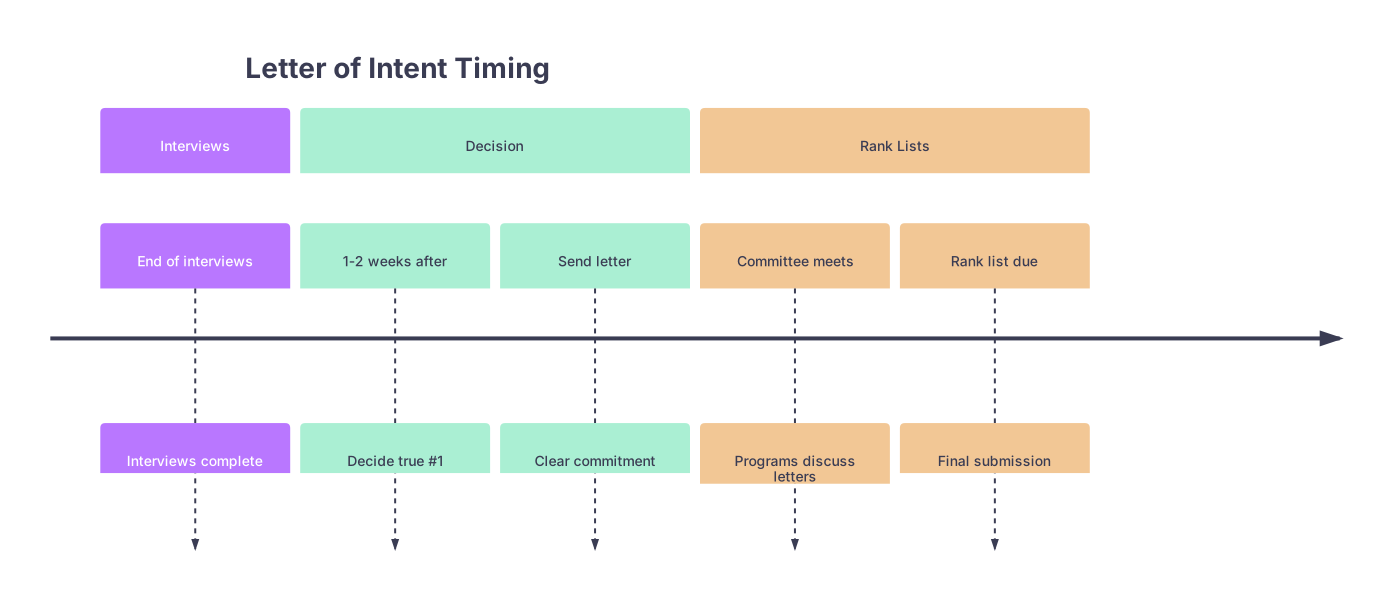
| Period | Event |
|---|---|
| Interviews - End of interviews | Interviews complete |
| Decision - 1-2 weeks after | Decide true #1 |
| Decision - Send letter | Clear commitment |
| Rank Lists - Committee meets | Programs discuss letters |
| Rank Lists - Rank list due | Final submission |
How to send
- Email to the program director, cc program coordinator.
- Subject line: “Letter of Intent – [Your Name], [Specialty] Applicant”
- PDF attachment optional; plain email body is usually fine.
Do not send through some portal message system only. Those often get buried. Email is direct.
8. Handling the Emotional Noise: Classmates, Prestige Anxiety, and FOMO
Let me say what no one says out loud: a lot of prestige anxiety is about other people’s opinions, not your actual career.
You’re worried about:
- What your classmates will think on Match Day.
- How your school’s “match list” slide deck will look.
- How family who do not understand medicine will react to a program they’ve never heard of.
Here’s the thing. After about 6–12 months, none of that matters. What matters is:
- Are you learning?
- Are you supported?
- Are you burning out?
- Are there attendings willing to write you real, not generic, letters?
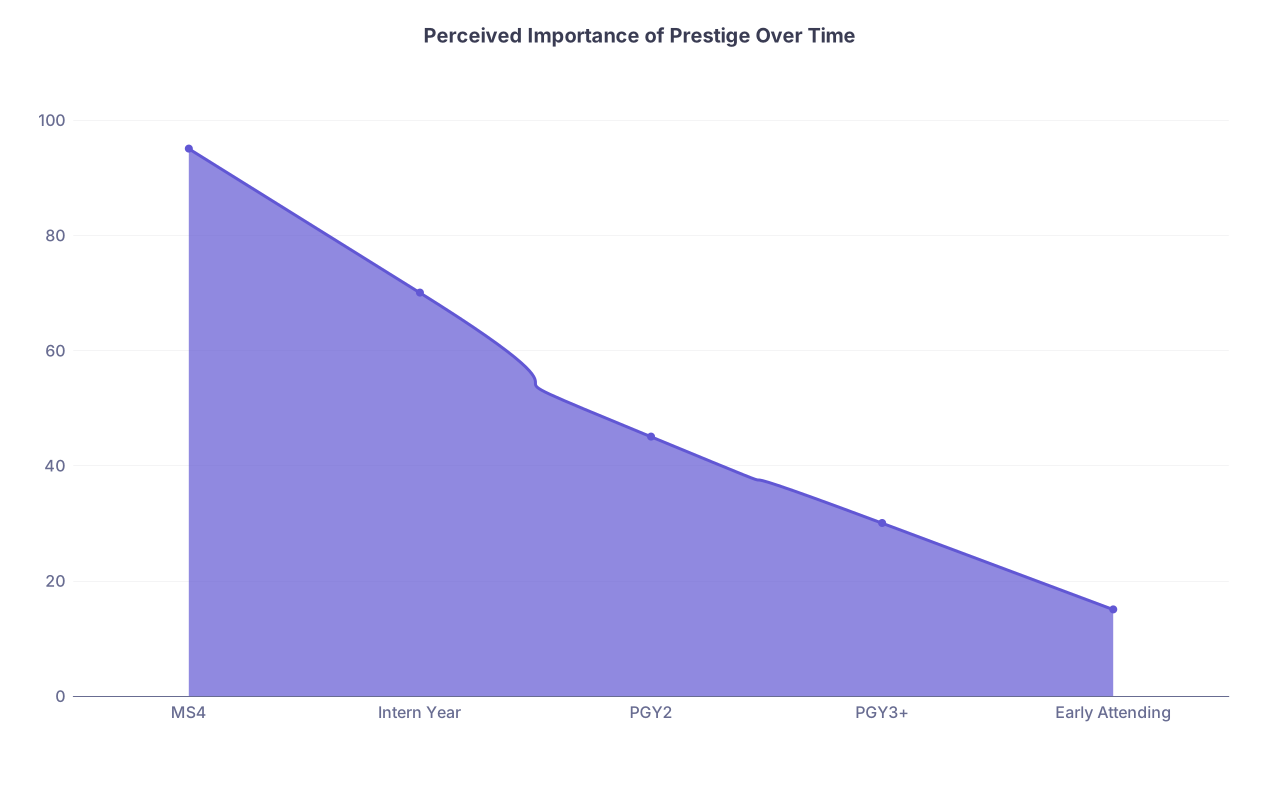
| Category | Value |
|---|---|
| MS4 | 95 |
| Intern Year | 70 |
| PGY2 | 45 |
| PGY3+ | 30 |
| Early Attending | 15 |
That drop-off is real. Prestige feels enormous as an MS4. It shrinks fast once you’re in the grind of residency and realize day-to-day life matters a lot more than the line on a CV.
So if you’re torn: the fact that you’re even considering a less-famous but geographically perfect program means your instincts are already ahead of the prestige game. Your letter of intent is you backing those instincts with action.
9. If You’re Worried About Future Fellowship or Jobs
Valid concern. Here’s the harder truth: most mid-tier programs place fine into fellowships from residents who:
- Crush their rotations.
- Get strong letters saying “top 10% resident I’ve worked with in 10 years.”
- Do some decent research or academic work (not always required, but it helps).
- Apply strategically, often regionally.
Where you trained matters. Who will pick up the phone for you matters more.
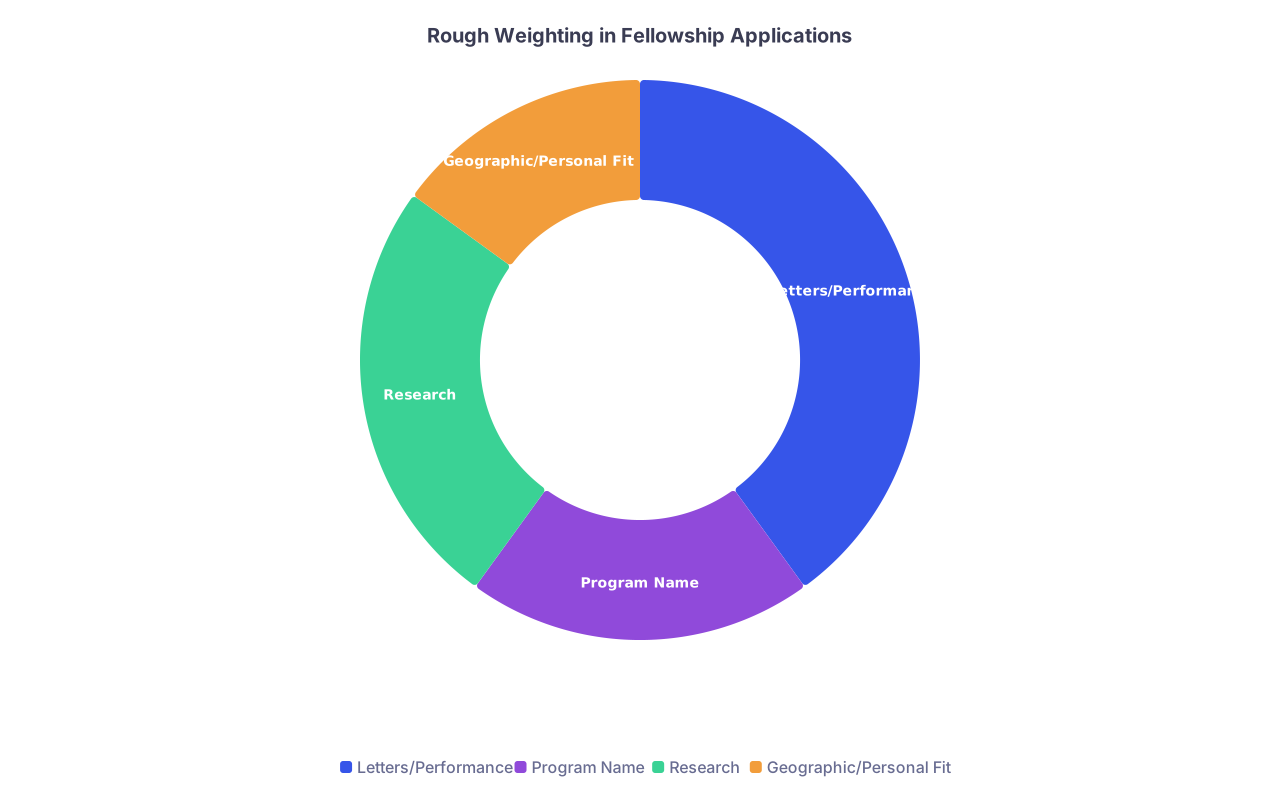
| Category | Value |
|---|---|
| Letters/Performance | 40 |
| Program Name | 20 |
| Research | 25 |
| Geographic/Personal Fit | 15 |
If the geographically perfect program has:
- A history of at least some graduates matching into your desired fellowship (even regionally).
- Attendings who are known or respected in that field.
- Opportunities to get involved (research, QI, teaching).
Then your job is to be that person who maximizes what the program can offer. The name on your badge is one line. The story behind it is everything else.
10. Quick Checklist Before You Hit Send
Pause and go through this mentally:
- Have I truly decided this is my #1, no matter what?
- Does my letter clearly say “I will rank you number one”?
- Have I explained my geographic/life reasons in specific, concrete terms?
- Did I mention 1–2 real details from interview day that prove I paid attention?
- Did I connect what I bring to what this program and region need?
- Am I sending it at a reasonable time before rank lists lock?
- Am I at peace with choosing geography over prestige if that’s the trade?
If yes, send it. Then stop obsessing. You’ve done the one meaningful thing you can do for that program.

11. If You Don’t Match There Anyway
Sometimes you do everything “right” and the program still doesn’t match with you. Someone else they ranked higher wanted them too. That’s not a moral judgment on you or on your choice to prioritize location.
If that happens:
- Do not immediately assume you were wrong to prioritize geography. You just didn’t control the other half of the match algorithm.
- Take stock of where you did match. Ask the same location vs prestige vs life questions again, this time with reality on the table.
- Over the next few years, keep your eyes open for ways to get back to that region if it’s still your long-term goal—fellowship, jobs, lateral moves.
Geography can be a long game, not a one-shot.

The Core Takeaways
Choosing a geographically perfect but non-prestige-heavy program is a legitimate, often very smart move. You’re trading some brand flash for real life stability and local network power.
A letter of intent to that program should be singular, direct, and specific: clear #1 commitment, concrete geographic reasons, and a credible case that you’ll be a long-term asset to that region and institution.
Prestige anxiety fades quickly once residency starts. The location you wake up in, the support system you have, and the mentors who know you well will shape your career far more than one line of brand-name bragging on your CV.