The biggest mistake late‑career applicants make with clinical experience is thinking their age and “real-world” background substitute for actual, recent patient exposure. They do not.
If you are coming from tech, finance, nursing, the military, or any other prior career, your shadowing and clinical work will be dissected more harshly, not less. Admissions committees look at you and think: “This person is about to burn their life down to start over. Do they actually know what they are getting into?” Weak or sloppy clinical experience answers that question for them. In the worst way.
Let me walk you through the common traps I see over and over—and how to avoid blowing up your application at the shadowing/clinical experience stage.
Mistake #1: Assuming Prior Health‑Adjacent Work “Counts Enough”
This one derails a shocking number of strong late‑career candidates.
You were a physical therapist for 10 years. A paramedic. A nurse. A scribe. A pharmaceutical rep who “was in the OR all the time.” You think: “Surely that proves I know clinical medicine.”
Not automatically.
Admissions committees care about physician‑specific exposure. Your past clinical or health‑adjacent jobs are a huge plus, but they are not a substitute for:
- Watching physicians think and talk through uncertainty
- Seeing how they document, triage, and delegate
- Understanding how they carry the ultimate responsibility when things go wrong
I have seen ICU nurses rejected from mid‑tier MD schools because they had almost no documented physician shadowing and never clearly articulated how the physician role differs from nursing. That is not fair. But it is real.
How this mistake shows up:
- An application with 3,000 hours as an RN… and 4 hours of physician shadowing
- Telling interviewers: “I’ve already seen everything; I did not really need to shadow”
- Personal statements describing the healthcare team in detail—but never once focusing on the physician’s specific responsibilities and tradeoffs
How to avoid it:
You must deliberately switch from “I know health care” to “I am trying to understand the physician’s job.”
That means:
- Shadow multiple physicians, ideally in your target country’s system (at least 40–50 hours total, more is better for late‑career)
- Explicitly reflect—in your writing and interviews—on how the physician’s role differs from your prior role
- Show that you understand what will change for you (decision-making burden, hours, liability, emotional weight)
Your previous health‑related work is a strong foundation. It is not, by itself, proof you understand being a physician.
Mistake #2: Treating Shadowing as a Checkbox, Not a Reality Check
Traditional 21‑year‑olds often treat shadowing as a hoop. Late‑career folks do it too—but the stakes are higher for you.
If you already have a mortgage, kids, or a decade in another career, shadowing is not just “to show interest.” It is your last low‑risk chance to realize: “Actually, I do not want this life.”
I have watched late‑career applicants tank interviews because their examples from shadowing were paper‑thin: “I really liked how Dr. X took time with patients.” That is high‑school level reflection. It screams, “I was present, but I was not paying attention.”
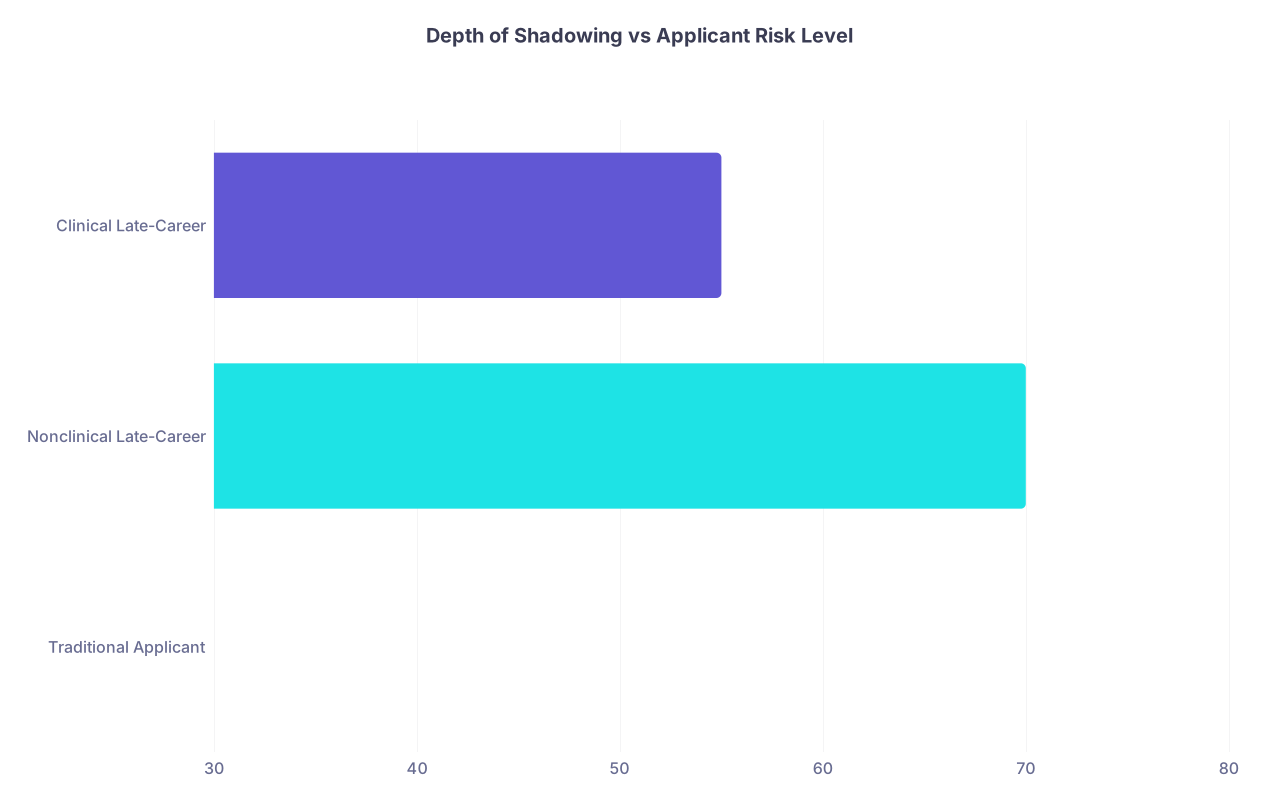
| Category | Value |
|---|---|
| Traditional Applicant | 30 |
| Nonclinical Late-Career | 70 |
| Clinical Late-Career | 55 |
(Here: higher values = greater need for deep, recent shadowing. Late‑career nonclinical applicants sit at the top of that risk curve.)
Shallow shadowing mistakes:
- Only following one physician for one or two half days, then calling it a day
- Shadowing in a single cushy outpatient specialty (e.g., dermatology aesthetics) and extrapolating to “medicine”
- Never asking questions about lifestyle, burnout, EMR time, night call, or difficult cases
How to do this correctly:
During shadowing, you should be actively testing your own assumptions:
- Ask physicians directly: “What do you wish you knew before you went to medical school?”
- Pay attention to non‑glamorous moments: charting at 7 p.m., phone calls with frustrated families, arguing with insurance
- Seek at least one high‑acuity setting (ED, inpatient) and one longitudinal setting (primary care, clinic)
- After each session, write down specific stories: particular patients, ethical dilemmas, system frustrations
If your notes from shadowing could be written by someone who watched a hospital drama on Netflix, you did not go deep enough.
Mistake #3: Relying on Old or Irrelevant Clinical Experience
This one is especially common in applicants who were once clinical but then spent years away.
You worked as a CNA eight years ago. You volunteered in a free clinic before grad school. You did EMS in your early 20s. Now you are 35, in consulting, applying to med school, and you think that early clinical work proves your commitment.
From an adcom chair I spoke with: “If their clinical experience is more than five years old and they have done nothing recent, I assume they liked the idea of medicine back then but chose something else.”
Harsh. But accurate.
The red flag pattern:
- Clinical experience ends years before the application
- The timeline shows a long nonclinical career with no recent re‑engagement
- Essays heavily lean on that ancient patient from 2011 as if it happened last month
Programs know people change. Values shift. Life gets comfortable. They want proof that current you—with a spouse, kids, lifestyle habits, maybe a six‑figure salary—has re‑tested this decision.
How to fix this:
You need fresh clinical exposure. As in:
- Within 1–2 years of applying, not 7–10 years ago
- Substantial: typically 100+ hours of recent clinical volunteering, paid work, or consistent shadowing for a late‑career applicant
- Ideally in the country and system where you are applying (do not lean solely on international mission trips from your 20s)
If your primary patient stories predate the smartphone era, you have a problem. Get back into the clinical world before you submit.
Mistake #4: Hiding Behind Nonclinical Volunteer Work
Another trap: late‑career changers are often excellent citizens. They volunteer at food banks, coach sports, serve on nonprofit boards. Then they try to use that as a substitute for clinical volunteering.
Medical schools like service. They still need to see patient‑centered service in real clinical settings.
A story I have seen too often: A 38‑year‑old engineer with 500+ hours at a soup kitchen, 50 hours of shadowing, and essentially no hands‑on clinical volunteering. They assume the “service” part translates.
Not enough.
You must show you are comfortable around sickness, bodily fluids, bad news, and the sheer messiness of clinical care. That does not show up when you are handing out canned goods.
Common misfires here:
- Volunteering in hospital gift shops and calling it “clinical”
- Doing health‑adjacent education (nutrition workshops, running clubs) with no sick patients in sight
- Describing “working with underserved communities” with zero mention of clinicians, charts, or treatment plans
You need to be in the rooms where clinical decisions are happening, where patients are scared, where things are not controlled or tidy.
Choose roles like:
- ED volunteer escort (actually interacting with patients and families)
- Hospice volunteer
- Inpatient unit volunteer doing comfort work, meal assistance
- Medical assistant / patient tech / scribe
If your “clinical” stories do not involve vital signs, medications, procedures, or physician interaction, committees will wonder if you are avoiding actual medical environments.
Mistake #5: Over‑Shadowing, Under‑Doing
On the other side, some late‑career applicants accumulate 200+ hours of passive shadowing and almost no hands‑on clinical work.
Shadowing shows observation. Volunteering or paid clinical work shows participation and resilience.
I have seen applications with gorgeous letters from physicians they shadowed, but when pressed in interviews about dealing with difficult or noncompliant patients, they had nothing. Because, of course, the physician handled it all while they silently watched.
| Aspect | Shadowing | Hands-On Clinical Work |
|---|---|---|
| Role | Observer | Active participant |
| Typical Hours (late-career strong app) | 40–80+ | 100–300+ |
| Demonstrates | Insight into physician role | Comfort with patients, systems, stress |
| Strong Examples | Multi-specialty MD/DO shadow | MA, CNA, ED volunteer, hospice, scribe |
If your experience looks like:
- 150 hours of shadowing in 4 specialties
- 20 hours of actual clinical volunteering
- 0 hours in roles where you had responsibilities to patients
…you are sending one message: “I like watching this. I have not proven I can actually do anything in this environment.”
Better pattern for late‑career applicants:
- 40–80 hours shadowing (enough to understand the physician role)
- 100–300+ hours of consistent, hands‑on clinical involvement over at least 6–12 months
- Clear examples in your essays of times you comforted patients, dealt with upset families, handled boring or unpleasant tasks
Do not hide behind the white coat of the person you are shadowing. Show that you can function in the trenches.
Mistake #6: Choosing “Comfort Zone” Settings That Flatter You
Late‑career people are very good at drifting toward situations where they look competent and feel respected. That is not automatically where you learn the truth about medicine.
Examples I have seen:
- The ex‑consultant who only shadows private concierge internists catering to executives
- The biotech manager who only does clinical work in their own company’s sponsored trials clinic
- The nonprofit director who works solely in administration-heavy “health outreach” and never near actual sick patients
It feels good to be the “experienced adult” in the room. It is also a trap. Clinical medicine will rip that feeling away when you are an MS1 or intern doing scut work at 3 a.m.
You need exposure that humbles you.
Seek:
- Busy, under‑resourced clinics where you are just another volunteer
- EDs that get slammed, where you are fetching warm blankets and trying not to get in the way
- Inpatient units where nurses look at you like “Who are you and why are you in my hallway?”
You should feel a bit incompetent and out of place at first. That is what the first years of training will be like. Better to find out now if you can tolerate that.
Mistake #7: Failing to Address Family / Lifestyle Realities Through Clinical Experience
Admissions committees quietly worry about late‑career applicants flaming out. Why? Because many of them have failed to think through what medicine looks like with kids, aging parents, and a life already built.
Shadowing and clinical experience are your chance to show you are not fantasizing.
I have watched interviewers ask a 40‑year‑old applicant, “How will you handle night call with your two young children?” and get some vague answer about “strong support systems.” That is code for: “I have not stress‑tested this.”
Your clinical exposure should include real conversations with physicians whose lives look roughly like the one you will have:
- Physicians with children at similar ages
- People who started medicine later than average
- Those who changed careers into medicine and survived
During or after shadowing, ask:
- “How did training impact your family?”
- “What did your spouse struggle with the most?”
- “If you were 38 starting again, what would you do differently?”
Then reflect those insights in your essays. If you never mention family, schedule, or burnout in your reflections, committees assume you have not thought about them. Or worse—you are avoiding the topic because you are afraid of the answer.
Mistake #8: Ignoring System Frustrations and Only Writing About “Helping People”
Nothing makes an adcom’s eyes glaze over faster than a 39‑year‑old applicant writing like a high schooler: “I love science and I want to help people.”
At your age, you have seen bureaucracy, politics, and broken systems. If your clinical write‑ups pretend medicine is just hugs and heroism, it feels fake.
From your shadowing and clinical work, you should be noticing:
- EMR frustrations and endless documentation
- Insurance prior auth nonsense
- Disparities in care, language barriers, social determinants
- Burned out staff, resignations, understaffed units
I have read strong essays from late‑career applicants who described watching a physician spend more time fighting with an insurance portal than in the exam room—and then explained why they still want the job, given those realities. That is the bar.
Your clinical experience must show that you:
- Have seen the cracks in the system
- Are not naive about workload, burnout, or moral injury
- Still choose this path with eyes open
If the worst thing you describe is “sometimes the days are long,” your application will not ring true.
Mistake #9: Getting Letters That Say “Nice Person” Instead of “Future Physician”
This one hurts because many late‑career applicants are genuinely well liked.
They get letters from nurses, NPs, PAs, volunteer coordinators that say things like: “They are dependable, kind, and a joy to work with.” That is not enough. You are not applying to be a professional volunteer.
You need at least one or two letters from physicians (MD/DO) who:
- Watched you over time in clinical or shadowing contexts
- Can comment on how you think about patient care, not just your personality
- Will say some version of, “I would be comfortable calling this person my colleague one day.”
If your letters all come from people who did not go through medical training, the committee has to guess whether physicians would actually support you entering their profession.
Do not make them guess.
Be honest with your letter writers:
- Ask directly: “Do you feel you can strongly recommend me for medical school?”
- Give them your personal statement draft and activity descriptions so they can align their comments
- Choose writers who have actually seen you interact with patients or clinicians, not just chat in the break room
A lukewarm letter from a famous physician is worse than a strong, specific letter from a community doc who knows you well.
Mistake #10: Poorly Explaining Career Transition in the Context of Clinical Exposure
Finally, the big one: failing to connect the dots.
Every late‑career applicant gets asked, explicitly or silently: “Why now? Why medicine, and not an advanced role in your current field?” Your clinical experiences need to help answer that question.
What does not work:
- “I always wanted to be a doctor but life got in the way.” (At 37, that sounds like a midlife crisis if not backed by concrete, recent experiences.)
- “I wanted more meaning.” (You can get meaning a lot of ways that are faster and cheaper than medical school.)
- “I was inspired by doctors I worked with.” (So are many people who do not quit their jobs.)
You must tie your recent shadowing and clinical work directly into a clear, adult rationale for this shift.
For example:
- “After ten years as a physical therapist, I realized my questions and interests were shifting from ‘How do we implement this plan?’ to ‘How do we decide which plan is appropriate?’ Shadowing in primary care and PM&R clarified that I want the responsibility of formulating diagnoses and treatment plans, not just carrying them out.”
- “Working as a trial coordinator, I became deeply frustrated that I could not advocate for specific therapies when I knew the evidence well. Watching oncologists weigh trial data, side effects, and patient values showed me that the physician role aligns more closely with the type of decision-making I want to engage in daily.”
Your clinical experiences are not just proof you have been in hospitals. They are the narrative spine of your career pivot. Use them.

| Step | Description |
|---|---|
| Step 1 | Decide to Pursue Medicine |
| Step 2 | Assess Old Experience |
| Step 3 | Plan New Clinical & Shadowing |
| Step 4 | Strengthen Existing Exposure |
| Step 5 | Hands-On Clinical Role 6-12 mo |
| Step 6 | Shadow Multiple Physicians |
| Step 7 | Reflect Deeply & Take Notes |
| Step 8 | Secure Strong MD/DO Letters |
| Step 9 | Integrate Into Essays & Interviews |
| Step 10 | Recent Clinical < 2 years? |
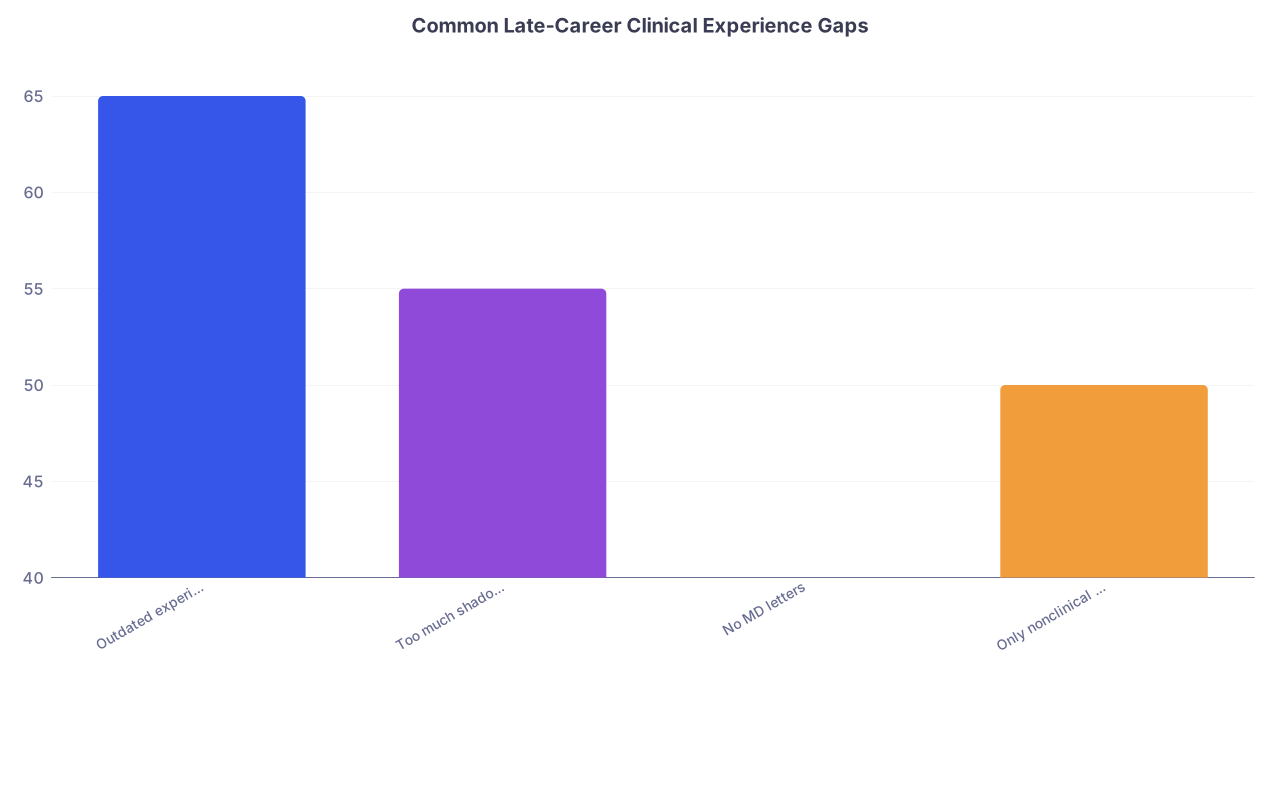
| Category | Value |
|---|---|
| Outdated experience | 65 |
| Too much shadowing, little doing | 55 |
| No MD letters | 40 |
| Only nonclinical volunteering | 50 |
How to Build a “No‑Doubt” Clinical Profile as a Late‑Career Applicant
You avoid these mistakes by being intentional. Not reactive. Not last‑minute.
Aim for something like this:
- Recent, sustained hands-on clinical work (100–300+ hours across at least 6–12 months)
- 40–80+ hours of physician shadowing, across at least 2–3 settings (inpatient + outpatient)
- Specific, nuanced reflections on: physician responsibilities, system frustrations, family/lifestyle tradeoffs
- Letters from 1–2 physicians who can describe your thinking, not just your kindness
- A career transition story that uses your clinical experiences as evidence, not backdrop

Let me be blunt: medical school is designed for people who have never had real power or money. You are trying to enter that world from the outside. Your shadowing and clinical experiences are how you prove this is a deliberate, informed decision—rather than an escape from your current job.
Do not make the lazy, predictable mistakes:
- Leaning on old experiences
- Staying in comfort‑zone settings
- Watching instead of doing
- Writing like a 19‑year‑old about “helping people”
You are older. Use that. Show that you see the tradeoffs clearly and still step forward.
If you remember nothing else:
- Old, vague, or purely observational experiences will sink a late‑career application faster than a weak MCAT. Get recent, hands-on, and physician-focused.
- Your clinical and shadowing work must clearly explain why now and why physician, in the context of your adult life—not a recycled childhood dream.