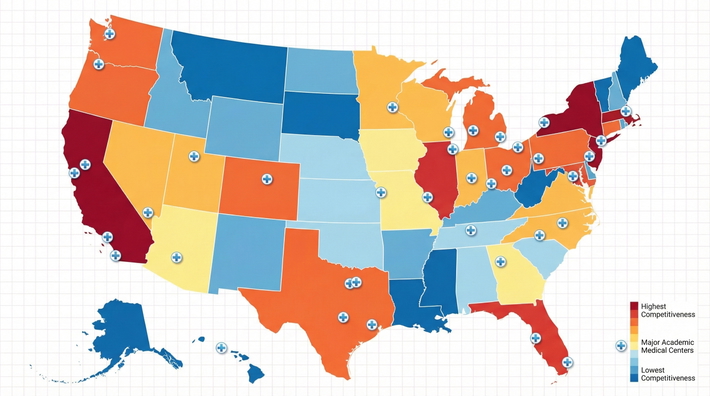
It is July 1st. You just finished residency or a contract, or you intentionally did not sign onto a job so you could move to a new region next year. You have 12 months of a gap year ahead of you, and all you know is this: you want to be in a different geographic market by next July.
Here is the problem: hospital systems do not care about your “vibes.” They care about fit, local references, licensing, and evidence that you understand their market. A gap year can make you look strategic or aimless. Your timeline is what decides which.
I am going to walk you month‑by‑month through how to use 12 months to pivot cleanly into a new geographic market—whether that is moving from Midwest community programs to West Coast academic centers, from Northeast big systems to Southeast private groups, or from one country to another within the U.S. system (IMGs, that is you).
Big Picture: Your 12‑Month Arc
Before we get granular, you need a mental model.
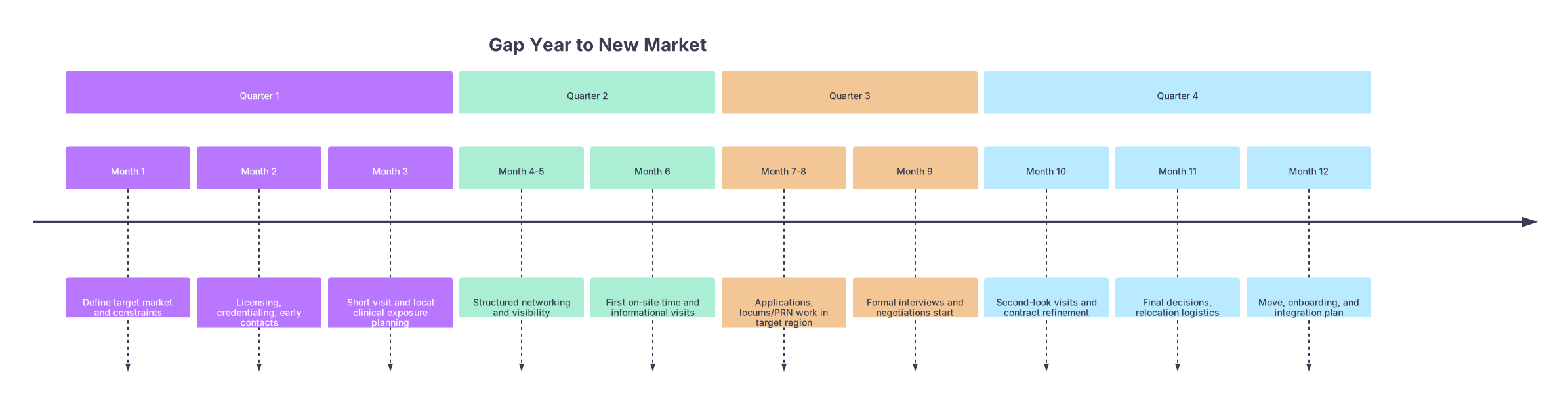
Here is the year at a glance:
| Period | Event |
|---|---|
| Quarter 1 - Month 1 | Define target market and constraints |
| Quarter 1 - Month 2 | Licensing, credentialing, early contacts |
| Quarter 1 - Month 3 | Short visit and local clinical exposure planning |
| Quarter 2 - Month 4-5 | Structured networking and visibility |
| Quarter 2 - Month 6 | First on-site time and informational visits |
| Quarter 3 - Month 7-8 | Applications, locums/PRN work in target region |
| Quarter 3 - Month 9 | Formal interviews and negotiations start |
| Quarter 4 - Month 10 | Second-look visits and contract refinement |
| Quarter 4 - Month 11 | Final decisions, relocation logistics |
| Quarter 4 - Month 12 | Move, onboarding, and integration plan |
You are not “waiting for jobs to open.” You are deliberately building:
- Local credibility
- Paperwork readiness (licenses, board status, hospital credentials)
- Relationships with key people in that market
If you get to Month 9 and you are still sending generic CVs to hospital HR inboxes, you wasted the year.
Month 1: Define the Market and Set Non‑Negotiables
At this point you should stop thinking in fuzzy terms like “I want to move to the West Coast” and start acting like a person choosing a specific labor market.
Week 1–2: Hard constraints
Sit down and write three lists:
Geographic constraints
- States or metro areas you will actually move to (e.g., “Seattle or Portland,” not “Pacific Northwest unless something else comes up”).
- Visa issues if you are on J‑1/H‑1B.
- Spouse/partner job needs, children’s schools, cost‑of‑living realities.
Professional constraints
- Academic vs community vs hybrid.
- Inpatient vs outpatient mix, call structure, procedure time.
- Board eligibility/certification timing.
Personal constraints
- Minimum salary to avoid financial stress.
- Max commute time.
- Specific lifestyle needs (airport access, family proximity, language communities).
Week 3–4: Market reconnaissance
By the end of Month 1 you should know who actually hires in your target market.
- Search: “[Your specialty] jobs [city/region] academic,” “[specialty] hospitalist [state],” “[specialty] FQHC [city].”
- List every major employer in a spreadsheet:
- Academic centers (e.g., OHSU, UCSF, Emory).
- Big systems (Kaiser, HCA, Sutter, Cleveland Clinic, etc.).
- Large private or multispecialty groups.
- Federally Qualified Health Centers if relevant.
| Category | Example Employer | Your Notes |
|---|---|---|
| Academic | OHSU | GI, cards heavy |
| Large system | Kaiser Permanente NW | Mostly employed |
| Private group | XYZ Cardiology Assoc. | Heavy call |
| Community hosp | Providence St. Whatever | Good for hospitalist |
| FQHC | Community Health Center | J-1 friendly |
By the end of Month 1 you should have:
- 1–3 specific metro areas.
- A live spreadsheet of employers.
- A draft budget showing whether the move is financially sane.
Month 2: Paperwork and Platform Setup
At this point you should stop pretending that licensing and credentialing are “future you” problems.
Week 1–2: Licensing
- Identify which state licenses you need.
- Apply now. Some states take 3–6 months, occasionally longer.
- If you are already licensed elsewhere, use FCVS if helpful.
Do not be clever here. Delayed licensure can kill offers.
Week 2–3: Professional profile and CV
Fix your digital footprint so that recruiters and department chiefs see a coherent story:
Update:
- CV (geographically targeted, not generic).
- LinkedIn (with “interested in opportunities in [region]” in headline).
- Doximity profile, specialty societies.
Add a short 2–3 sentence positioning statement at the top of your CV:
- Example: “General internist with 3 years of academic hospitalist experience at [Institution], seeking a long‑term position in the Seattle metro area with a focus on resident teaching and QI.”
Week 4: First quiet outreach
End of Month 2, you do soft pings, not job begging.
- Email 3–5 faculty or attendings you know who:
- Trained in your target region, or
- Are well connected nationally in your specialty.
- Ask exactly one question: “Who actually hires hospitalists in Portland that you respect?”
- Capture names, not just programs.
You are laying the first bricks of your network.
Month 3: Reality Check and First Visit Planning
Now you move from screen‑based research to on‑the‑ground planning.
Week 1–2: Macro‑market scan
This is where you treat it like a real market, not vibes and weather.
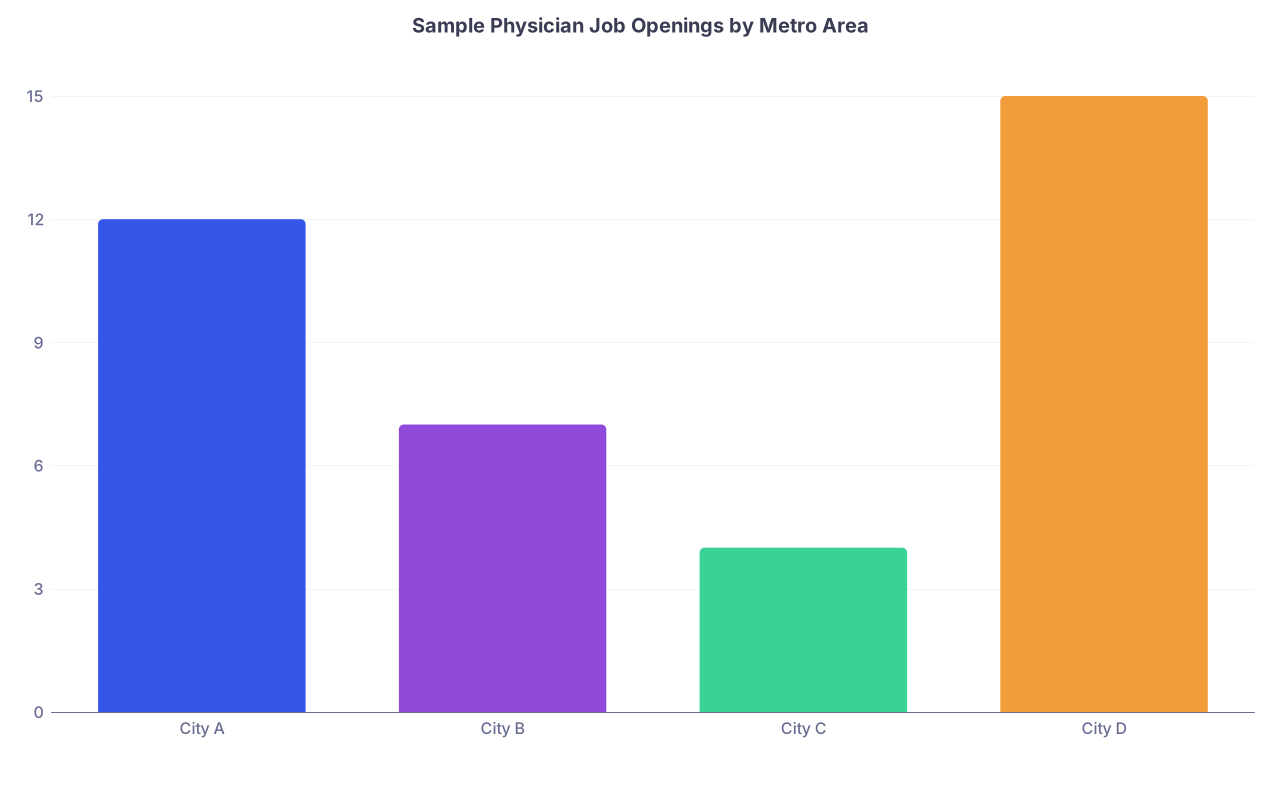
| Category | Value |
|---|---|
| City A | 12 |
| City B | 7 |
| City C | 4 |
| City D | 15 |
Look at:
- Number of open positions in your specialty in the last 6–12 months.
- Mix of:
- Employed vs private practice.
- Academic vs community.
- Typical salary range (from MGMA data, Doximity, recruiters).
If your chosen city shows 1–2 job postings a year in your specialty and they are all subspecialized roles you do not fit, be honest and recalibrate now.
Week 3–4: Plan a scouting visit
Decide: When will you visit in person? For most people, that is Month 6–7, but you need to block time and budget now.
Your visit should include:
- Hospital tours (formal or informal).
- Coffee with at least 2 people in your specialty.
- Neighborhood scouting (really seeing where you would live).
Book vacation days, flights, or time off from locums now so you do not “get too busy” later.
Months 4–5: Systematic Networking and Visibility
At this point you should stop dabbling and start acting like you are entering a tight labor market where relationships matter.
Month 4: Build your network map
Week 1: Name the humans
Use LinkedIn, Doximity, institutional websites.
For each target hospital/group, identify:
- Department chair / service line director.
- Associate program director or division chief.
- One mid‑career person who actually does the work you want.
Week 2: Initial outreach emails (low‑pressure)
You are not asking for a job yet. You are asking for 10–15 minute video or phone calls to understand the local landscape.
Email template skeleton:
- Who you are (“Finishing X at Y, planning move to [region] in 12 months”).
- Why them (specific connection or reason).
- One specific ask (“Could I get 15 minutes sometime this month just to understand how people in [city] have structured their careers in [specialty]?”).
Aim for 4–6 conversations this month.
Week 3–4: Specialty meetings and conferences
Look at:
- Regional specialty society meetings (e.g., state ACP, ACC, AAFP).
- Hospital system CME events where faculty from your target region present.
If a state‑level conference in your target market happens in Months 6–9, register now and block the dates.
Month 5: Become visible in that region’s ecosystem
At this point you should have at least a handful of names and some sense of which systems are serious options.
Week 1–2: Local scholarly or QI tie‑ins
Options that actually work:
- Co‑author a review or small QI report with someone from that region.
- Offer to present a virtual case or QI project at one of their conferences or noon conferences.
- Submit an abstract or poster where the affiliation includes your target institution if you have a legit collaborator there.
No, this is not mandatory. But it signals serious intent and gives you something to mention in every conversation.
Week 3–4: Recruiter conversations (on your terms)
You do not let recruiters drive your timeline, but you do use them for intel.
- Talk to 2–3 recruiters who regularly place in your target region.
- Ask:
- “Which systems actually treat physicians decently?”
- “Who has high turnover?”
- “What salary ranges do you actually see signed on paper?”
Take notes. Verify with your faculty contacts later.
Month 6: First On‑Site Visit and Reality Check
By Month 6 you should stop speculating and start walking the hallways.
Week 1–2: Your visit schedule
If you can get there for 3–5 days:
- Day 1–2:
- Meet 1–2 department leaders in person (even if just informal).
- Walk the units, clinics, call rooms if possible.
- Day 3–4:
- Explore neighborhoods, commute routes, schools, partner job markets.
- Day 5:
- Debrief: sit in a coffee shop and write pros/cons for each system and neighborhood.

Week 3–4: Decision point
Ask yourself bluntly:
- Is this market still your first choice?
- Are there obvious red flags (toxic departments, excessive RVU demands, cost of living vs salary mismatch)?
- Do you need a backup market?
If major concerns emerge, this is the last sane time to pivot to a different primary market and demote this one to backup.
Months 7–8: Start Working in the Region (If Possible) and Apply
At this point you should turn “I am interested in your region” into “I already work here, at least part‑time.”
Month 7: Locums/PRN/short‑term roles
If your specialty and visa status allow:
- Seek:
- Short locums assignments in your target state.
- PRN/part‑time with large systems that use per‑diem pools.
This does three things:
- Gives you local references.
- Puts you in the hospital’s credentialing system (way faster next time).
- Lets you test drive the culture.
If locums is not realistic, look for:
- Telehealth roles licensed in that state.
- Contract work with clinics or urgent cares in the region.
Even one or two months of documented local work helps.
Week 3–4: Start formal applications
You are now 4–6 months from when many systems want to lock in new hires.
Apply:
- Directly to department chiefs when possible, not just HR portals.
- With:
- Customized cover letters referencing your visit and local contacts.
- Clear move timeline (“Relocating by July 1, 20XX; state license in progress / already approved”).
Month 8: Structured interview preparation and push
By Month 8, you should be moving interviews from “nice to have” to “priority.”
Week 1–2: Interview prep
This is not generic “prepare for behavioral questions” fluff. Focus your prep on:
- Explaining the geographic pivot clearly:
- “My partner’s career is anchored here,” or
- “I plan to build a career in [city] because… [specific professional reasons tied to that market].”
- Demonstrating local knowledge:
- “I know your system is expanding into [neighborhood], and I am particularly interested in…”
- “The payer mix here (Medicaid-heavy, lots of tech employees, retirees) is something I care about because…”
Week 3–4: Push for on‑site interviews
For any serious opportunity:
- Offer specific dates you can be on site.
- If you are already doing locums there, ask to tack interview days onto that schedule.
You want at least 2–3 serious options moving into Month 9.
Month 9: Offers, Negotiations, and Backup Plans
At this point you should stop collecting interactions and start forcing decisions.
Week 1–2: Clarify your ranking and thresholds
Before offers land, write down:
- Your top 3 employers in this market.
- Absolute deal‑breakers:
- Base salary floor.
- Maximum RVU expectations or call frequency.
- Non‑compete clauses that are absurd.
Week 3–4: Negotiate like you plan to stay 5+ years
You are not negotiating for a gap‑filler. You are negotiating for your anchor in a new region.
Look hard at:
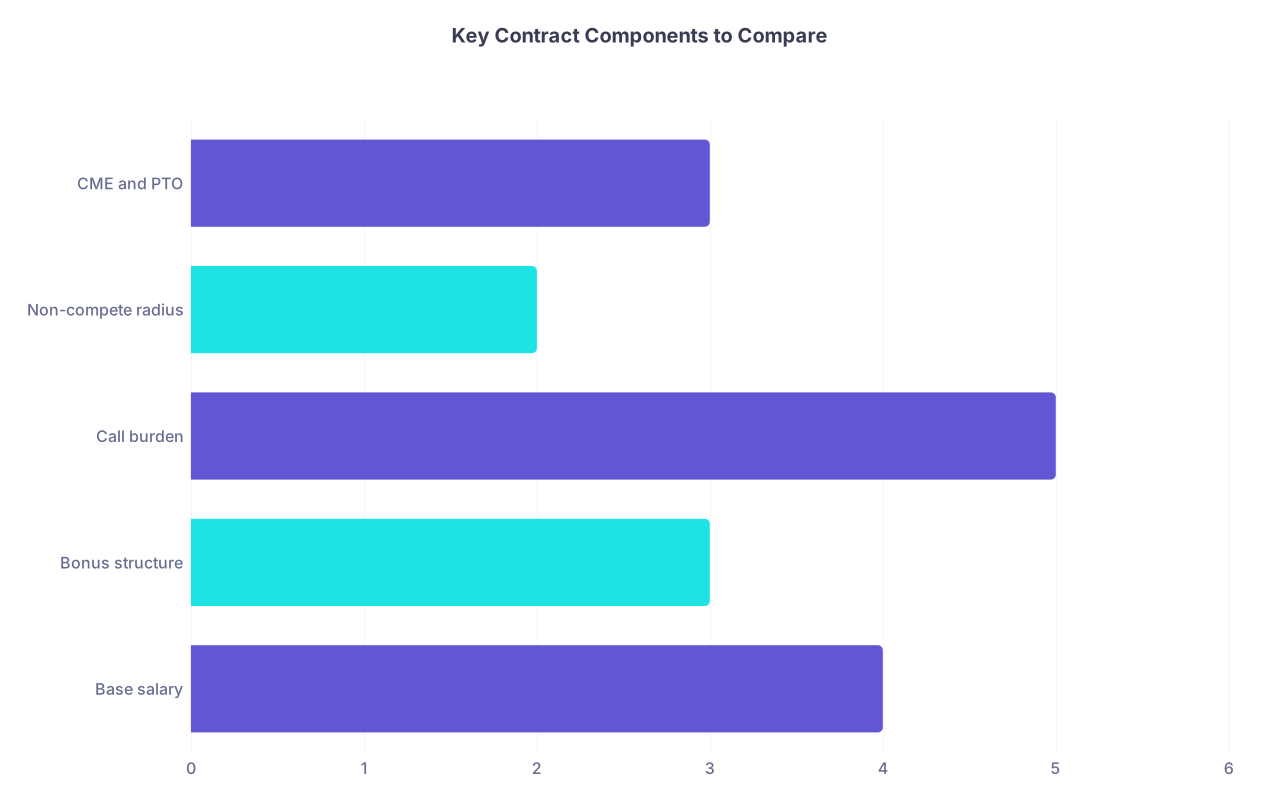
| Category | Value |
|---|---|
| Base salary | 4 |
| Bonus structure | 3 |
| Call burden | 5 |
| Non-compete radius | 2 |
| CME and PTO | 3 |
(Scale here is just an example of relative importance; you decide your own.)
Points you should not roll over on:
- Non‑compete that makes half the city off‑limits.
- Unrealistic productivity targets for a new hire.
- Punishing repayment clauses on sign‑on bonuses if things go bad early.
Keep at least one backup market alive. That may mean continuing conversations with a second city or region in case your first market lowballs or stalls.
Month 10: Second Looks and Locking the Choice
By Month 10 you should be narrowing to 1–2 serious options and getting granular.
Week 1–2: Second‑look visits
If you have more than one viable offer:
- Go back. Even if just for 1–2 days.
- This time:
- Shadow a typical day, if they allow it.
- Talk to junior partners or early‑career hospitalists—people who are actually living your likely reality.
- Visit likely neighborhoods during rush hour.

Week 3–4: Make the call
Commit.
- Sign the contract contingent on final credentialing and licensure.
- Immediately:
- Provide any additional documents for credentials.
- Agree on a start date.
- Clarify onboarding (orientation, EMR training, first call date).
You need this locked down so Months 11–12 are about logistics and integration, not last‑minute panic.
Month 11: Logistics, Exit Plan, and Pre‑Integration
At this point you should be executing, not deciding.
Week 1–2: Physical move planning
- Housing:
- Temporary vs long‑term lease vs buy.
- Aim for easy commute at first, not dream house.
- Moving:
- Book movers, storage if needed, car shipping if cross‑country.
Week 3–4: Close out old commitments
- Finish any locums or per‑diem work cleanly.
- Wrap up research or QI projects or at least hand them off gracefully.
- Update:
- State medical boards.
- DEA, if changing states.
- Malpractice carriers.
Set up basics in the new location:
- Bank relationships if needed.
- Schools, childcare, partner’s job transition.
This is where people drop the ball and arrive fried on Day 1. Do not do that to yourself.
Month 12: Arrival and First 30 Days in the New Market
You are here: new city, new hospital, new colleagues. The gap year is over. The real pivot starts now.
Week 1: Onboarding
- Show up early, not on time.
- Keep a notebook of:
- EMR workflows they do differently here.
- Key names and phone numbers.
- “Unwritten rules” you observe.
Week 2–3: Intentional introductions
Make a short but deliberate list:
- 3–5 people in your department you want as long‑term allies.
- 1–2 people from:
- Hospital leadership.
- Ancillary departments (pharmacy, nursing leadership).
Schedule coffee or brief check‑ins. Your goal is simple: signal that you are here to stay and to contribute, not just to collect a paycheck.
Week 4: Integration review
Sit down and answer:
- What surprised you—good and bad?
- Where are the friction points:
- Schedule.
- Clinical workflows.
- Team dynamics.
- What small, realistic improvement can you propose or own in the next 3–6 months?
You used 12 months to get here. Now you protect that investment by actually embedding yourself in this market.
Common Pitfalls on This 12‑Month Path
Let me be blunt. I have seen people waste their gap year. The same mistakes repeat.
| Mistake | Consequence |
|---|---|
| No state license early | Offer delays or rescind |
| Vague region, no city focus | Scattered, weak ties |
| Late on-site visit | Nasty surprises |
| Ignoring non-compete terms | Trapped professionally |
| No backup market | Forced into bad job |
Avoid these by anchoring each quarter to clear deliverables:
- Q1: Defined city + license in progress + initial contacts.
- Q2: Real humans who know you + at least one planned visit.
- Q3: Actual local work if possible + applications and interviews.
- Q4: Signed contract + move executed + first steps of integration.
FAQ (Exactly 2)
1. What if I cannot afford to be unemployed for the whole 12‑month gap year?
Then do not be. Many people misunderstand “gap year” as “no clinical work.” You can:
- Work full‑time for 6–9 months in your current region, then do a 3‑month focused push (locums plus interviews) in your target market.
- Arrange block‑style locums where you do 7‑on/7‑off near your current home and use off weeks to visit and interview in the new region.
- Mix telemedicine (anchored in your current licensure) with short, intensive trips to your target state.
The key is that your calendar, not your imagination, reflects your intention. If you reach Month 6 and all your clinical work is still in your old region and you have never set foot in the new one, your pivot is not real.
2. Does this timeline change for residents vs attendings vs fellows?
The structure is the same; what changes is how early you start, and how much leverage you have.
- Senior residents / fellows: Start this 12‑month arc in the middle of your final year, not after graduation. Your “gap year” in that case is really just your last training year plus a few months of true gap time.
- Established attendings: You often have more flexibility with locums, telehealth, and part‑time arrangements. You also have more leverage in negotiations—but state licensing and credentialing still move at the same glacial pace.
- New grads with visas: You must front‑load the licensing and immigration constraints into Months 1–3 and be more conservative about markets that are not visa‑friendly.
Open your calendar right now and block 30 minutes this week labeled: “Target Market Definition – Gap Year.” During that block, force yourself to pick 1–3 specific metro areas and start the employer spreadsheet. That is the first real step from fantasy to an actual geographic pivot.