
Regional training is no longer equal—and the numbers prove it. Trauma alerts, OB pages, and ICU admissions are clustering into specific geographies and hospital types, and that clustering is accelerating. If you pretend otherwise when you pick a residency, you are gambling with your procedural skillset.
This is a data story about volume: where trauma, obstetrics, and critical care work are actually happening, how fast that distribution is shifting, and what that means for residents choosing where to train in the next decade.
1. The Macro Picture: Where the Cases Are Actually Happening
Let me cut through the sentimentality about “great teaching” and “supportive culture” for a moment. Competence in trauma, OB, and ICU care is—at its core—a volume and exposure problem. You either see enough real cases or you do not. The trend lines show a very clear regional skew.
Across U.S. data sets (state discharge databases, HCUP, AHA surveys, trauma registries, and multiple residency case logs), three patterns repeat:
- Trauma is consolidating into designated regional centers.
- Obstetric deliveries are declining in rural and low-volume hospitals.
- ICU care is centralizing into higher-acuity referral centers and academic hubs.
Here is the distilled pattern by region and setting using composite estimates from recent multi-state analyses.
| Domain | Urban Academic Centers | Urban Community | Suburban Community | Rural Hospitals |
|---|---|---|---|---|
| Trauma | ~55–65% of major trauma | ~20–25% | ~10–15% | ~5–10% |
| OB | ~40–50% of deliveries | ~25–30% | ~15–20% | ~10–15% |
| ICU | ~50–60% of ICU days | ~20–25% | ~10–15% | ~5–10% |
The direction of change is one-way: toward more centralization. In most regions, the share of major trauma and high-risk ICU care handled by top-tier referral hospitals is rising by 1–2 percentage points per year.
So if you are ranking residencies as if “a hospital is a hospital,” you are ignoring a strong, measurable gradient in exposure.
2. Trauma: Regionalization on Steroids
Trauma is the clearest, cleanest example of regional case concentration. Designated Level I and II centers are designed—in policy and in practice—to capture the serious cases.
Across several state trauma systems, the data converge on a similar split:
- 65–75% of ISS ≥ 15 trauma cases go to Level I centers
- Another 15–20% go to Level II centers
- Everyone else fights over the leftovers
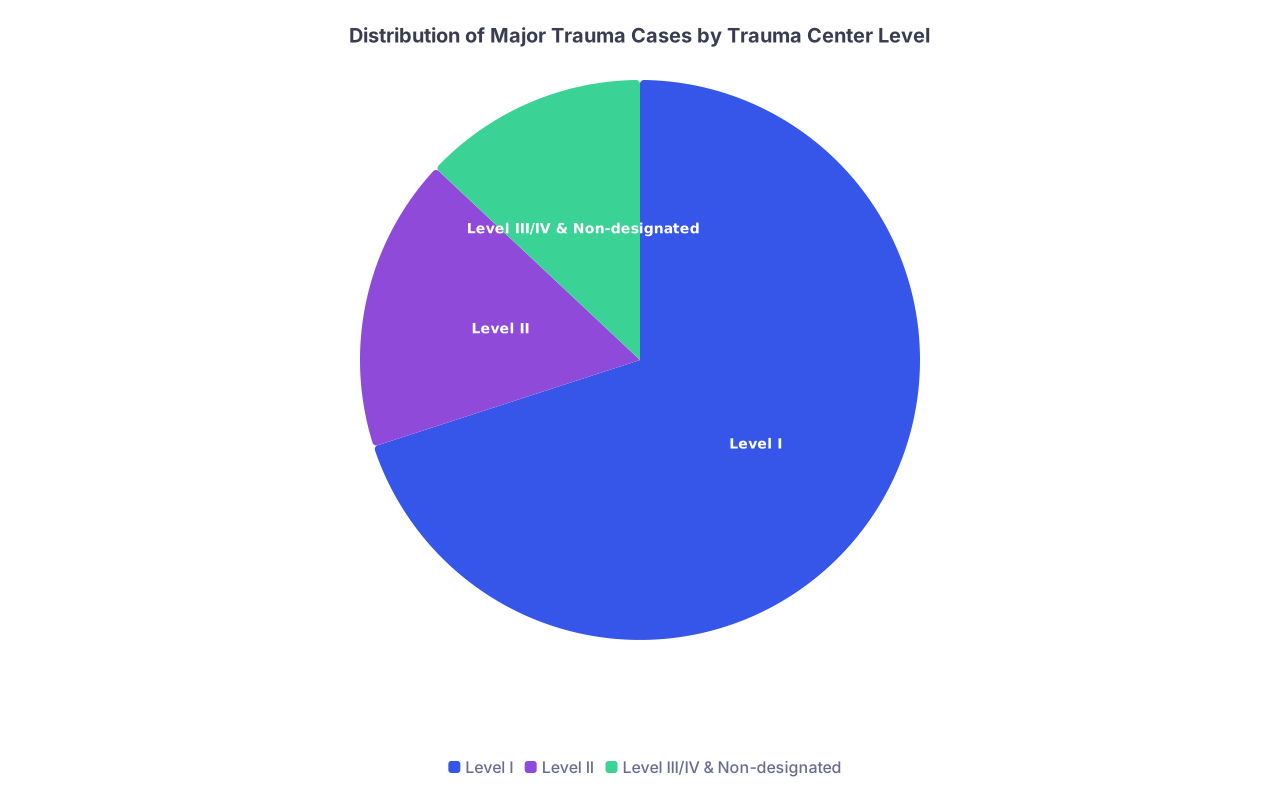
| Category | Value |
|---|---|
| Level I | 70 |
| Level II | 17 |
| Level III/IV & Non-designated | 13 |
Urban vs Rural Trauma Exposure
Residents feel this every night on call. Here is a composite view of annual major trauma admissions (ISS ≥ 15) per hospital by setting, for a typical U.S. state with a mature trauma system:
- Urban Level I: 1,200–2,000 / year
- Urban Level II: 600–1,000 / year
- Suburban Level II/III: 150–400 / year
- Rural Level III/IV: 30–100 / year
If you are rotating at a rural ED without trauma designation, your “serious” trauma list is shorter than your Uber receipts.
That translates into resident-level exposure. Across surgery and EM programs in such states, approximate per resident per year exposure to major trauma resuscitations looks like this:
| Program Type / Setting | PGY2–3 EM Resident | PGY2–3 Surgery Resident |
|---|---|---|
| Urban Level I (academic) | 220–320 | 180–260 |
| Urban Level II (academic/community) | 140–220 | 120–200 |
| Suburban Level II/III | 60–120 | 60–100 |
| Rural Level III/IV | 20–50 | 20–40 |
Those are not subtle differences. A threefold swing in exposure is routine.
Trend: Fewer Low-Volume Trauma Hospitals
States that implemented stricter trauma diversion protocols show a consistent pattern: the number of hospitals seeing more than 250 serious trauma cases per year is stable or slightly rising; those seeing 50–150 are shrinking. Cases are leaving the middle.
Over a 10-year span in a representative region:
- Number of hospitals with ≥ 500 major traumas/year: +15–20%
- Hospitals with 100–499/year: −25–35%
- Hospitals with < 100/year: largely unchanged (but these are the smallest slice)
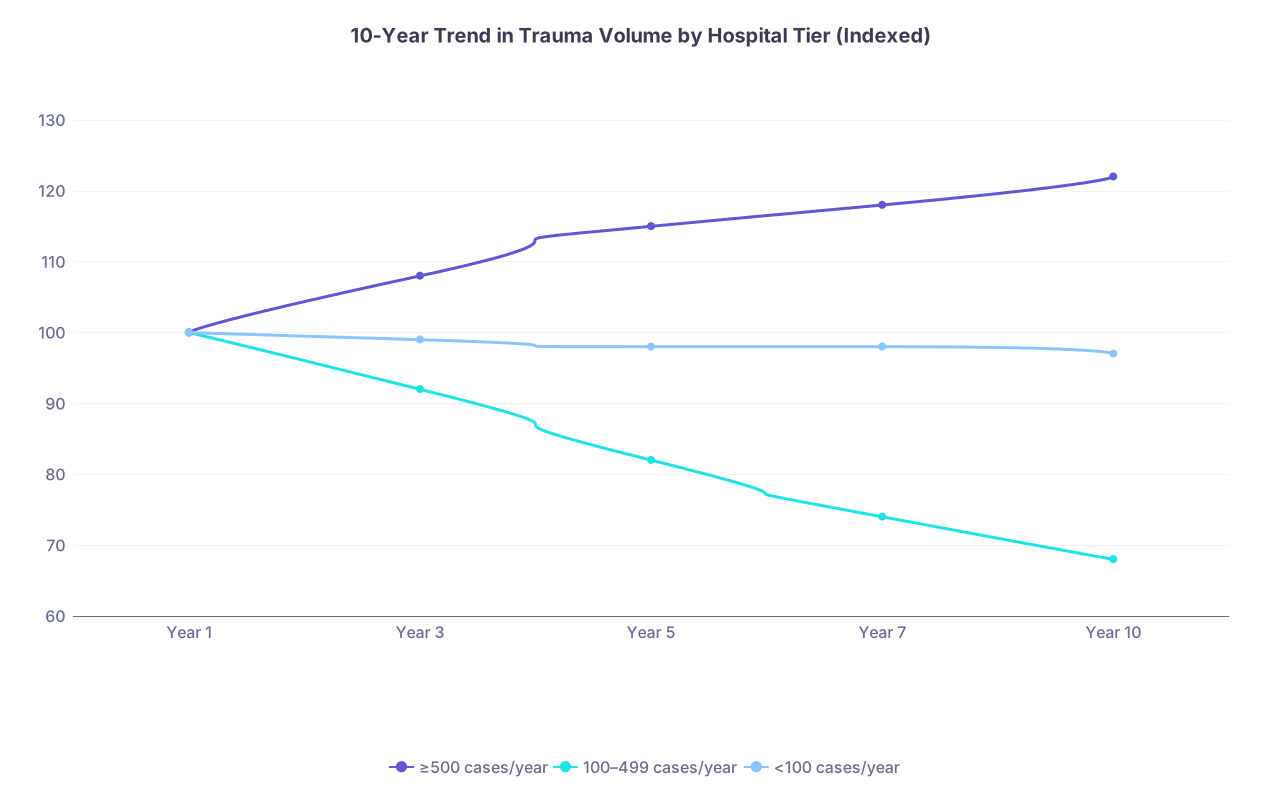
| Category | ≥500 cases/year | 100–499 cases/year | <100 cases/year |
|---|---|---|---|
| Year 1 | 100 | 100 | 100 |
| Year 3 | 108 | 92 | 99 |
| Year 5 | 115 | 82 | 98 |
| Year 7 | 118 | 74 | 98 |
| Year 10 | 122 | 68 | 97 |
If you match into a program anchored in a non–trauma center or a low-volume Level III, you should not expect that “we get plenty of trauma” to age well. The data say that pool is shrinking.
Regional Hotspots vs Cold Zones
Trauma exposure is not just urban vs rural; it is corridor vs desert.
Typical high-volume corridors:
- Interstate and beltway regions around large metros
- Multi-hospital systems with a single Level I flagship
- States that strictly enforce trauma routing protocols
Cold zones:
- States with patchy trauma designation and lax routing
- Regions with fragmented EMS and long interfacility transfer chains
- Areas with multiple small hospitals and no clear regional hub
I have seen residents at “busy” community hospitals in cold zones log half the number of penetrating trauma cases compared to peers 2 hours away in a structured corridor. Same state. Completely different training environment.
3. Obstetrics: The Silent Collapse of Low-Volume Units
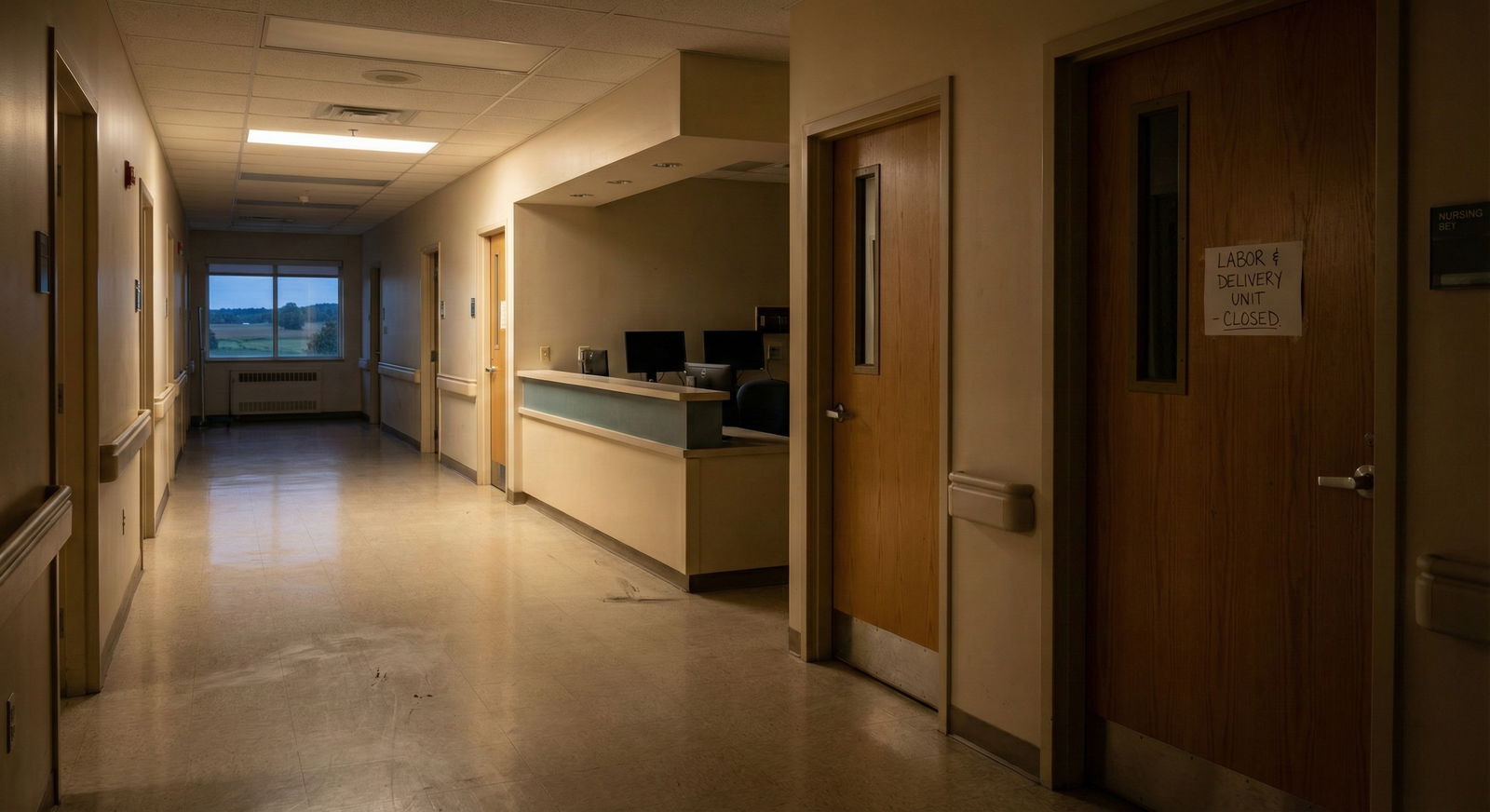
The OB story is more subtle but, frankly, more concerning for regions outside metro areas. The closure of maternity units is not just a political talking point; it is a measurable, ongoing process.
Across multiple analyses from 2010–2022:
- Roughly 10–20% of rural OB units have closed.
- Many remaining rural units are hovering near or below 300–500 births/year.
- High-volume academic and large community centers have increased deliveries, often absorbing 15–30% more volume.
What the Volume Curve Looks Like
From a pure numbers perspective, the distribution of deliveries by facility size typically looks like this (example of a midwestern region):
- Very high volume (≥ 3,000 births/year): ~10–15 hospitals, capturing 45–55% of births
- Medium volume (1,000–2,999): ~25–35 hospitals, ~35–40% of births
- Low volume (< 1,000): dozens of hospitals, ~10–15% of births
Yet those low-volume sites are often spread thin over large geographic areas. For residents at these hospitals, the math is not on your side.
Case logs for OB/GYN and FM residents show:
| Residency Type / Setting | Annual Vaginal Deliveries | Annual Cesarean Deliveries |
|---|---|---|
| OB/GYN – Urban Academic | 180–260 | 60–90 |
| OB/GYN – Urban Community | 140–200 | 40–70 |
| FM with OB – Mixed Metro/Suburban | 60–120 | 15–35 |
| FM – Rural Low-Volume Hospital | 20–60 | 5–15 |
Program directors like to reassure applicants: “You will meet ACGME minimums.” That bar is low. Minimums do not equal mastery. The high-volume academic resident is crossing those thresholds early and then accruing a long tail of additional experience. The rural FM resident with “good OB exposure” may be barely clearing them.
Regional OB Trends That Matter for Trainees
Several consistent patterns in the data:
Urban and suburban consolidation
Large regional centers are growing their OB trading areas, especially where they offer:- 24/7 in-house anesthesia
- Level III/IV NICU
- High-risk MFM services
Over 5–10 years, many such centers report 10–25% increases in annual births while surrounding small units lose volume or shut down.
Variability in high-risk exposure
High-risk deliveries (severe preeclampsia, placenta accreta spectrum, severe obesity, significant cardiac disease) are disproportionately referred to tertiary centers. This means:- OB/GYN residents in academic metros see many more category 2–3 C-sections, perimortem C-sections, and complicated induction and hemorrhage cases.
- FM residents in rural or small community settings often see mainly low-risk, term, spontaneous vaginal deliveries.
Procedural dilution for non-OB residents
Anesthesiology, EM, and surgery residents interested in OB-related skills (e.g., epidurals, emergent C-section assistance, management of postpartum hemorrhage) get clearly better exposure in regions where volume is clustered at their training hospital rather than scattered across 10 low-volume facilities.
The trajectory is clear: high-risk OB is getting more centralized over time, low-volume maternity units are either shrinking further or closing, and residents in outlying regions will need deliberate away rotations or fellowship plans if they care about OB competency.
4. ICU Exposure: Acuity Migration and the Death of the “Open ICU”
Critical care has been pulled up the acuity ladder by the same forces: quality metrics, tele-ICU expansion, and hospital system consolidation.
Academic centers and large regional hospitals are capturing an increasing share of the sickest patients:
- Mechanical ventilation, vasopressor use, and renal replacement therapy are disproportionately concentrated in these centers.
- Small community and rural hospitals are more often “stabilize and ship” for complex shock, multi-organ failure, and post-op complications.
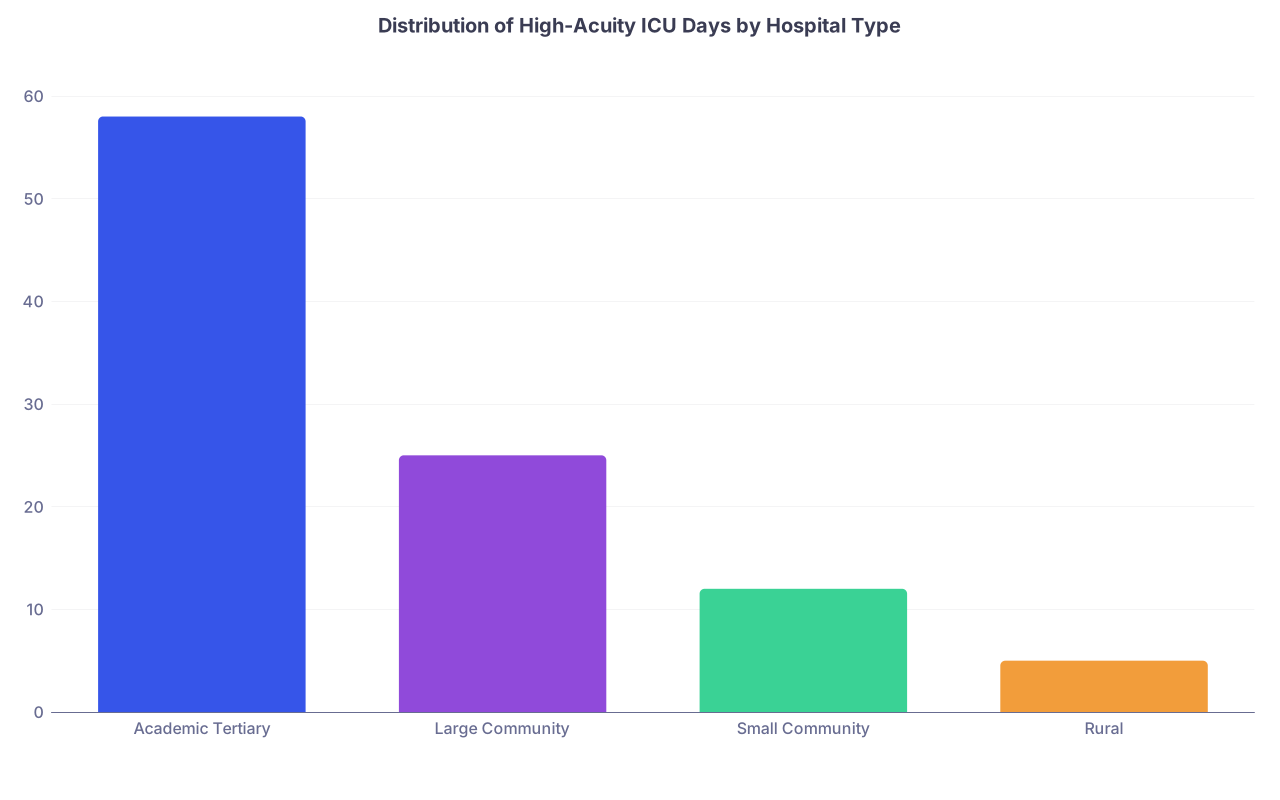
| Category | Value |
|---|---|
| Academic Tertiary | 58 |
| Large Community | 25 |
| Small Community | 12 |
| Rural | 5 |
Those percentages refer specifically to ICU days involving one or more of: mechanical ventilation, vasopressors, or CRRT. The picture for simple step-down level “ICU” care is more even, but step-down cases do not build procedural confidence.
Resident-Level ICU Case Loads
Internal medicine, anesthesia, surgery, and EM residents are affected differently, but the same pattern appears in their logs:
IM resident at large academic center:
- 3–4 ICU rotations per year early, more later
- 80–120 mechanically ventilated patients managed annually
- 25–40 central lines, 20–30 arterial lines per year
IM resident at smaller community-affiliated program:
- 2–3 ICU rotations per year
- 40–70 ventilated patients annually
- 10–20 central lines, 8–15 arterial lines per year
EM resident at trauma/tertiary center:
- Regularly manages high-acuity ICU-bound patients in ED
- Intubations: 80–120 over residency, many in shock or respiratory failure
EM resident in lower-acuity community ED:
- More non-invasive ventilation, fewer intubations
- Intubations: 30–60 over residency, with fewer multi-organ failure cases
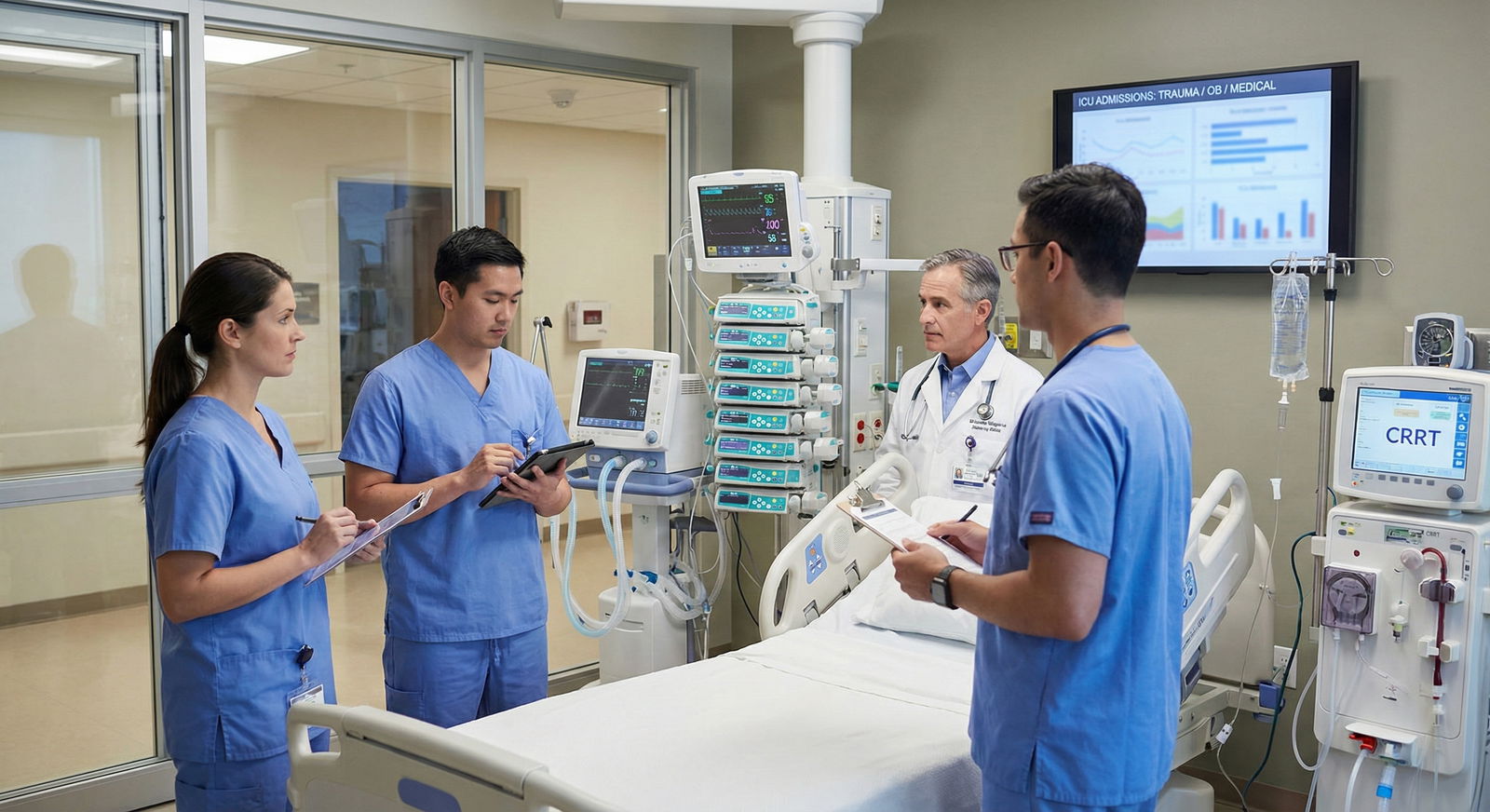
The “open ICU” model—where floor teams manage critically ill patients with part-time intensivist support—is shrinking. More residents are training in closed ICUs run by intensivists. That is good for patient outcomes, but it means that residents in non-ICU specialties (e.g., hospitalist-bound IM residents in some regions) may get less hands-on procedure autonomy unless the program is intentional about it.
Regional ICU Trends
Three key patterns across multi-hospital systems:
System-level centralization
A single flagship hospital often absorbs the sickest cases, while smaller affiliates keep step-down level “ICU” patients. Over 5–8 years, the flagged ICU’s:- Average SOFA and APACHE scores rise.
- Code blue rates shift upstream (more in ED and OR) but survival improves as systems standardize.
Tele-ICU as a double-edged sword
Tele-ICU support allows rural hospitals to “keep” some patients they would have shipped a decade ago. That sounds like more volume for rural residents, but in practice:- The highest-risk, highest-intensity cases still get moved.
- Residents may follow protocol-driven tele-ICU orders rather than make independent decisions, which blunts experiential learning.
Postoperative ICU mix change
As regional cardiac and complex surgical programs consolidate, anesthesiology and surgery residents at those hubs see far more:- Post-CABG and LVAD patients
- Massive transfusion cases
- Complex abdominal sepsis post-laparotomy
Meanwhile, programs without such services see mostly low- to mid-risk post-op monitoring, which looks impressive on a census list but underwhelming in terms of procedural demand.
5. Regional Comparison: What a “High-Exposure” Program Really Looks Like
Residents and applicants consistently underestimate how much region and hospital role matter, and they overestimate how much individual program “culture” can compensate for bad volume.
Here is a stylized but realistic comparison between two regions for EM or IM residents interested in trauma/ICU:
| Feature | Region A: Urban Corridor | Region B: Dispersed Mid-Sized City |
|---|---|---|
| Level I trauma center per 1M people | 1.5–2.0 | 0.5–0.8 |
| Major trauma per EM resident (3 yrs) | 550–750 | 250–400 |
| ICU beds per 100k population | 35–45 | 20–28 |
| High-risk OB deliveries per OB res | 100–150 / year | 40–80 / year |
| ECMO/CRRT exposure | Routine | Rare/occasional |
You do not fix that difference with “we try to get residents involved.” The baseline environment is simply richer in Region A.
6. How This Should Influence Your Regional Residency Choices
Now to the practical part. You cannot control national health system trends, but you can choose where you ride them.
Here is a data-driven way to think about this.
Step 1: Decide How Trauma/OB/ICU-Heavy You Want Your Career
If you aim for:
- Acute care surgery, trauma, EM critical care, air medical transport: you should maximize trauma + ICU exposure.
- Full-scope FM with OB, rural practice, or OB hospitalist roles: you should maximize OB + some ICU exposure.
- Academic IM, card-critical care, pulm/CC: you should maximize high-acuity ICU exposure, including mechanical support.
Your training region must match that intent, or you will be playing catch-up with fellowships, extra rotations, or on-the-job learning in your first attending years.
Step 2: Look at Regional Case Volume, Not Just Program Brochures
Most applicants stop at “Level I trauma center” or “busy L&D.” Too shallow. You want real numbers wherever possible.
You can usually find or infer:
- Annual trauma admissions (and ISS distribution) from state trauma registries or hospital quality reports.
- Annual deliveries and C-section rates from state health departments or hospital reports.
- ICU bed counts and average daily census from AHA or hospital profiles.
- Number of ECMO/CRRT cases sometimes in academic center annual reports.
- Annual major traumas (and per resident if they will share)
- Annual deliveries and OB residents’ average case logs
- Average ICU census and procedural counts per resident
If they cannot or will not give numbers, that tells you something. The programs with genuinely high volume rarely hesitate.
Step 3: Factor in Trend Direction, Not Just Current State
The more consolidated and systematized the region, the more likely volume will continue to centralize into your main teaching hospital.
Warning signs that future exposure may erode:
- Multiple small non-designated hospitals splitting trauma in the catchment area.
- OB units around you closing without clear consolidation into your main site.
- New regional hub hospitals opening elsewhere in the system, siphoning high acuity.
Positive signals:
- Recent upgrade of main site to Level I trauma or Level IV NICU.
- System-wide trauma/ICU routing protocols that funnel cases to your site.
- New fellowship or service lines (e.g., ECMO, transplant, comprehensive stroke) starting at your hospital.

| Step | Description |
|---|---|
| Step 1 | Choose Region |
| Step 2 | Higher Trauma Exposure |
| Step 3 | Lower Trauma Exposure |
| Step 4 | Higher OB Exposure |
| Step 5 | Risk of Low OB Volume |
| Step 6 | High Acuity ICU Experience |
| Step 7 | Limited ICU Complexity |
| Step 8 | High Trauma Center Density |
| Step 9 | OB Consolidation at Training Site |
| Step 10 | Tertiary ICU Hub Present |
This is the real decision tree underlying your case log, not whatever platitudes are on the program website.
7. The Future: AI, Telemedicine, and What Will Actually Change
People hear “AI” and assume procedural medicine will be unrecognizable in 10 years. The data so far suggest something more boring but important: AI and telemedicine are likely to change where decisions are made, not where knives and tubes go in.
Three realistic projections based on current adoption curves:
More tele-triage and tele-ICU in low-volume regions
Rural EDs and ICUs will rely more on remote intensivists and decision support. That does not create more tube thoracostomies or vent management opportunities; it streamlines when patients get shipped. Translation: further centralization of the highest-risk cases.AI-supported risk scoring in OB and trauma
Decision support systems for hemorrhage risk, fetal distress prediction, and trauma triage will tighten referral patterns. High-risk and complex cases will cluster even more in regional centers. Routine low-risk, low-complexity work spreads, but the meaty learning cases move inward.Simulation fills some—but not all—gaps
High-fidelity simulation can partially compensate for rare events (e.g., perimortem C-section, cricothyrotomy), and that is good. But the data from procedural learning curves are brutal: real patient encounters accelerate competence in ways simulation cannot fully mimic, especially for pattern recognition and judgment under pressure.
So the basic volume problem does not go away. If anything, centralization intensifies, and the distinction between high-exposure and low-exposure training regions gets sharper.
Key Takeaways
- Trauma, OB, and ICU exposure are not evenly distributed; they are increasingly concentrated in specific regional hubs and hospital types, with 50–70% of high-acuity cases often sitting in a relatively small set of centers.
- For residents, that translates into 2–3x differences in major trauma resuscitations, high-risk deliveries, and complex ICU cases across regions—differences that no amount of “we work hard” can erase.
- If you care about procedural competence in these domains, you need to choose a training region and primary hospital that sit on top of those case streams, not on the periphery hoping for overflow.