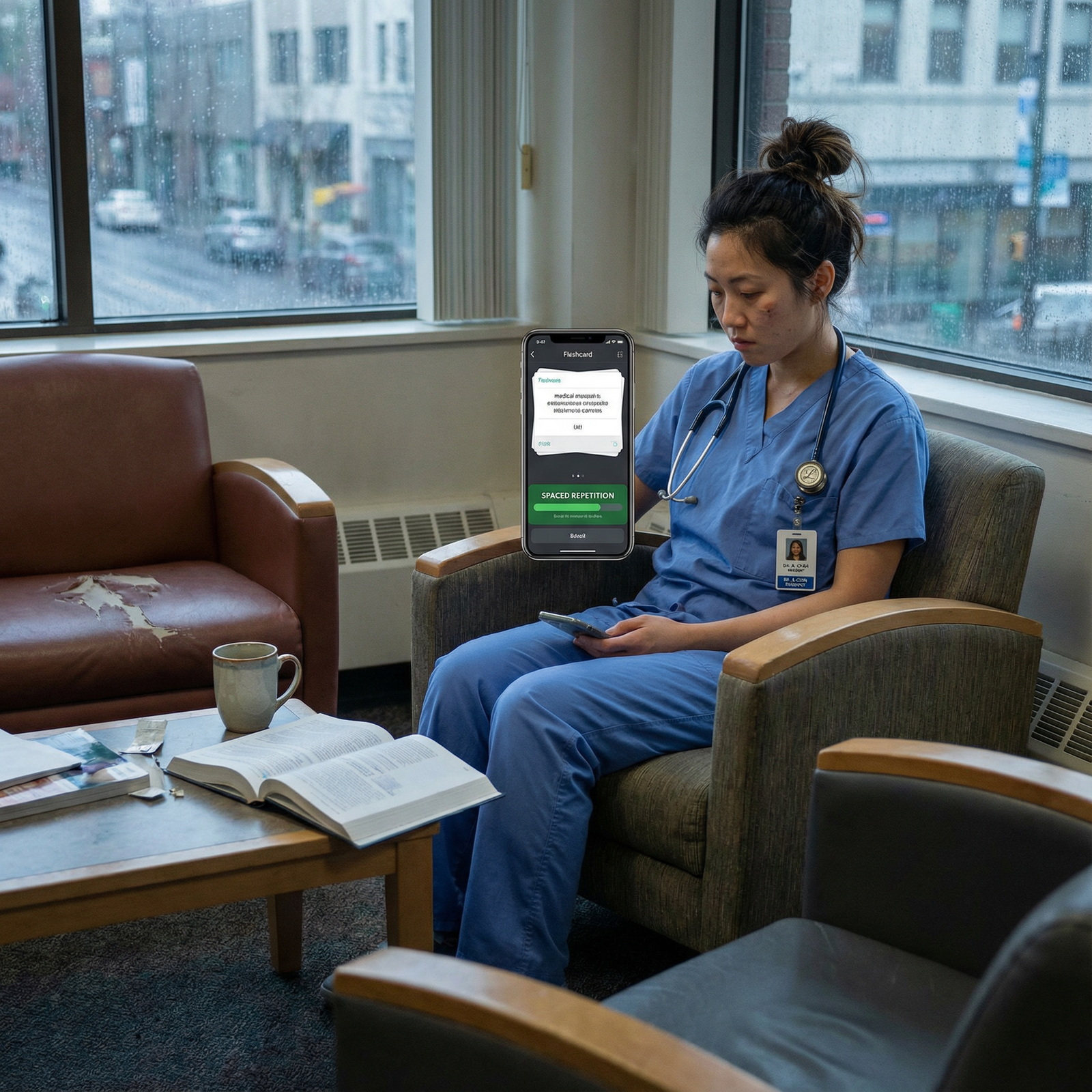
The myth that everyone else is calmly juggling clinics and wards while you barely stay afloat is a lie.
If you’re panicking about how you’re supposed to handle a full clinic schedule, inpatient responsibilities, notes, calls, labs, patient messages, and somehow not completely fail at all of it—you’re not crazy. You’re just honest.
I’m going to say the part nobody likes to admit out loud: a lot of residents do feel like they’re one chaotic afternoon away from dropping the ball on something important. The difference is, some build systems that barely keep the chaos contained. Others pretend they’re fine until things crash.
You’re trying to be in the first group. Good. Let’s talk about how.
The real fear behind “juggling clinics and wards”
You’re not just asking, “How do I stay organized?”
You’re asking things like:
- What if I forget to follow up that abnormal lab from clinic because I’m slammed on wards?
- What if my clinic preceptor thinks I’m lazy because I’m always running late with notes after a brutal call night?
- What if someone gets hurt because I missed a med refill or imaging follow-up?
- What if I get that email from the PD: “We need to talk about your performance”?
That’s the actual fear. Not time management. Catastrophic failure.
I’ve watched residents melt down over this exact problem:
- The resident who had 20+ MyChart messages piling up because she was cross-covering nights and doing continuity clinic and literally forgot they existed.
- The one who didn’t realize an urgent MRI was never scheduled because the order went in but nobody checked completion, and now he’s getting tense emails from risk management.
- The intern whose attending said, “You’re great on the wards, but your clinic documentation is falling dangerously behind.”
This is fixable. But not by “just working harder” or “being more efficient.” You need systems that assume you’ll be tired, distracted, and operating with half a brain.
Because you will be.
First: accept that something’s always going to be on fire
You will never have a day where:
- All clinic notes are done on time
- All inpatient notes are pristine
- All calls/messages are answered by 5 pm
- Your inbox is at zero
- You left early and had a peaceful evening
If you’re waiting for that reality, you’ll feel like a failure every day.
The real game is: keep the right things from burning down. Not everything. The right things.
That means you need to know what’s actually critical and what’s just “annoying but survivable.”
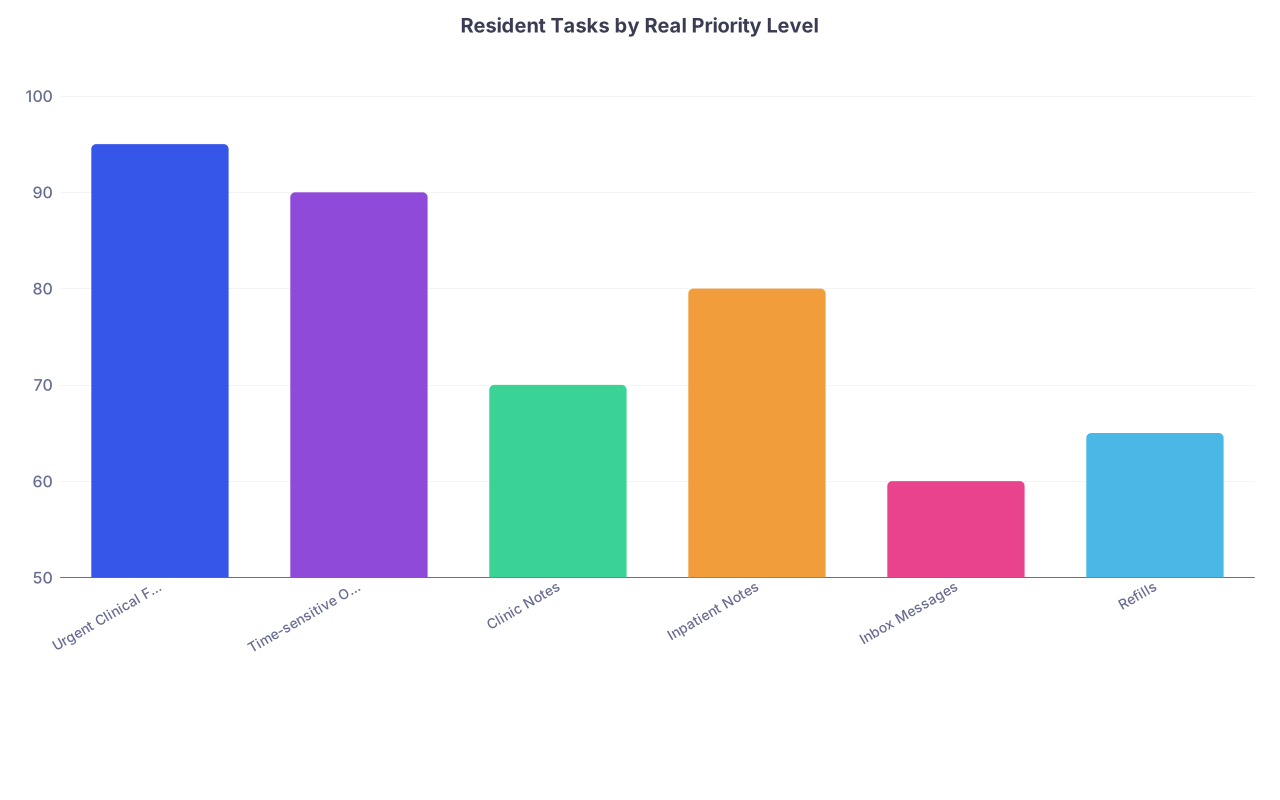
| Category | Value |
|---|---|
| Urgent Clinical Follow-up | 95 |
| Time-sensitive Orders | 90 |
| Clinic Notes | 70 |
| Inpatient Notes | 80 |
| Inbox Messages | 60 |
| Refills | 65 |
Think of it this way:
- Patient safety > attending annoyance
- Time-sensitive clinical stuff > “ideal” documentation
- Calls and imaging that can harm someone if delayed > routine lab follow-ups that can wait a day or two
You’re not slacking. You’re triaging your own workload.
Build one brain, not two: linking clinic and wards
The worst feeling is like you’re living two separate lives:
- Clinic brain: outpatient meds, refills, labs, chronic problems, messages
- Wards brain: daily rounding, discharges, consults, notes, “Who’s crashing?”
And you’re expected to mentally flip a switch every time you go from one to the other. Which you can’t reliably do when you slept four hours and ate a granola bar over 12 hours.
So you need one system that tracks both worlds in the same place.
Here’s the hard truth: anything that depends on “I’ll remember to check that later” is going to fail. You won’t. You’re not supposed to. You’re human.
Pick one capture system. Just one. Then force yourself to use it for everything:
- A tiny pocket notebook
- A single dedicated Notes app folder
- A paper “cross-cover” sheet with a margin section for “clinic stuff”
- A physical clipboard with a daily sheet you print and use religiously
I’ve seen residents overcomplicate this with six apps and three different to-do systems. Those people always drop something.
Your system needs three buckets:
- Today – absolutely must get done
- This week – important but not today
- On someone else’s radar – ordered, messaged, or delegated but still needs checking
Every time something clinic- or ward-related comes up, you put it in one of those. Immediately. No “I’ll jot it down later.” That’s how follow-ups die.
A realistic daily structure that doesn’t pretend you’re a robot
You can’t create more hours. But you can give each part of your day a “job.”
Let me walk through a semi-typical combined day—mix of ward responsibilities and continuity clinic—and how a sane version might look.

| Step | Description |
|---|---|
| Step 1 | Pre-round |
| Step 2 | Morning Rounds |
| Step 3 | Midday Orders and Notes |
| Step 4 | Clinic Session |
| Step 5 | Post-clinic Cleanup |
| Step 6 | Evening Ward Tasks |
| Step 7 | Final Follow-up Check |
Morning: protect mental bandwidth for acute stuff
Your brain is freshest-ish in the morning. That’s when you handle:
- Sick inpatients
- New admits
- Critical labs/imaging
Clinic brain can wait. If you try to “just answer a few messages” at 7 am, you’ll blow 20 minutes and be behind on prerounding. So you deliberately ignore the clinic inbox until a designated block later. Yes, ignore.
You’re not being negligent. You’re preserving yourself from chaos.
Midday: tiny protected admin window
Carve out one 15–20 minute window somewhere between late morning and early afternoon.
In that window only:
- Scan clinic inbox for truly urgent stuff (new chest pain, red flag symptoms, time-sensitive abnormal results)
- Respond or route those quickly
- Add non-urgent things to your “This week” list
If your schedule doesn’t allow even 15 minutes? You ask for it. Directly.
“Dr. Smith, I’m feeling stretched between wards and my clinic responsibilities. Could I have 15 minutes around noon to triage my outpatient tasks so important follow-ups don’t get delayed?”
Most attendings would rather you ask this than quietly miss a cancer workup.
Clinic days when you’re on wards: how to not drown
The classic horror scenario: you’re on a brutal inpatient block and also have your continuity clinic that afternoon. You’re averaging 8–12 patients, still figuring out the EMR templates, and your wards team is paging you.
Here’s the key: your clinic day doesn’t start when the first patient checks in. It starts the night before.
The evening before clinic:
- Quickly review your schedule in the EMR
- Identify high-complexity visits (multiple comorbidities, chronic pain, poorly controlled diabetes, etc.)
- Pre-chart the worst offenders: problem list, key labs, meds glance
You’re not writing full notes. You’re just lowering the cognitive barrier for tomorrow’s self.
The day of clinic:
Before clinic starts
Look at your list and mark who is absolutely non-negotiable to finish notes for today (new patients, complicated stuff, legal-risk visits) and who can realistically be finished later that evening or the next day.Between patients
Aim for “good enough” notes in real time. Not epic novels. If you’re trying to write UpToDate-level documentation in between patients, you’ll fail and run late.After clinic
Give yourself a hard cutoff time for finishing “today’s” notes before wards brain takes over again.
Your clinic attending doesn’t expect you to be perfect on day one. They expect you to be reliable over time.
Inpatient work when clinic refuses to stay in its lane
On the flip side: you’re trying to admit someone in heart failure and your outpatient brain is screaming about:
- 11 MyChart messages
- 3 refills overdue
- A lab you ordered last week that you never checked
You need a rule: clinic stuff gets 1–2 defined blocks a day, not constant nibbling at your attention.
For example:
- Block 1: quick scan mid-day (we talked about this)
- Block 2: 20–30 minutes at end of day for refills, basic messages, non-urgent labs
Everything else waits.
You train yourself: every time the thought “I should check that lab” pops into your head, you write it down in your system and promise yourself you’ll address it in your next block. Then you let it go.
You can’t prevent the worry. But you can make it not control you.
The follow-up trap that keeps you up at night
Let’s be honest. The real nightmare isn’t “notes are late.” It’s:
“I ordered something and never followed up. And something bad happened.”
So you need a follow-up safety net that doesn’t rely on good intentions.
| Method | What It Tracks |
|---|---|
| EMR reminder flags | Imaging, labs needing result review |
| Personal log (paper/app) | High-risk tests, referrals |
| “Problem list” tagging | Patients needing time-bound follow-up |
| Shared clinic pool messages | Things routed to team but still monitored |
| Calendar reminders | Truly critical one-off follow-ups |
Pick 1–2, not all of them. Again, too many systems = failure.
Create a rule for yourself, something like:
- Any high-risk result (possible cancer, serious infection, etc.) gets either a reminder in the EMR or a calendar entry with “Check X result for Y by [date].”
And once a week—literally pick a day—you run through your follow-up list. Even if it’s at home on your laptop with a sad mug of coffee. You’ll sleep better knowing that list exists and isn’t just spinning in your brain at 2 am.
How to not look “disorganized” to attendings (even when you feel it)
You’re scared someone’s going to call you out: “You’re not keeping up with your responsibilities.”
Let me be blunt: attendings don’t care if your system is perfect. They care whether:
- Dangerous stuff is dropped
- You respond to feedback
- You show you’re trying to be systematic
You can actually score points by being transparent before it’s a problem.
Something like:
“Dr. Lee, I’ve realized juggling inpatient and clinic tasks can get messy. I’ve started using a single running list for urgent clinic follow-ups and I’m setting aside 20 minutes a day for them. If you see gaps, I’d appreciate you pointing them out early so I can tighten my system.”
That doesn’t sound incompetent. That sounds professional.

If someone criticizes you—“Your clinic notes are getting behind”—don’t crumble. Don’t over-explain. Say:
“You’re right. I’ve been overloaded on wards and my old system isn’t cutting it. I’m moving to doing X and Y to prevent this going forward. If you have specific priorities for what absolutely must be same-day, I’d like to align with that.”
You’re showing insight and a plan. That’s what most programs care about.
When you’re truly overwhelmed (not just stressed)
Sometimes it’s not “I need a better checklist.” It’s “This is too much for one human.”
Signs you’re in that zone:
- You’re dreaming about labs you forgot to check
- You’re waking up at 4 am with “I missed something” panic
- You’re behind on clinic notes by weeks, not days
- You’re constantly apologizing in your inbox messages
This is where people either burn out quietly… or they ask for help too late.
You go to someone you trust—chief, advisor, PD, or even a senior resident—and you say:
“I’m worried I’m not keeping up with both clinic and ward responsibilities. I’m doing [briefly describe your system], but I’m still falling behind on [notes/messages/follow-ups]. I’m afraid something important will slip through the cracks. Can we look at my workload and see if there’s a better way to structure this?”
That’s not weakness. That’s being the person who actually cares about patient care enough to ask for structural help.
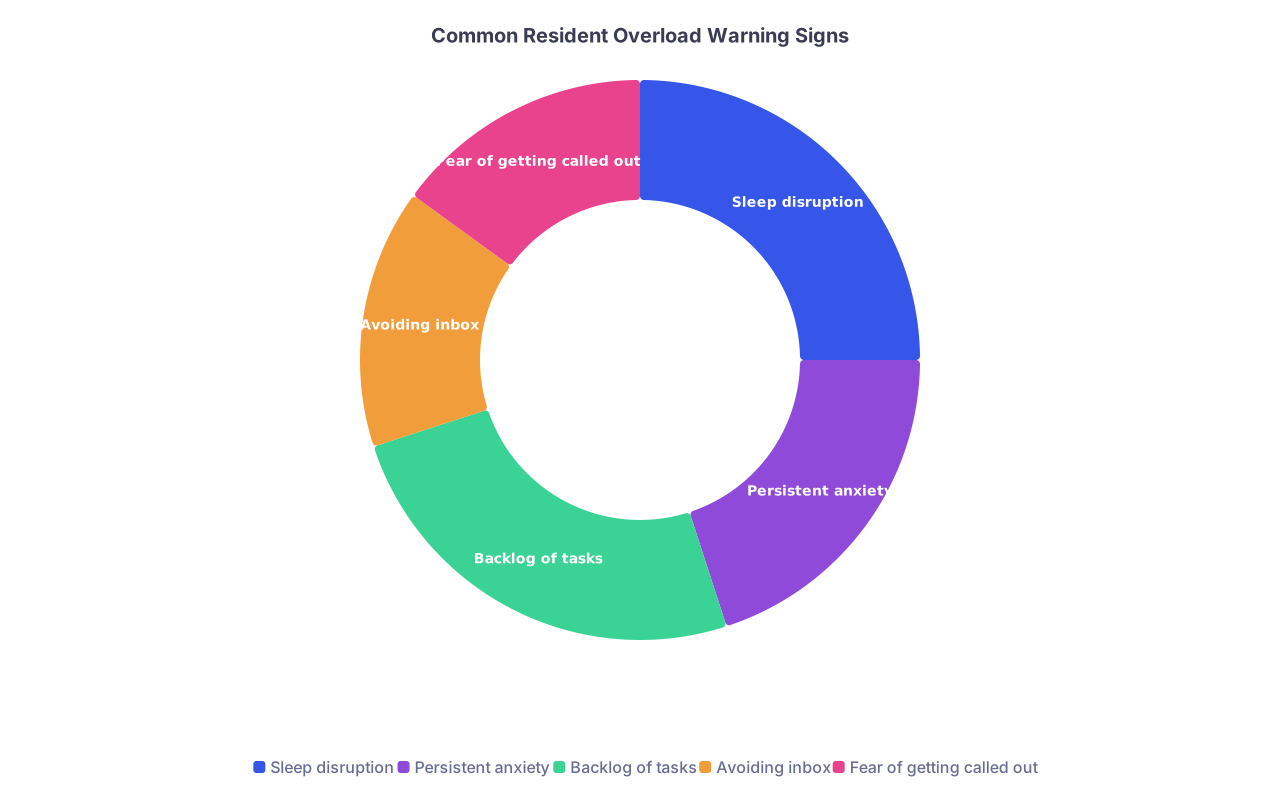
| Category | Value |
|---|---|
| Sleep disruption | 25 |
| Persistent anxiety | 20 |
| Backlog of tasks | 25 |
| Avoiding inbox | 15 |
| Fear of getting called out | 15 |
Sometimes the fix is small—adjusted clinic schedule while you’re on ICU, fewer same-day add-ons, or help batching your inbox. But they won’t know you’re drowning unless you say it.
You’re not failing. You’re doing two jobs at once.
Outpatient and inpatient are two different worlds. Different pace, different expectations, different risks. Most reasonable people would say each one could be a full-time job.
You’re doing both. In one week. On subhuman sleep.
Of course it feels impossible some days. The goal is not “make it feel easy.” The goal is “make it survivable and safe.”
So you:
- Stop pretending your memory will save you
- Use one system for everything
- Give each part of your day a specific role
- Protect small but non-negotiable blocks for clinic responsibilities
- Build a follow-up safety net that doesn’t rely on you being at 100%
And you remember this: programs know residency is messy. They’re not expecting a flawless robot. They’re expecting someone who cares enough to build guardrails, fix what’s broken, and speak up before they completely fall apart.
Years from now, you won’t remember the exact number of MyChart messages or how many half-finished notes you had. You’ll remember whether you treated yourself like a machine—or like a human who deserved systems, support, and a fighting chance.