
14% of residency applicants attend a second look—and most of them gain exactly zero measurable advantage from it.
Let’s talk about the dirty little secret of “second look” visits, especially if you’re coming in with low board scores or a weaker academic profile. Programs will never say this out loud in an email, but you’ll hear it in hallways and behind closed doors:
“We don’t move people up just because they came back for a second look… unless they were already on our radar.”
You’re probably here because you’re wondering:
“I have a 220 Step 2 for a competitive-ish program. If I go for a second look, can that fix it?”
Short answer: No. Not in the way people think.
What a Second Look Actually Does (And Doesn’t Do)
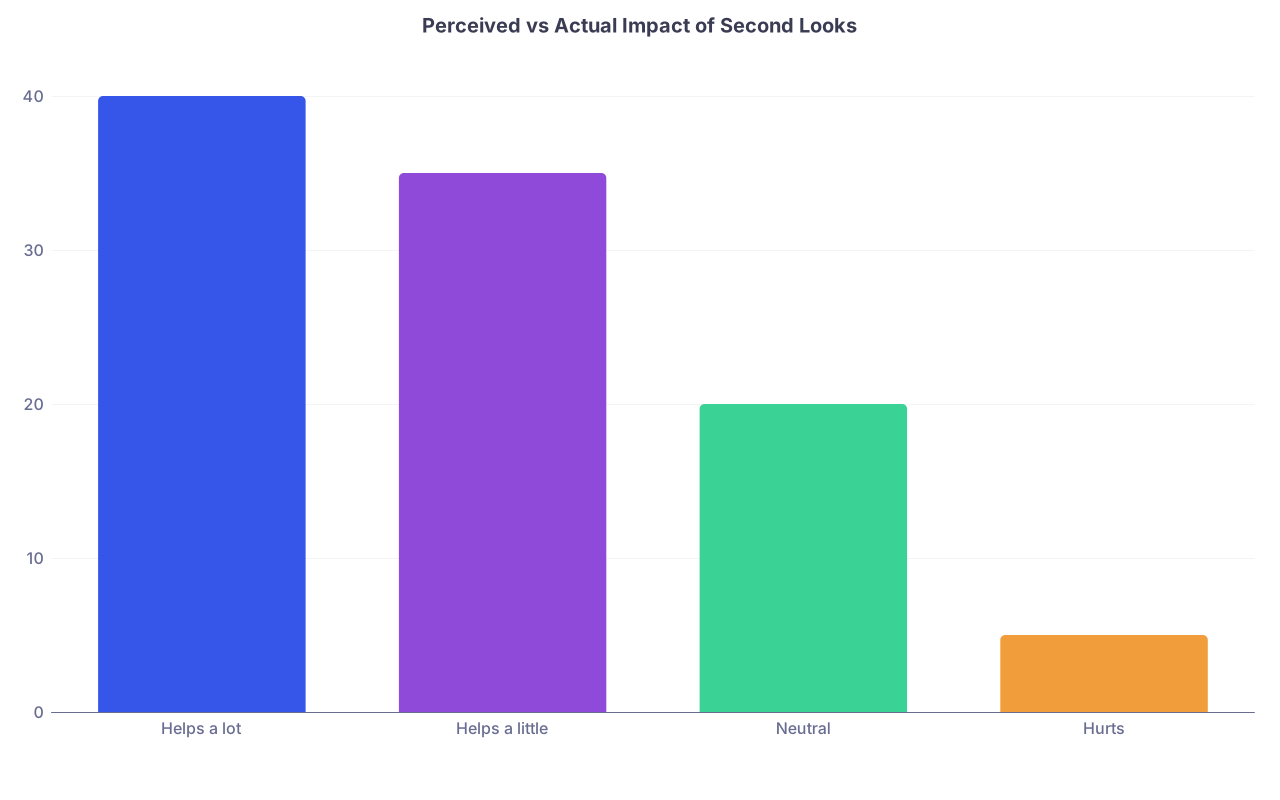
| Category | Value |
|---|---|
| Helps a lot | 40 |
| Helps a little | 35 |
| Neutral | 20 |
| Hurts | 5 |
Residents think second looks do a lot more than they actually do. Here’s the basic reality, based on surveys, NRMP data, and what faculty quietly admit during rank meetings:
A second look typically does:
- Confirm your interest in the program.
- Give you a clearer sense of culture, workload, and fit.
- Offer more informal facetime with residents and sometimes faculty.
- Occasionally tip a close call between two similar applicants.
A second look typically does not:
- Erase low scores or a weak transcript.
- Move you from “unlikely to rank” to “top of the list.”
- Repair a bad interview.
- Turn a “No” into a “Yes” at programs that are numbers-driven.
I’ve sat through rank meetings where someone says, “He came back for a second look,” and you know what happens? Maybe a nod. Maybe a “Oh yeah, he seemed nice.” Then everyone goes back to the spreadsheet: scores, MSPE language, class rank, letters.
Interest is a tiebreaker. Not a rescue mission.
Myth: “With Low Scores, I Need a Second Look to Prove Interest”

This is the classic story you hear from stressed applicants with a 215 Step 2 or a shelf failure:
“But if I just show them how much I want it, they’ll rank me higher.”
Here’s the problem: wanting it badly doesn’t distinguish you. Everyone wants it. Programs are used to being told “You’re my #1” twenty times a week in January.
From an evidence standpoint:
- The NRMP Program Director Survey consistently shows interview performance, letters, and academic metrics as top ranking factors.
- “Demonstrated interest” isn’t even a main category. At best, it’s buried under “other” or shows up indirectly via “perceived commitment to the program.”
What actually happens to low-score applicants?
If a program is score-sensitive (and many are, even when they pretend not to be), there are three buckets:
- Auto-screened out before interview – second look is irrelevant, you’re never in the room.
- Interviewed, but flagged as “academic risk” – here, a second look might mildly help if you already impressed them.
- Interviewed, strong fit, low-ish scores but not catastrophic – this is where a second look can occasionally matter at the margins.
But if you bombed the interview, or your file has multiple red flags (multiple fails, professionalism issues, etc.), a second look is lipstick on a pig. Programs aren’t going to override serious concerns because you came back for a half-day tour.
Where Second Looks Can Move the Needle (Slightly)
Let me be fair. Second looks aren’t useless. They’re just wildly over-sold as a magic fix.
Second looks can matter in narrow, specific situations:
You’re already in their top/mid group, and they’re unsure of your interest.
They’ve liked you, but you’re also interviewing at more “prestigious” places. They’re suspicious you’ll rank them low. Coming back, asking focused questions, and interacting well with residents can reassure them you’re serious.You’re from out of region with low-ish scores, but everything else is strong.
A Northeast applicant trying to match in the South or Midwest, for example. Programs often worry: “Will they actually come here?” A second look plus coherent reasons why you want that region can help.You didn’t fully click on interview day, but you weren’t bad.
Not a disaster, just a little flat or awkward. A second look can give them a more human, three-dimensional sense of you—especially if they only met you in 2 short Zoom interviews.
Here’s how that really appears in rank discussions:
“Scores are a little low for us, but he came back, got along well with the residents, and clearly wants to be here.”
“OK, move him up a few spots. Not to the top, but let’s keep him in the main group.”
That’s the ceiling for most “helpful” second looks. A few spots. Not a leap from “long shot” to “top 5.”
When Second Looks Are Mostly Theater
There are also programs where the second look is basically a scripted show. You’ll know them:
- They schedule a “second look day” with a big crowd of applicants.
- Residents are there. A couple faculty. Cookie-cutter Q&A.
- No one is taking notes on you. No one is updating the rank list based on that event.
If your scores are low and you’re chasing one of these big, polished second look days expecting a massive rank boost, you’re spending money and emotional energy on a mirage.
The “Low Scores” Part: How Much Can Anything Really Move?
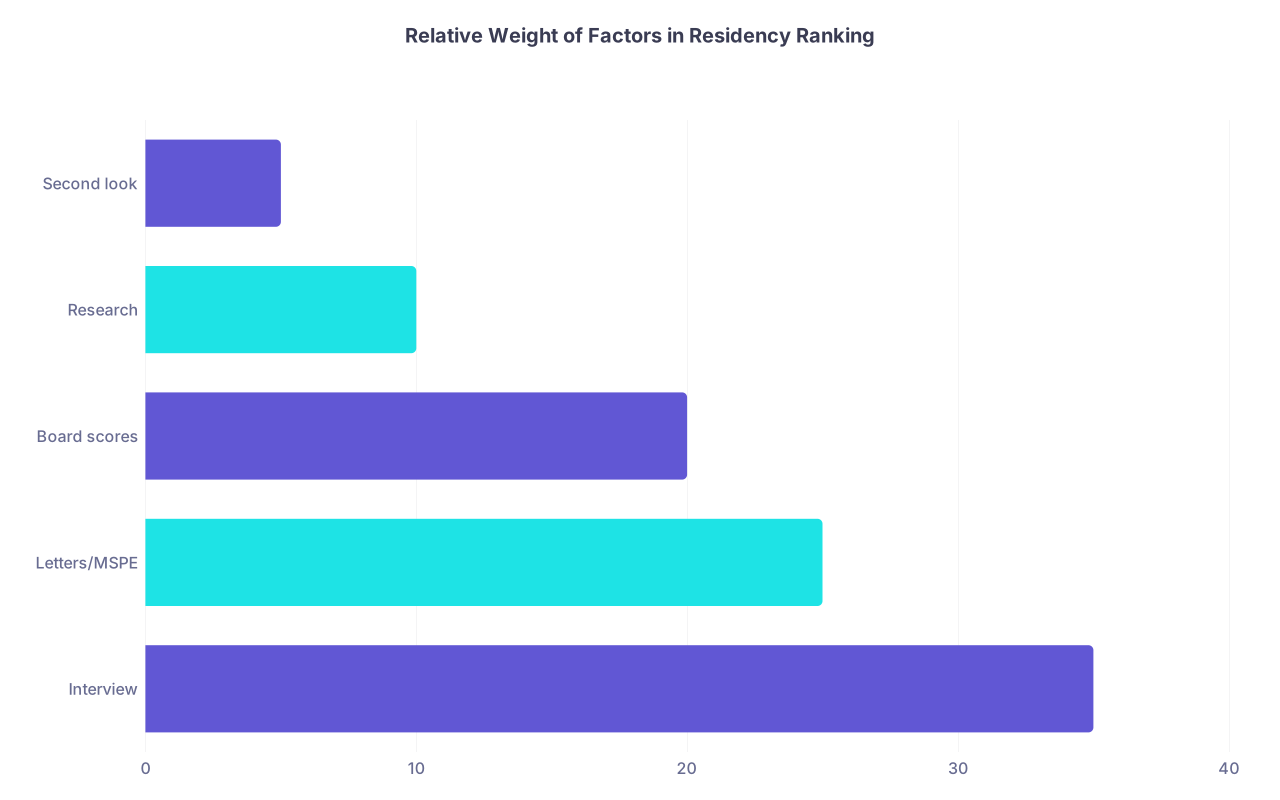
| Category | Value |
|---|---|
| Interview | 35 |
| Letters/MSPE | 25 |
| Board scores | 20 |
| Research | 10 |
| Second look | 5 |
Let’s be blunt.
Programs don’t care about “low” vs “high” scores in some philosophical way. They care about risk and optics:
- Risk that you will fail boards, struggle clinically, or require remediation.
- Optics of their average Step scores for future recruitment and bragging rights.
A second look addresses neither of those. It doesn’t improve your past performance. It doesn’t change their institutional averages.
Once you’re in the interview pool, scores are less dominant, but they’re not gone. What matters more than a second look for low-score applicants:
- A clear upward trend (failed Step 1 followed by solid Step 2).
- Concrete remediation and explanation for failures.
- Strong letters saying “This person can do the work and has improved.”
- A mature, non-defensive explanation in your interview.
If you’ve already nailed those and had a genuinely good interview, then sure, a second look may nudge the committee in your favor. But it is downstream of all of that.
Second looks don’t fix numbers. They only potentially polish perception.
When a Second Look Is a Bad Idea

Let’s flip this around. Everyone talks about the upside. Nobody talks about when a second look actually hurts you.
1. When you can’t afford it
Travel, flights, hotel, Uber, food. I’ve seen students drop $400–$800 for a single second look. For what? A tiny theoretical bump at one program while they rank 12–15 programs overall.
If your budget is tight, spending that money on:
- Decent clothes for interview day
- A better internet connection / camera for virtual interviews
- Time off to rest and not show up exhausted
…will do more for your match chances than a single extra visit.
2. When your behavior raises red flags
If you come across as:
- Weirdly intense or desperate
- Overly aggressive about “How high will you rank me?”
- Disrespectful to staff or junior residents
you can absolutely get moved down based on a second look. I’ve heard, “He came back for a second look but rubbed several people the wrong way; let’s drop him” more than once.
Second looks amplify whatever impression you already create. If you’re socially off, more exposure isn’t your friend.
3. When you’re using it to compensate for a bad interview
If the interview genuinely went poorly (stumbled through basic questions, came off arrogant, poor insight), you don’t fix that with:
“I’d love to come back for a second look to show you who I really am.”
No. You already showed them who you are under mild pressure. That’s what they care about. A casual second visit doesn’t override that first impression.
How Programs Actually Use Second Looks Behind the Scenes
| Scenario | Typical Effect on Rank |
|---|---|
| Already strong candidate, comes back | Small bump up |
| Mid-tier candidate, good fit, second look | Slight bump or no change |
| Weak file, low scores, second look | Almost no effect |
| Concerning behavior at second look | Drop down or off list |
Second looks are informal data points, not structured evaluation tools.
Most programs:
- Do not have a rubric for second looks.
- Do not systematically track who came back.
- Do not guarantee any movement based on a second look.
What often happens is this: a resident or faculty member sends a quick email—“X came for a second look; seemed engaged; got along with team.” Then, during rank meeting:
- That comment is mentioned once.
- If you’re already in the “likely to rank” group, it might push you up slightly.
- If you’re borderline and they like you, might keep you on the list instead of chopping you.
But notice the common pattern: you have to already be competitive. Second looks are multipliers, not generators. They amplify existing interest. They don’t create it from nothing.
When a Second Look Is Worth It for a Low-Score Applicant

| Step | Description |
|---|---|
| Step 1 | Interviewed at program |
| Step 2 | Skip second look |
| Step 3 | Second look may be reasonable |
| Step 4 | Did interview go well? |
| Step 5 | Do you truly like this program? |
| Step 6 | Is this a realistic match level? |
| Step 7 | Can you afford travel? |
For someone with lower scores, I’d say a second look might be actually rational if:
- You interviewed there, and multiple people explicitly said they liked you.
- Your scores are low for the field, but not catastrophic for that program’s usual range.
- You’d honestly be thrilled to match there and would likely rank it in your top 3.
- You can afford the cost without wrecking your budget or mental health.
Then yes, a second look could buy you a modest edge—especially at mid-tier or community programs that actually care more about fit and reliability than Step flexing.
But if you’re:
- Chasing a “name” program that usually takes 250+ Step 2s while you sit at 215.
- Hoping a second look will magically erase two exam failures.
- Using it as an emotional Band-Aid because you’re anxious.
Then you’re not being strategic. You’re being superstitious.
The Future: Are Second Looks Dying?
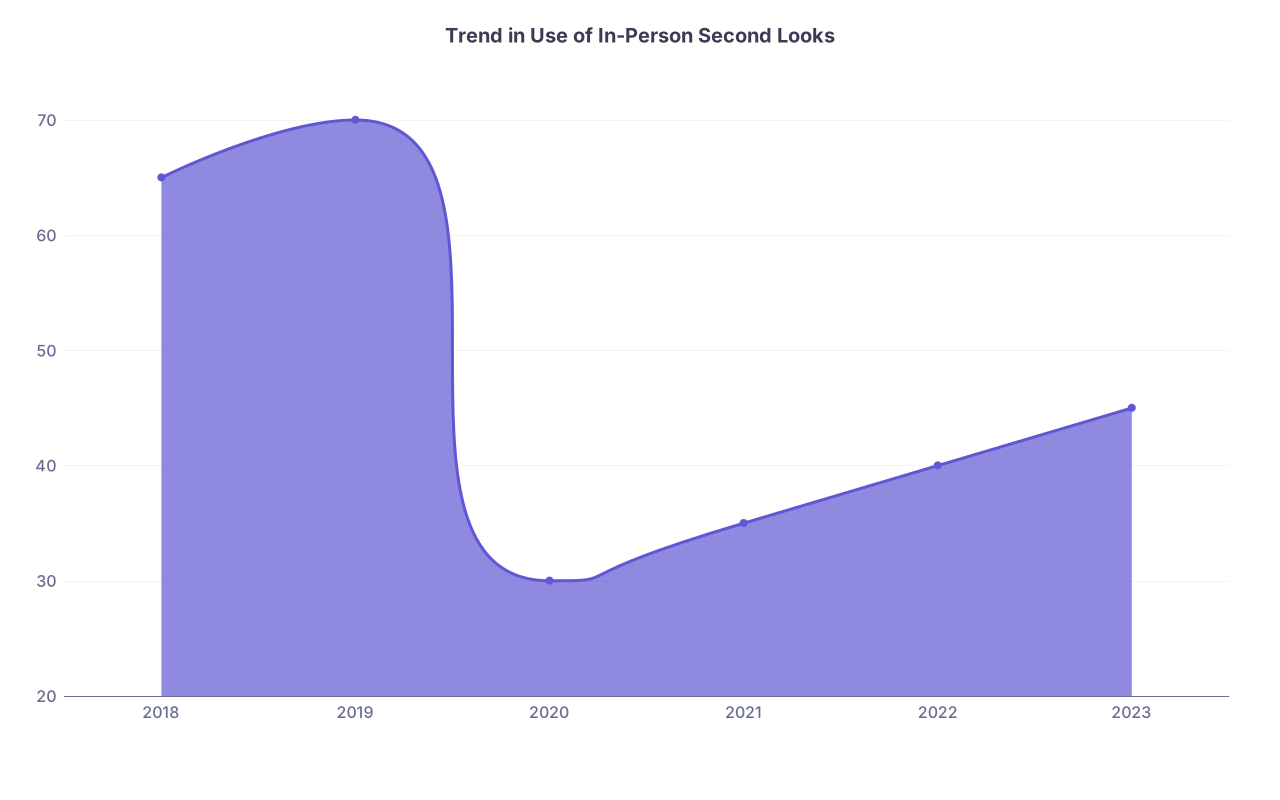
| Category | Value |
|---|---|
| 2018 | 65 |
| 2019 | 70 |
| 2020 | 30 |
| 2021 | 35 |
| 2022 | 40 |
| 2023 | 45 |
Virtual interviews, cost concerns, equity conversations—these are all pushing programs to rethink second looks. Some are:
- Banning them altogether.
- Allowing them but explicitly stating they don’t affect ranking.
- Moving to virtual open houses instead.
Why? Because second looks preferentially benefit people with money and flexibility. The student who can drop $1500 on three extra trips has an unfair advantage over the one barely affording regular interviews.
Here’s the funny thing: as programs de-emphasize second looks, anxious applicants keep overvaluing them. You get this weird psychological lag where students are fighting last year’s war with this year’s rules.
So if you’re fixated on second looks as your big “low-score” strategy, you’re probably aiming at the wrong target.
FAQs
1. If a program explicitly invites me for a second look, does that mean they’ll rank me higher?
Not automatically. It means you’re at least on their radar and not in the “no” pile. Some programs invite a lot of people for optics and engagement. Others genuinely want another look at a small subset they’re seriously considering. The only safe interpretation is: they’re not rejecting you. Whether they rank you higher depends on how you already performed and how you come across again.
2. Is a second look more useful for community programs than academic ones?
Generally yes. Many community or smaller regional programs care heavily about whether you’re likely to stay, fit with the team, and not quit. For those programs, seeing you again, hearing your reasons for being there, and watching you interact with residents can matter more than at a huge academic powerhouse that mostly sorts people by CV and interview. Still, even there, it’s incremental—not a substitute for being fundamentally solid.
3. If I have low scores, what helps more than a second look?
Almost everything upstream: a strong Step 2 score relative to Step 1 if you struggled early, concrete remediation for failures, excellent letters from people who actually worked closely with you, and a clear, honest narrative about your growth in your personal statement and interviews. Those change risk perception. A second look mostly changes interest perception—and only slightly.
4. Should I tell a program I’d rank them highly instead of doing a second look?
If they’re genuinely your top choice, a concise, clear “you are my #1” email can carry as much or more weight than a second look, especially in an era trying to reduce travel burdens. But don’t lie to multiple programs—that’s how people get reputations. If they’re just “in the mix,” you can send a polite expression of interest email without overstating. And yes, in many cases, that email is as effective as flying back for an in-person visit.
Key points:
- Second looks are not a fix for low scores; they only slightly help candidates who are already competitive.
- They’re most useful as a tiebreaker or reassurance of interest—not as a rescue strategy.
- If money, time, or stress are tight, you’re almost always better off improving the fundamentals instead of chasing an extra visit.