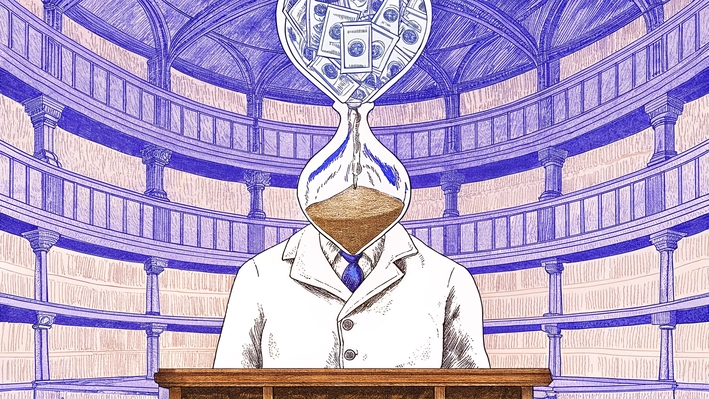
The most dangerous test anxiety advice in medical school is four words: “Just power through it.”
It sounds tough. It sounds disciplined. It also quietly wrecks scores, mental health, and sometimes entire careers when students ignore what their anxiety is actually signaling.
Let me be blunt: I’ve watched smart, capable med students fail or underperform on exams not because they didn’t know the content—but because they tried to white‑knuckle their way through worsening test anxiety. They treated anxiety like a character flaw to crush, instead of a system problem to diagnose.
You’re in medical school. You know what happens when you suppress symptoms without treating the underlying condition. Do not make that same mistake with your own brain.
The “Power Through” Mindset: Why It’s So Appealing (And So Misleading)
“Everyone’s stressed. Welcome to med school.”
“You just need to grind harder.”
“Step exams are supposed to be brutal. Just push through.”
You’ve heard versions of that in every hallway. Some of it comes from well‑meaning classmates, some from residents, some from attendings who survived a different exam era and now romanticize suffering like it was a growth strategy.
Here’s the trap: “Just power through” sounds like:
- Mental toughness
- Professionalism
- What “serious” students do
But in the context of test anxiety, it often means:
- Ignoring clear red flags from your nervous system
- Misinterpreting physiological overload as laziness or weakness
- Doubling down on strategies that are already failing you
You wouldn’t tell a patient with crushing chest pain, “It’s OK, just power through your jog, that’s what athletes do.” Yet students tell themselves the cognitive equivalent of that before, during, and after exams.
The mistake is not feeling anxious. The mistake is deciding your only acceptable response is to override it.
Five Red Flags That “Powering Through” Is Turning Dangerous
Anxiety in med school is normal. I’m not talking about butterflies or mild nerves. I’m talking about signs your brain is passing the threshold from “activated” into “compromised.” If you’re seeing these and still forcing yourself to grind with no adjustments, you’re making a risky error.
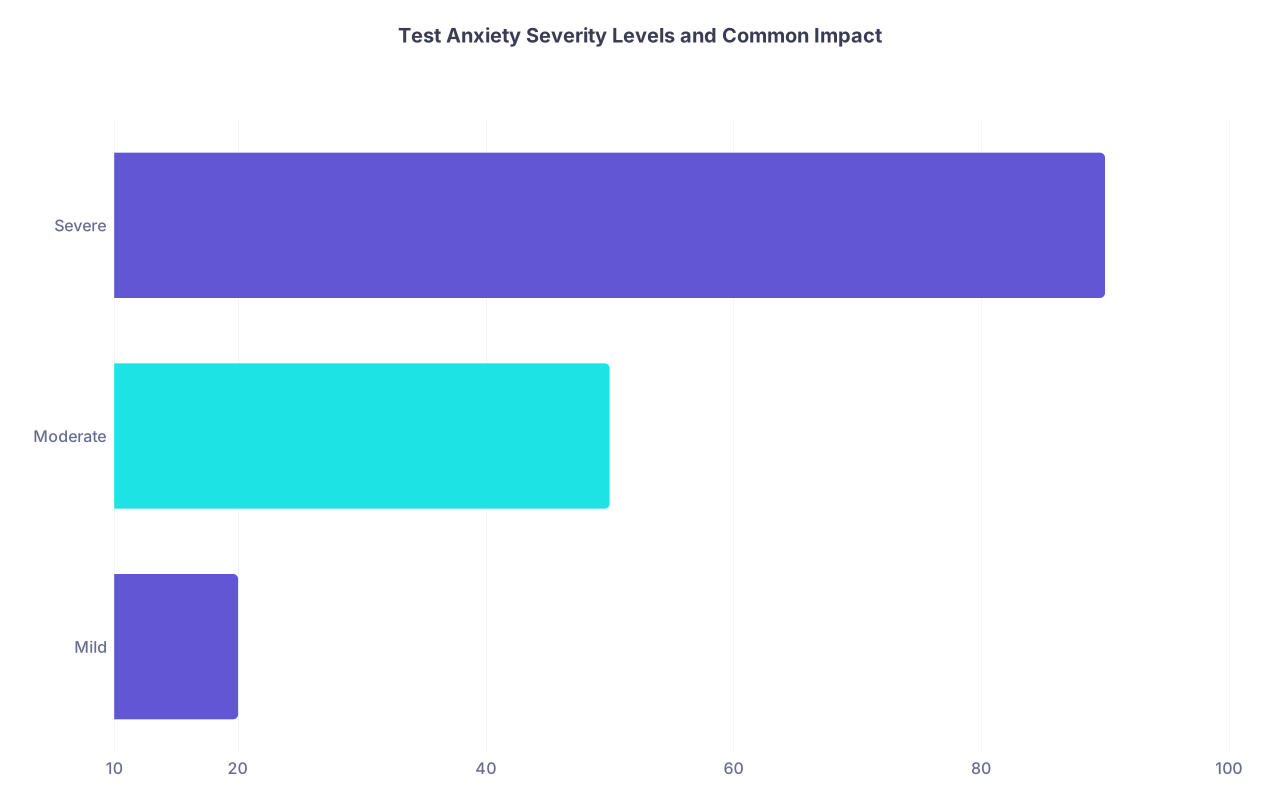
| Category | Value |
|---|---|
| Mild | 20 |
| Moderate | 50 |
| Severe | 90 |
1. Your Practice Scores Collapse During Timed Tests (But Not Untimed)
Classic pattern:
Untimed UWorld blocks? 70–75%.
Timed blocks or NBME practice exams? 50s or low 60s—with the same content.
If you “just power through” that discrepancy, you misdiagnose the problem as “I don’t know enough.” So you:
- Add more hours
- Add more resources
- Add another Qbank
And your timed performance barely moves. Because the limiting factor isn’t knowledge—it’s performance under pressure. You’re in cognitive overload. Your working memory is hijacked by “What if I fail” loops while you’re pretending the only variable is content.
Ignored long enough, this leads straight to:
- Step/COMLEX underperformance way below practice potential
- Shelf scores that cap your clerkship evaluations
- A residency application that doesn’t reflect your actual ability
2. You Have Physical Symptoms During Exams You Keep Dismissing
I’ve seen this list too many times:
- Hands shaking so much you mis‑click answers
- Vision blurring mid‑block
- Heart pounding so hard you can feel it in your ears
- Nausea, urge to bolt from the testing room, tunnel vision
- Post‑exam migraines or vomiting
And the story that follows is always some variation of:
“I thought I just had to get used to it. Everyone’s stressed. I figured if I kept doing more exams I’d eventually adapt.”
That’s not adaptation. That’s sensitization. You’re teaching your brain that “exam = bodily threat” and reinforcing the fight‑or‑flight response every time you override it without support.
White‑knuckling through this and calling it “resilience” is like calling uncontrolled hypertension “cardio training.”
3. Your Sleep and Baseline Function Are Falling Apart
Here’s where “just power through” stops being a study problem and starts being a life problem.
Watch for this drift:
- You can’t fall asleep because your brain replays questions on loop
- You wake up multiple times sweating, heart racing, thinking about scores
- You doom scroll Reddit/SDN at 2 a.m. to “reassure yourself” with other people’s failures
- You feel wired and exhausted at the same time, all day
- You cry in the bathroom between OSCEs or during a clerkship shift
If your baseline function is tanking and your only answer is “I just need to push harder,” you’re not being disciplined. You’re being reckless with your own nervous system.
A tired brain doesn’t suddenly become a high‑performing brain because you scold it.
4. You’re Afraid to Change Anything Because It Feels “Weak”
This one’s sneaky.
You know you’re struggling. You know your current approach is not working. But:
- You refuse to shorten your study blocks
- You refuse to talk to Student Affairs, therapy, or a physician
- You refuse to request accommodations, even if you qualify
- You refuse to tell your advisor how bad it really is
Because you’ve internalized the message that “strong students just handle it.”
So you decide it’s safer to protect your identity as “tough” than to protect your actual brain. That’s how people end up with repeated Step failures, extended leaves, or dropping out when an earlier, more honest intervention could have kept them in the game.
5. You Keep Repeating the Same Exam Approach and Expect Different Results
On test day you:
- Sleep 4–5 hours, fueled by caffeine and panic
- Cram the morning of, flipping Anki like it’s a good luck ritual
- Walk into the test center already at an 8/10 anxiety
- Blast through the first few questions too fast, then freeze when you hit a hard one
- Spend the rest of the block time‑checking and self‑judging
You do this for:
- Multiple NBMEs
- Multiple shelf exams
- And then…Step 1 or 2/COMLEX
And you tell yourself each time, “I just need to be stronger next time.” No meaningful change in process. Just more pressure.
That’s not grit. That’s magical thinking with a white coat on.
The Hidden Cost: How “Power Through” Quietly Damages Your Career
Let’s talk fallout, because it’s not theoretical. I’ve watched versions of these stories in real med schools:
- The M2 who kept saying “I’ll be fine on the real thing” despite panic attacks during practice exams. Failed Step 1, lost automatic progression, needed an extra year and remediation, and their specialty choices narrowed overnight.
- The M3 with good knowledge base but terrible test anxiety who consistently underperformed on shelves. Letters all said “hard‑working, great on the floor,” but their scores blocked them from competitive residencies.
- The student who white‑knuckled through worsening anxiety until it became a full depressive episode. Took a leave of absence right as they were supposed to be prepping for Step 2. Recovery took a year instead of 3–4 months because they waited until they fully crashed.
None of them “lacked discipline.” They lacked a realistic model of anxiety as something to manage, not dominate.

What To Do Instead Of “Just Power Through”
Here’s the shift: you treat your test anxiety like you’d treat a complex patient—systematically, not emotionally.
Step 1: Diagnose What’s Actually Happening
Stop calling everything “anxiety.” That’s as useless as writing “pain” in the chart with no location.
Ask yourself, specifically:
- Is my issue mostly before the exam (anticipatory dread)?
- During the exam (freezing, blanking, racing thoughts, time mismanagement)?
- Or after the exam (rumination, catastrophic predictions, shame)?
- Are my practice scores content‑limited or performance‑limited?
If your untimed or low‑pressure scores are solid, but high‑stakes/timed ones crash, you’re not dealing with a pure knowledge deficit. “More Anki” won’t fix that.
Step 2: Separate Content Study From Performance Training
This is where most students blow it. They keep thinking:
“My anxiety will get better once I know everything.”
You will never know everything. The exam is designed that way.
You need two parallel tracks:
- Content and question strategy – all the usual: UWorld, NBME forms, structured review
- Performance and anxiety management – training your brain and nervous system for test conditions
Performance training is where “power through” must die. It includes:
- Practicing under realistic conditions: timed blocks, test‑like environment, same time of day
- Predictable pre‑exam routine: same breakfast, same wake time, no last‑minute cramming that spikes cortisol
- Deliberate calming strategies baked into your practice blocks (more on that next)
If you wait to “use coping skills” only on the real exam, you’ve already lost. You wouldn’t try a new procedure for the first time on a real patient.
Step 3: Learn to Hit the “Physiologic Reset” Button During Exams
Here’s where people say, “I don’t have time to calm down during the exam.” And that mindset keeps them stuck.
You also don’t have time to stay in a physiologic state where your frontal lobe is barely online.
You need fast, in‑block reset tools you’ve rehearsed so many times they’re automatic. Examples:
- Box breathing between questions: 4 seconds inhale, 4 hold, 4 exhale, 4 hold. Do 2–3 cycles between hard questions instead of panic‑clicking forward.
- Grounding via the five senses: silently name 5 things you see, 4 feel, 3 hear, 2 smell, 1 taste—brings you out of the mental horror movie and back into the room.
- Scripted self‑talk: not “relax” (useless) but “I can miss questions and still pass. Focus on the one in front of me.” Short, specific, rehearsed.
You practice these inside timed blocks, not in bed the night before. So your body learns: “Oh, this is what we do when anxiety spikes during a test.”
The Big, Controversial One: Not Seeking Help Early
Let me say the quiet part out loud: the culture in medicine still quietly shames needing help for anxiety. That culture is wrong. And dangerous.

| Step | Description |
|---|---|
| Step 1 | Early test anxiety |
| Step 2 | Power through without changes |
| Step 3 | Worsening symptoms & sleep issues |
| Step 4 | Declining scores & confidence |
| Step 5 | High-stakes exam underperformance |
| Step 6 | Remediation/limited specialty options |
| Step 7 | Seek structured help early |
| Step 8 | Improved coping & performance |
Here’s the mistake pattern I see constantly:
- Early test anxiety shows up on first few med school exams.
- Student decides it’s “not bad enough” to justify help.
- Anxiety escalates gradually. They keep hiding it.
- By the time they reach Step 1/COMLEX 1, it’s baked into their nervous system.
- Now they seek help—when stakes and pressure are maximized.
That’s like waiting until septic shock to start antibiotics.
What getting help actually looks like (and what students wrongly fear):
| Approach | Outcome Risk |
|---|---|
| Early counseling/therapy | Skills before high-stakes exams; lower burnout |
| Evaluation for accommodations | More realistic timing; fewer panic spirals |
| Ignoring anxiety and grinding harder | Higher failure/underperformance risk |
| Honest talk with dean/advisor | Tailored schedule; safety net planning |
I’ve seen students’ entire trajectory change because they finally:
- Talked to a campus counselor about panic during exams
- Got formally evaluated for ADHD/anxiety and received treatment
- Used extra time or a reduced distraction environment—legit accommodations, not “cheating”
- Told their advisor, “My practice scores don’t match my knowledge and I think anxiety is a factor”
The earlier you do this, the less “personality‑level” your anxiety becomes.
Specific “Power Through” Behaviors To Stop Doing
Let’s get concrete. If you recognize yourself in these, that’s your cue to change course.
Stop:
- Forcing yourself to do full‑length exams when you’re already at 9/10 anxiety before starting “to toughen up”
- Studying 14–16 hours a day while your practice scores plateau or drop
- Treating any idea of reducing hours or changing strategy as “slacking”
- Hiding symptoms from physicians or mental health providers to avoid documentation
- Refusing mock exams, simulations, or feedback because “I just need to survive the real thing”
Start:
- Shortening study blocks before you’re mentally cooked
- Building in non‑negotiable recovery: real sleep, real food, real time away from med content
- Trialing anxiety strategies in low‑stakes settings instead of waiting for the NBME center
- Being brutally honest with at least one person in your support system about how bad it is
None of this makes you weak. It makes you someone who would not ignore a deteriorating patient and call it “resilience.”
How To Tell If You’re Managing Anxiety… Or Just Rebranding It
Ask yourself three hard questions:
Have my scores improved in timed, exam‑like settings after all this “pushing through”?
- If no, your strategy isn’t working, no matter how disciplined it feels.
Is my life outside of studying at least minimally functional?
- If your relationships, sleep, or basic self‑care are collapsing, you’re not “managing” anxiety. You’re being steamrolled by it.
If a classmate told me the exact story I’m living, would I tell them to keep going like this?
- If the honest answer is, “I’d tell them to get help,” you have your answer.
If your gut reaction to these questions is defensive (“I don’t have a choice”), that’s exactly what “just power through” thinking sounds like when it’s running the show.
You have more choices than you think. They’re just uncomfortable ones.
FAQ: Test Anxiety & The “Just Power Through” Trap
1. How do I know if what I’m feeling is “normal stress” or true test anxiety that needs intervention?
Look at function and consistency. Normal stress might make you a bit restless, but your performance stays relatively stable and your life works: you sleep, you eat, you can focus on other things sometimes. Test anxiety that needs attention usually shows up as a pattern: significant score drop only in timed/high‑stakes settings, physical symptoms (shaking, nausea, heart racing) during tests, intrusive worry that doesn’t shut off, and a noticeable impact on sleep or daily functioning. If your untimed practice and casual teaching sessions are way better than your exam results, don’t shrug that off—it’s a sign your problem isn’t just knowledge.
2. If I start therapy, medication, or ask for accommodations, will it hurt my future residency chances?
This fear keeps too many students suffering in silence. The reality: programs see your scores, performance, and professionalism. They don’t see your counseling records. What actually hurts your residency chances far more than using help is failing or underperforming repeatedly on major exams. Getting your anxiety managed early—by therapy, meds, accommodations, or all three—protects the metrics programs care about. Yes, you should be thoughtful about how things are documented for licensing, but the bigger mistake is pretending brute force is a safer option while your performance deteriorates.
3. I’m close to a high‑stakes exam (Step, COMLEX, big school OSCE). Is it “too late” to change my approach from powering through to actual anxiety management?
It’s late, but not too late. You’re not going to rebuild your entire nervous system in three weeks, but you can stop making it worse. In the short term, that means: cutting off destructive behaviors (all‑nighters, last‑week resource hopping, constant score‑checking), tightening your routine (consistent wake/sleep, controlled caffeine, realistic daily goals), and practicing 1–2 rapid‑reset strategies inside timed blocks. If your exam is months away, you have even more room to build proper habits and get professional support. The only truly “too late” point is after you’ve failed and still decide the solution is to suffer more alone the second time.
Open your calendar for the next four weeks and mark one specific step: a shorter, realistic timed block where you will practice both questions and anxiety resets—not just “see how much you can push.” That’s where you stop powering through and start actually getting better.