
Choosing a residency for prestige alone is one of the fastest ways to ruin your training.
Not because prestige is useless. Because when you chase the shiny label and ignore the actual training environment, you walk straight into traps that are very hard to undo once the Match is over.
You are not choosing a trophy. You are choosing who will shape how you think, how you practice, and how you feel about medicine at 2 a.m. when everyone else is sleeping.
Let me walk you through the biggest “community vs academic” mistakes I see applicants make. Over and over. And how to avoid them before they cost you the residency you actually needed.
The Single Biggest Error: Confusing “Academic” With “Better”
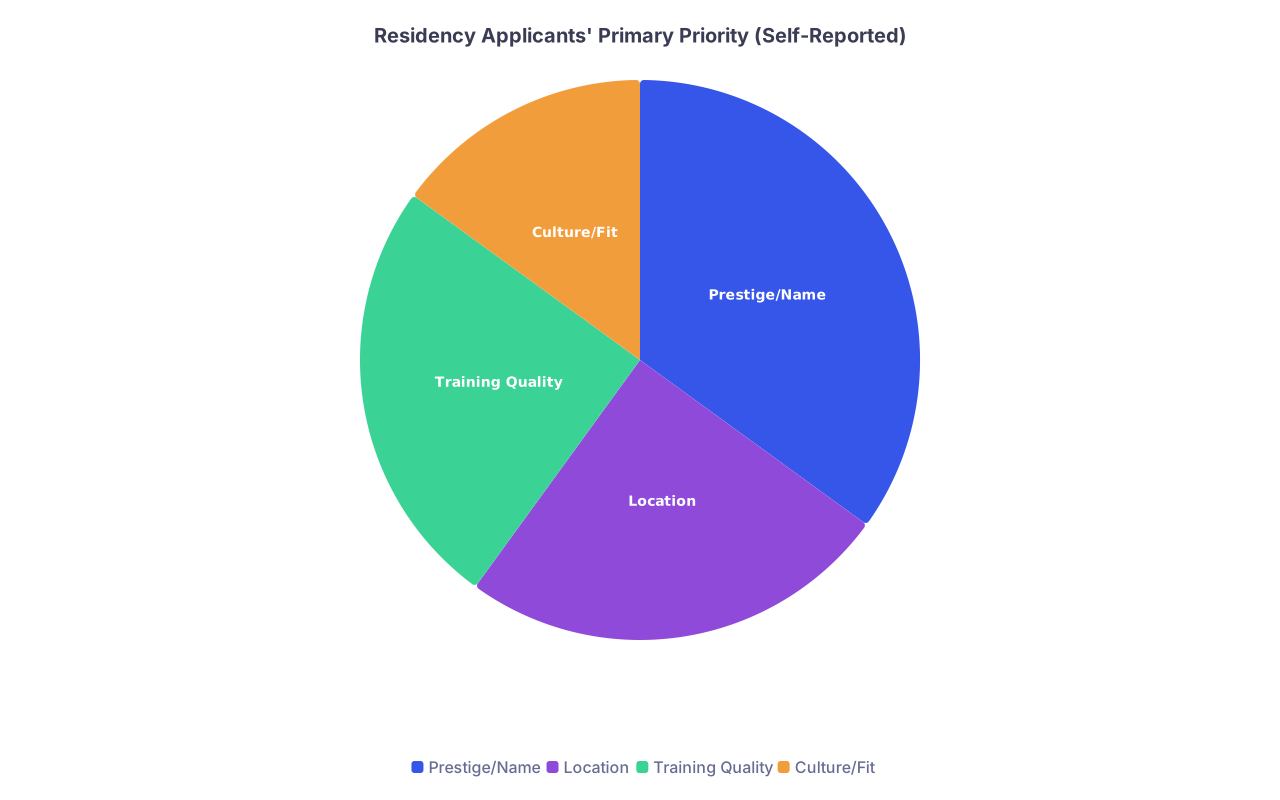
| Category | Value |
|---|---|
| Prestige/Name | 35 |
| Location | 25 |
| Training Quality | 25 |
| Culture/Fit | 15 |
The worst assumption: “Academic = superior training, Community = backup option.”
Wrong. And dangerous.
I have watched applicants:
- Rank well-known academic university hospitals at the very top
- Stick solid, high-volume community programs in the “safety” zone
- Then spend PGY-2 saying things like:
- “I barely touch patients because everything goes to the subspecialists.”
- “I wanted to operate, but the fellows are in the way on every case.”
- “We write notes. The APPs and fellows do the procedures.”
Here is the core problem: “Academic” and “Community” are labels about structure and mission, not quality. They tell you:
- Who funds the place
- How much teaching and research they emphasize
- What kind of patients they attract
They do not guarantee:
- That you will get good hands-on training
- That you will match into a competitive fellowship
- That you will be happy
The wrong way to think:
- “I am competitive. Therefore I must go academic.”
- “If it is not a university program, it will hurt my fellowship chances.”
The right way:
- “I am choosing between different types of training. Which matches who I am and what I want to do?”
If you let the word “university” or a big name system blind you, you will miss red flags that are staring you in the face.
Trap #1: Overvaluing Name Brand, Undervaluing Case Volume

This one hurts the most for surgery, OB/GYN, EM, and procedural IM subspecialties.
Here is how people blow it:
- They fall in love with:
- Top 20 med school attached
- Famous department chair
- Fellowship power-list on the program website
- They never ask:
- How often do interns actually do procedures?
- What are the senior resident’s numbers?
- Who owns the OR – fellows or residents?
So they match the shiny academic name. Then they discover:
- Every complex case goes: Attending → Fellow
- Residents fight over scraps (hernia repairs, lap choles, basic scopes)
- Advanced cases? “You can retract.”
Meanwhile, the no-name community program across town:
- No fellows
- High surgical volume
- Seniors graduating with 1.5–2x case numbers
- Chairs on national committees who know fellowship directors by first name
Prestige brain makes you ignore this. You tell yourself: “But a big name gets me any fellowship I want.”
Not if you graduate with weak hands and shallow experience.
Watch for this during interviews:
- When you ask about case volume, do they give:
- Specific numbers by PGY level? Good.
- Vague reassurance like “you will be comfortable”? Bad sign.
- Are there multiple fellowship programs that overlap heavily with your core procedures?
- Do residents present as confident and specific about their operative / procedural experience? Or evasive?
| Factor | Academic-Heavy Program | Community-Heavy Program |
|---|---|---|
| Fellows present | Many, often multiple per service | Few or none |
| Complex case exposure | See a lot, often assist or observe | Fewer zebras, more bread-and-butter |
| Resident autonomy | Often less early, varies by service | Often more, especially senior years |
| Case volume per resident | Can be limited by fellows | Often higher, more primary surgeon time |
| Focus | Research, reputation, subspecialization | Service, efficiency, clinical skills |
Do not rank a prestige-heavy academic program above a strong community program if the latter is clearly giving better hands-on training in the area you care about. That is not “settling.” It is being smart.
Trap #2: Ignoring Your Career Goal: Clinician vs Physician-Scientist vs Educator
The worst fit happens when people mismatch their career plan with program type.
When a mainly clinical person chooses hyper-academic
If you quietly know you want:
- Community practice
- Hospitalist life
- Private practice
- Minimal research
Then a very research-heavy, NIH-machine academic program will grind you down.
You will be pushed into:
- Mandatory research blocks you dislike
- Pressure to publish or present every year
- Projects that feel like hoops rather than growth
I have heard this exact line from PGY-3s in big-name academic IM programs:
“I am spending nights writing papers for a career I do not want, just to make my program leadership happy.”
If your future is 100% clinical practice and you pick an academic powerhouse just for prestige, expect misalignment. Constantly.
When an academic-minded person chooses pure service community
The opposite mistake is equally bad.
If you want:
- Research as a real part of your career
- A serious shot at tenure-track jobs
- Subspecialty or highly competitive fellowships in research-heavy fields
Then matching at a service-heavy community program with:
- Minimal research infrastructure
- No protected time
- No serious mentorship in your niche
will severely limit your options. You can still push, but you will be swimming upstream.
You must ask yourself bluntly:
- Am I likely to actually enjoy research work?
- Or do I just want the option of fellowship?
Two different answers. Lead to two different program types.
If you want optionality without full research pressure, the sweet spot is often:
- Hybrid programs:
- University-affiliated community hospitals
- “Academic community” programs with:
- Some research
- Some affiliations
- But not full-on NIH churn
The trap is assuming binary: “I am smart, I must do pure academic” or “I am not a researcher, so I must go pure community.” Reality is way more nuanced.
Trap #3: Overlooking Resident Culture in Favor of Reputation

This one feels intangible until you live it. Then it is everything.
Applicants will forgive:
- Long hours
- Tough patients
- Heavy call
But they do not forgive toxic culture. They just burn out or leave.
Both community and academic programs can have:
- Supportive, team-based cultures
- Or malignant, soul-crushing ones
Name does not protect you from that. In fact, prestige sometimes hides toxicity because people are afraid to speak honestly.
Red flags applicants routinely ignore:
- Residents cannot talk freely on tours; faculty are always hovering
- PGY-3s or PGY-4s give oddly rehearsed answers
- Nobody ever admits any weakness in the program
- You hear:
- “We are like a family!” but residents look exhausted and tense
- “We work hard and play hard” used as a euphemism for 80+ hours
What you want to see instead:
- Residents who joke about real frustrations without fear
- At least one honest criticism of the program
- Clear descriptions of:
- How leadership responds to problems
- How schedules changed after feedback
Do not skip the step of actually talking to residents—away from attendings. Especially at prestigious academic places where the brand itself may pressure people to defend the program.
And stop putting more weight on “this program is famous” than on “these are the people I will suffer and grow with for 3–7 years.”
You do not stay late for a logo. You stay late for your co-resident who covers you when you are destroyed.
Trap #4: Misreading “Community” as “No Fellowship Options”
This one keeps strong applicants from ranking excellent community programs where they would thrive.
Reality: many community or hybrid programs place residents into top fellowships every year. Especially in:
- Cardiology
- GI
- Pulm/CC
- Heme/Onc
- Sports, Pain, etc.
The problem is lazy thinking:
- “They are not a big-name academic center, so I will be stuck.”
Look at the actual data:
- Fellowship match list for last 3–5 years
- Specific programs:
- Are they matching people to major university fellowships?
- Or only internal / local low-demand spots?
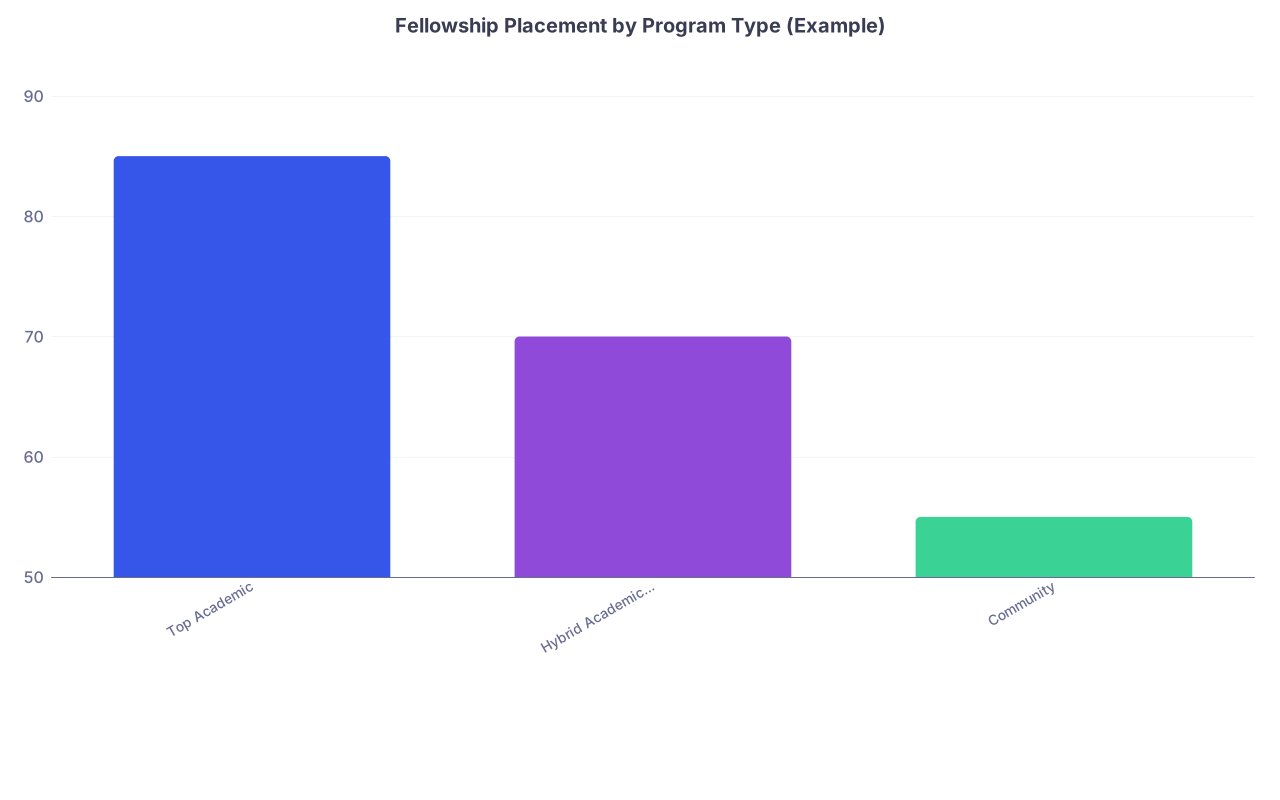
| Category | Value |
|---|---|
| Top Academic | 85 |
| Hybrid Academic-Community | 70 |
| Community | 55 |
Now, be careful with interpretation. An 85%+ rate at a major academic flagship vs a 55% rate at a community program does not automatically mean “academic is better.” It often means:
- Applicant self-selection (ambitious people cluster at big names)
- Some programs aggressively push everyone into fellowship
- Some are more balanced, with more residents choosing general practice
But if a community or hybrid program:
- Consistently sends 2–4 people per year to recognizable academic fellowships
- Has faculty with strong connections in your desired field
- Gives you autonomy and good letters from people who actually know your work
then ranking it “below all the big-name places” just because it is community-based is naïve.
Make your decisions based on actual outcomes, not lazy stereotypes.
Trap #5: Forgetting Lifestyle Reality: Location, Support, and Burnout

| Step | Description |
|---|---|
| Step 1 | Choose Program |
| Step 2 | Risk - Poor Fit |
| Step 3 | Consider Training Needs |
| Step 4 | Higher Burnout Risk |
| Step 5 | Balanced Choice |
| Step 6 | Better Long Term Satisfaction |
| Step 7 | Prestige Focused? |
You are not a robot that ingests training and spits out board scores. Your environment matters.
Both community and academic programs can wreck your life if:
- You ignore cost of living
- You underestimate commute time
- You disregard family / partner needs
- You pretend you can “tough out” any schedule
Classic mistakes:
- Ranking a coastal, expensive, elite academic program top 3 while:
- You have dependents
- Massive loans
- No real support network nearby
- Assuming:
- “It is just three years, I will survive.”
Then reality hits:
- Tiny apartment
- 70–80 hour weeks
- $2,000+ rent
- No family nearby
- Constant pressure to research, publish, impress
Or:
- Ranking a geographically isolated community program low because “boring”
- Even though:
- Short commute
- Reasonable call
- Strong co-resident relationships
- Real chance at decent work–life balance
Residency is long. Burnout is real. And prestige does not cure depression, divorce, or exhaustion.
Ask yourself:
- Will I have at least one support anchor here?
- Family
- Close friends
- Partner with realistic job options
- Can I afford this city on a resident salary without constant financial anxiety?
- Is the call schedule survivable for me personally?
It is a mistake to act like these questions are “soft” compared with academic vs community labels. They are not. They decide whether you still like medicine by PGY-3.
Trap #6: Ignoring Program Direction and Stability
Another subtle but important trap: only looking at the static label (community vs academic) and ignoring trajectory.
You must figure out:
- Is this program on the way up, stable, or quietly falling apart?
Signs of trouble that applicants often wave away:
- Multiple recent leadership changes (PD, chair)
- Rumors of losing hospital contracts or services
- Brand new program with:
- No graduates yet
- Thin faculty bench
Early years of new community or academic programs can be chaotic:
- Inconsistent teaching
- Poorly structured rotations
- Over-reliance on residents as service coverage instead of learners
Conversely, I have seen “mid-tier” community or hybrid programs explode upward because:
- New leadership is aggressive about improving education
- New fellowship programs open
- Case volume and complexity increase
Do not assume the shiny academic center is automatically more stable. Big systems can merge, close services, or shift site responsibilities in ways that hit residents hard.
Questions you should ask directly:
- “What meaningful changes have occurred in the last 3 years?”
- “What changes are planned for the next 3?”
- “Have any services been cut, moved, or threatened recently?”
- “How long has the PD been in place?”
Listen carefully to how residents answer. They tend to be more honest than leadership.
Trap #7: Using “Academic vs Community” As a Shortcut Instead of Doing Real Homework
| Lazy Shortcut Thought | Smarter Replacement Question |
|---|---|
| Academic = better training | How is resident autonomy and case volume by PGY year? |
| Community = worse fellowship options | What is the 5-year fellowship match list? |
| Prestige name = better for my CV | Will I get strong letters and mentorship here? |
| Community = just service work | How much teaching, feedback, and structured curriculum? |
| Academic = more research so must be better | Do I actually want research built into my life? |
Here is the uncomfortable truth: people cling to the academic vs community label because it lets them avoid the hard work of:
- Reading detailed case logs
- Studying fellowship placement lists
- Asking uncomfortable questions about culture and workload
- Actually listening to what residents say off-script
Name recognition is seductive. Binary labels simplify complexity. But residency is not a multiple-choice question; it is a 3–7 year immersion.
If you use “academic vs community” as the primary filter:
- You will over-rank prestige-heavy places that do not fit you
- You will under-rank low-brand but excellent training environments
- You will ignore critical variables like autonomy, mentorship, outcomes, and culture
Resist the urge to shortcut. It is your career on the line, not the ranking of your Match Day selfie on Instagram.
How To Actually Avoid These Traps
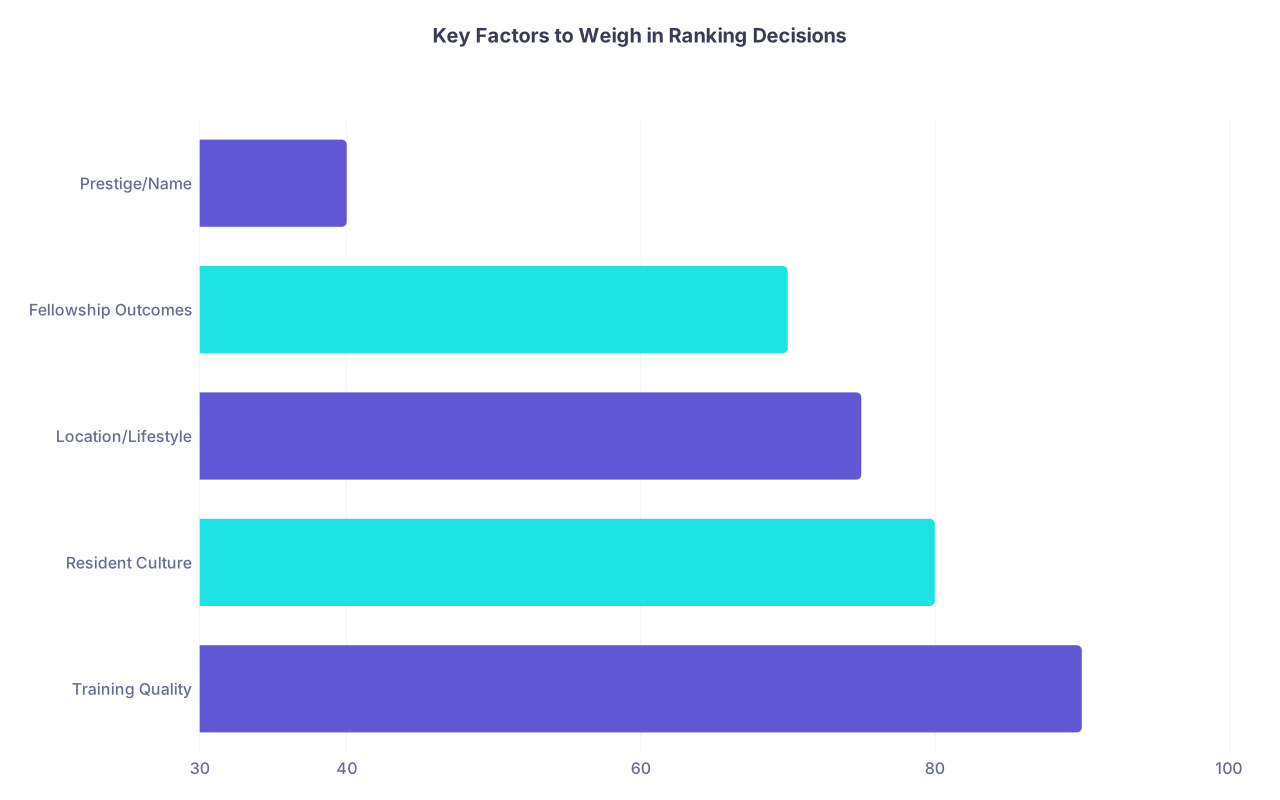
| Category | Value |
|---|---|
| Training Quality | 90 |
| Resident Culture | 80 |
| Location/Lifestyle | 75 |
| Fellowship Outcomes | 70 |
| Prestige/Name | 40 |
Here is a blunt, practical framework:
Define your likely career path
- Mostly clinical practice → give strong weight to:
- Hands-on training
- Autonomy
- Bread-and-butter case volume
- Strong academic/research interest → look for:
- Real mentors in your area
- Protected time that is actually protected
- Track record of grants / publications for residents
- Mostly clinical practice → give strong weight to:
Collect real data on programs
- Ask for:
- Fellowship match lists
- Case volume / logs by PGY level
- Examples of QI/research projects residents did recently
- Talk to:
- Multiple residents in different years
- If possible, graduates a few years out
- Ask for:
Audit culture and support
- Listen for:
- Genuine camaraderie vs forced “family” language
- An ability to admit weaknesses and describe fixes
- Ask:
- “What kind of resident struggles here?”
- “What has leadership changed after resident feedback?”
- Listen for:
Factor in real life
- Do an honest check on:
- Money
- Relationships
- Mental health history
- Commute and housing
- Do an honest check on:
Then and only then, use prestige as a tiebreaker
- If two programs are truly equal on:
- Training
- Culture
- Outcomes
- Lifestyle
- Sure. Take the bigger name.
- But never let prestige override clear, significant differences in fit and training.
- If two programs are truly equal on:
FAQ (Exactly 3 Questions)
1. Will choosing a community program hurt my chances at a competitive fellowship?
It can, if the program has poor outcomes, minimal mentorship, and no track record in your desired field. But many community and hybrid programs place residents into strong fellowships every year. The key is to look at actual fellowship match lists, faculty connections, and your ability to build a good CV there. A well-chosen community program with strong training and supportive mentors often beats a big-name academic place where you struggle to stand out or get cases.
2. Is it a mistake to rank only academic programs if I am a strong applicant?
It is a mistake if you are doing it purely for prestige and ignoring fit. Strong applicants sometimes lock themselves into a narrow list of big-name university programs and skip excellent community or hybrid options that would give them better operative experience, a healthier culture, or a better lifestyle. Being competitive means you have more options, not that you must choose the most “impressive” label regardless of what happens to you once you get there.
3. How many community programs should I include on my rank list as a “safety”?
Stop thinking of community programs as generic safeties. That mindset is how you miss excellent training. Instead, identify at least a few community or hybrid programs you would genuinely be happy to attend based on training, culture, and outcomes. Rank them honestly, not just at the bottom as an afterthought. The real mistake is not the number, it is failing to do the legwork to figure out which community programs are actually strong fits for your goals.
Open your rank list right now and circle every program you put higher only because of name or “academic” status. For each one, write down three concrete training or culture reasons it deserves that spot. If you cannot, move it down.