What if your dream program saw your letter of intent…rolled their eyes…and quietly rejected you without saying anything?
That’s the fear, right? You poured your heart into that letter. You picked every word like it was a piece of your future. You hit send. And then: silence. No “thank you,” no “got it,” no “we appreciate your interest.” Just the void.
Let me say the thing you’re afraid to believe:
Silence after a letter of intent almost never means you’re out.
It usually just means…they’re a residency/med school admissions office.
What Programs Actually Do With Your Letter Of Intent
Here’s the part nobody tells you when they encourage you to send a “strong letter of intent” like it’s some magical spell.
Most programs don’t reply. At all. On purpose.
They’re paranoid about:
- Looking like they’re promising you a spot
- Violating NRMP / match rules
- Creating the impression of a “secret signal” system with certain applicants
So you send this deeply personal letter, and on their end it’s…click, upload to your file, move on to the next 200 emails.
I’ve watched this play out behind the curtain. You’ll see stuff like:
- Coordinator: “This applicant says we’re their #1, I’ll upload it to their ERAS file.”
- PD: “Okay.”
- End of story.
No big discussion. No emotional pause. No “we must get back to them.” Just another data point in your app.
They might:
- Tag it in your ERAS file or internal system
- Mention it briefly in rank meeting (“They sent a strong letter saying we’re their top choice”)
- Use it as a tiebreaker if they liked you anyway
But respond? As in, personally? That’s actually the exception.
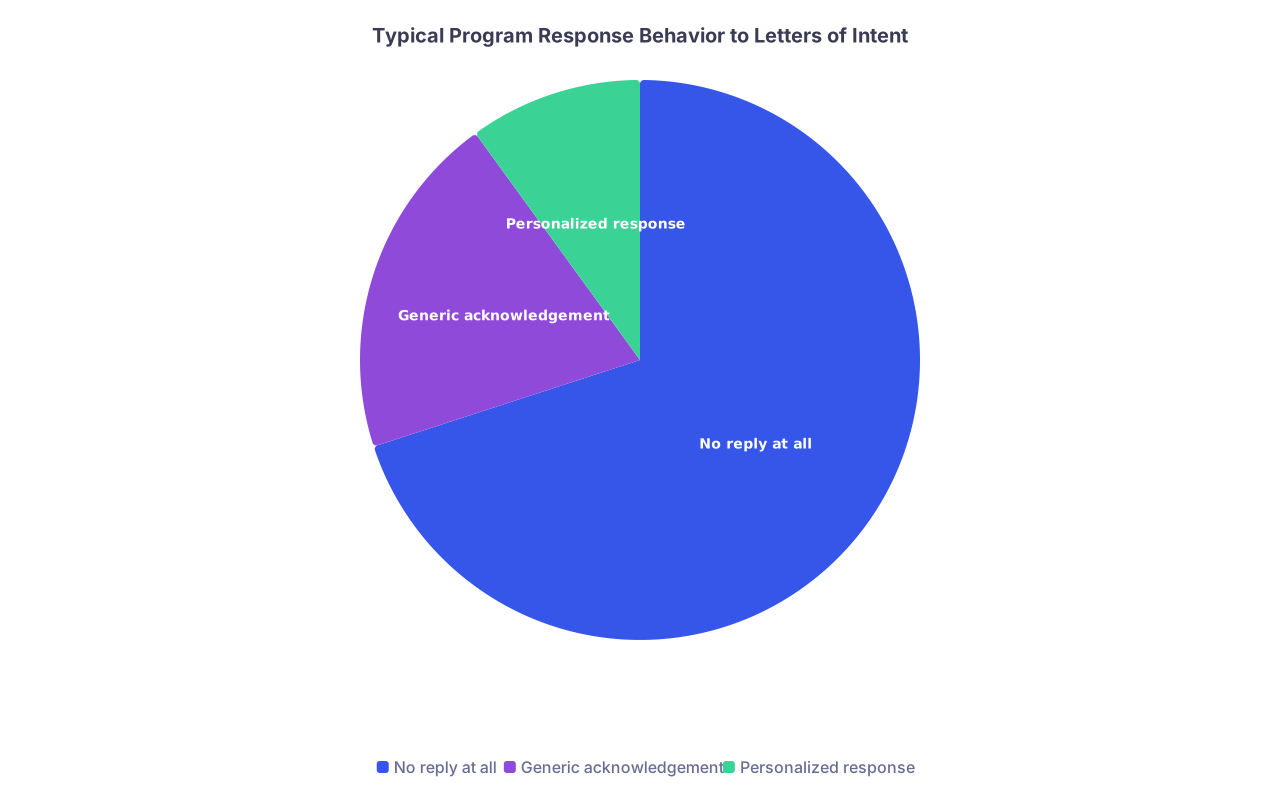
| Category | Value |
|---|---|
| No reply at all | 70 |
| Generic acknowledgement | 20 |
| Personalized response | 10 |
So if you’re spinning this narrative in your head that “no reply = they hated it” — that’s you filling in blanks that, honestly, just aren’t filled on their end.
They’re not sitting around thinking: “Let’s ignore this one applicant to send them a secret rejection by silence.”
They’re just overwhelmed and cautious. That’s it.
What Silence Definitely Does Not Mean
Let’s go through the nightmare scenarios your brain is inventing and just…kill them off.
1. “They read my letter and decided to rank me lower”
No. That’s not how this works.
If your letter wasn’t unhinged, creepy, or dishonest (like “I will sue if I don’t match”), it’s almost never hurting you.
More likely:
- It confirms what they already thought (you’re genuinely interested)
- Or it changes nothing because they were already ranking you highly or not at all
Letters of intent are usually additive or neutral. Not destructive.
The only time a letter backfires is if:
- You send obviously copy-pasted stuff to multiple programs (“You are my top choice because [insert wrong city name]”)
- You promise them they’re your #1 when you’re telling that to multiple programs
- You cross into entitlement: “Given my qualifications, I expect to match here”
If your letter was professional, specific, and honest? You’re fine.
2. “No reply means they’ve already finalized the rank list”
Also no.
Even when programs have a rough rank list made, that list moves. A lot. As faculty argue. As they review notes again. As they remember, “Oh yeah, the applicant who emailed saying we’re their top choice…”
Your letter could be:
- Seen right before a rank meeting
- Mentioned as a quick positive: “They really want to be here”
- Used as a tiebreaker between you and someone very similar
Silence just means they’re not going to tell you what they’re doing with it. It doesn’t mean they’re done.
3. “If they wanted me, they’d reassure me”
I wish this were true. It would make this whole nightmare way more straightforward.
But a lot of PDs and deans take a hard line: no promises, no hints, no “we’re ranking you highly” emails. They refuse to get pulled into the “games.”
Not because they don’t like you. Because:
- They don’t want to mislead anyone
- They’ve been burned before by applicants quoting their emails
- They’re busy, and interacting with every anxious applicant is…not happening
They could be ranking you to match. And still never send you a single comforting word.
How Much Does a Letter of Intent Actually Matter?
Here’s the part where people either overestimate or wildly underestimate the power of this letter.
It’s not nothing. But it’s not a magic key.
| Situation | Typical Impact |
|---|---|
| Strong interview, near top of list | Helpful tiebreaker |
| Solid interview, middle of list | Small positive nudge |
| Weak interview, low on list | Usually minimal impact |
| Never interviewed / no invite | Almost no impact |
Where it does help:
- You interviewed, they liked you, and you’re somewhere in that big fuzzy middle where lots of people are “good”
- You clearly explain why their specific program fits your goals (and it aligns with what they offer)
- You’re genuinely ranking them #1 (or very high) and that matters to them for retention and culture reasons
Where it basically doesn’t:
- You never got an interview and send a letter of intent out of desperation
- Your interview was clearly rough and they have way more strong applicants than spots
- You write a vague, generic letter anyone could send to any program
Think of the letter as: slight ammo. Not a deciding weapon.
And again: whether they reply to it has nothing to do with whether they value it.
Common “What Ifs” That Keep You Up At 2 A.M.
Let’s just go straight into the weeds, because I know where your brain is spiraling.
“What if they never even saw it?”
Possibilities:
- It went to spam (rare, but possible)
- The coordinator saw it and filed it away, PD never personally read it, but it’s still in your file
- PD skimmed it quickly and mentally logged it as “interested in us”
If you sent it to the correct official address (program coordinator, program email, or the address they list), assume it made it to your file.
If you DM’d it on Instagram to a chief resident? Yeah, that one might have died. But if it went through official channels, it’s probably in the system, whether or not someone responded.
“Should I send a follow-up since they didn’t respond?”
Short answer: usually no.
If you already:
- Sent one clear, professional letter of intent
- To the right person/address
- After your interview
Then sending a “just wanted to check if you received this” email makes you look…anxious. Which you are. But they don’t need the full front-row experience of that.
Only exception:
If you realize you sent it to the wrong address or it literally bounced back. Then yes, you resend.
Otherwise: you did your part. More emails don’t turn into more points.
“I told one program they’re my #1…but what if I change my mind?”
This is where the anxiety multiplies.
Ethically: you shouldn’t tell more than one program they’re your top choice. Yeah, “everyone does it” is the rumor. That doesn’t make it a good idea.
If you truly changed your mind:
- Don’t send a new “you’re now my #1” letter to a second program
- You can send a strong interest letter (“I will be ranking your program highly”) without lying
- You don’t need to send a retraction to the first program. Just quietly rank how you want.
They don’t see your rank list. They just see the match outcome. Your letter of intent is not a binding contract. It’s a signal, not a legal document.
“I sent a letter of intent and then got radio silence from them everywhere. Does that mean they downgraded me?”
Not necessarily.
Programs go quiet for tons of reasons:
- PD on service
- Rank meeting chaos
- Trying not to look like they’re courting specific applicants
- Policy: “No contact after interview unless administrative”
Your brain sees a pattern. “Before letter: some warmth. After letter: cold. Therefore, letter killed my chances.” It’s usually coincidence plus timing and your hyper-awareness.
What You Should Do After Sending a Letter of Intent
Here’s the annoying truth: once you send it, your control basically ends.
But if you want some structure instead of just staring at your inbox:
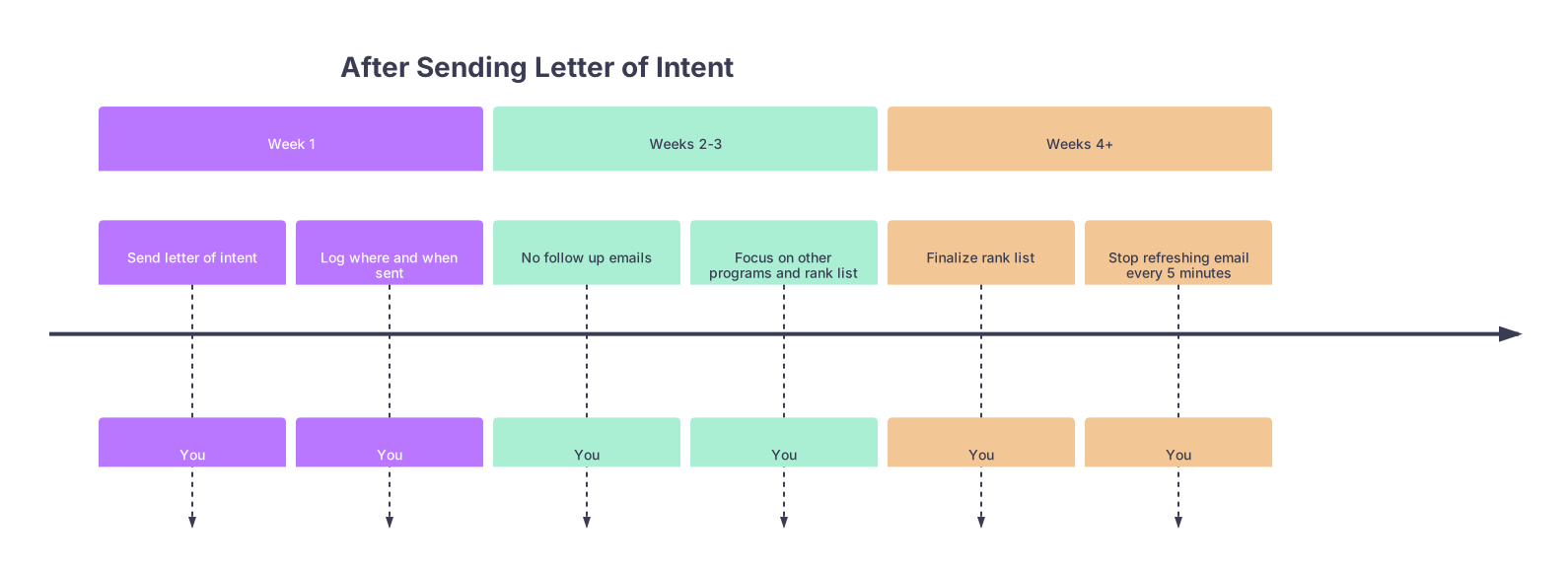
| Period | Event |
|---|---|
| Week 1 - Send letter of intent | You |
| Week 1 - Log where and when sent | You |
| Weeks 2-3 - No follow up emails | You |
| Weeks 2-3 - Focus on other programs and rank list | You |
| Weeks 4+ - Finalize rank list | You |
| Weeks 4+ - Stop refreshing email every 5 minutes | You |
Practically:
- Don’t send more than one letter of intent. One is enough.
- Don’t badger the program for a response.
- Keep working on your rank list based on your priorities, not the fantasies in your head about what your letter is “doing” behind the scenes.
- Remember: the most important thing is how you rank them, not how “wanted” you feel in the moment.
And yes, easier said than done when your self-esteem is currently tied to the refresh button.
The Ugly Psychological Part: Why This Silence Hurts So Much
You’re not just waiting on an email. You’re waiting on your entire identity and future to feel…acceptable.
You already got judged in your personal statement. Your letters. Your interview. Your scores. Then you write one last thing that feels really vulnerable: “I want you. More than anyone else.”
And the response is…nothing.
So your brain fills the silence with the cruelest possible explanations:
- “I embarrassed myself.”
- “They laughed at me.”
- “They don’t care.”
- “I’m not competitive enough to even deserve a reply.”
Here’s the blunt version: their silence says more about their volume, policies, and liability fears than your worth as an applicant.
They are swamped. They don’t have time to soothe 500 highly anxious, very smart people who all want reassurance. If they answer 1, they’d have to answer everyone. So they pick: no one.
You’re not being singled out. You’re being systematized. Which…feels worse, but is actually safer for your chances.
Quick Reality Check: What Actually Determines Your Outcome
It’s not:
- Whether they replied to your letter
- How fast they replied
- How warm the reply felt
It’s mostly:
- Your interview performance (huge)
- How your application fit their program’s needs (research? community? language abilities? niche interests?)
- Faculty impressions and comments from interview day
- Their internal priorities this year (partner hospital politics, chiefs begging for more X or Y kind of resident, etc.)
- Then, maybe, your clear demonstrated interest — which a letter of intent can help with
That last one is where your letter sits. As a bonus. Not the core.
If you felt your interview went well, people were engaged, you connected with residents, and your file is solid for that program’s usual range? You are absolutely still in play, even if your inbox looks like a graveyard.