AI mock interviews
Practice your interview by nearly having one.
SmartPrep is free to start — upgrade when you want unlimited mock interviews.
15 categories · 2031 articles
Data-driven ranking of medical specialties by automation exposure, see which fields (radiology, pathology, etc.) face AI disruption and how clinicians adapt.
Learn when and how to safely use ChatGPT-type tools with de-identified patient data, HIPAA risks, platform differences, and a practical decision framework.
Avoid charting errors from AI notes - learn common AI-generated documentation pitfalls and practical review steps to protect patient records and limit liability.
Inside how hospitals select AI tools: key insights on hospital AI adoption, vendor selection, pilots, governance, and what truly matters.
Clinician-ready quick checklist to prevent AI hallucinations in healthcare: verify AI suggestions, fact-check doses and citations, and safeguard patients.
Discover how augmented reality is revolutionizing surgery and medical education, enhancing surgical precision and training for today's medical professionals.
Survey-backed comparison of MSL vs consulting work hours and travel, see typical weekly hours, travel percent, and peak workload.
Playbook for clinicians moving into healthcare consulting: translate clinical expertise into a niche, craft consulting stories, and land paid clients.
Uncover the hidden medical affairs hierarchy and who truly holds influence, scientific authorities, commercial fixers, and political protectors.
Alternative careers for board-eligible but not certified physicians: clinical, telehealth, use, industry, and education roles valuing your training.
Discover diverse pharmaceutical careers in regulatory affairs, medical writing, and more. Unlock your potential beyond traditional lab roles today!
Compare physician salaries in pharma vs clinical practice, compensation benchmarks, effective hourly rates, and role-by-role pay to guide career choices.
Explore the best countries for doctors to work abroad, offering unique medical opportunities, global health insights, and diverse healthcare careers.
Best countries for US-trained doctors to relocate: compare Canada, Australia, New Zealand, UAE/Gulf - licensing, timelines, and practical pathways.
Discover the best countries for healthcare professionals to thrive in their careers while enjoying a fulfilling work-life balance and enhanced job satisfaction.
Data-driven ranking of visa-friendly countries for doctors. Compare visa, licensing & PR pathways for top destinations: UK, Germany, Canada, Australia, NZ.
Find mountain and outdoor cities where physicians can thrive: career-ready hospitals, quick trail access, reasonable cost of living, and airport convenience.
Compare physician hours, pay, and autonomy in Europe vs the US, data-driven breakdown of taxes, workload, benefits, and career trade-offs to help doctors decide.
Discover physician expert witness hourly rates by specialty and region, with data-driven benchmarks and charging strategies to boost your expert income.
Physician startup equity explained: typical percentages, vesting patterns, and negotiation benchmarks for advisors, cofounders, and CMOs.
Weekend-only side hustles for residents: realistic, low-risk plans to earn $30-$100/hr without burnout. Step-by-step 4-6 week launch and scheduling tips.
Compare physician side hustles by income and hourly pay, locums, consulting, telemedicine, expert witness, content. Find highest-paying options fast.
Explore 7 proven passive income strategies tailored for medical professionals to achieve financial security and overcome burnout. Start today!
Discover non-clinical side hustles for physicians when your contract bans moonlighting, including legal high-yield options and steps to start safely.
Discover side-splitting medical jokes and humor that resonate with doctors, nurses, and medical students. Perfect for bonding and coping with stress!
Explore uproarious patient stories that illuminate humor in healthcare, showcasing the power of laughter in medicine and its impact on communication.
Dark humor in medicine isn't just 'coping.' Read evidence showing links to burnout, moral injury, and reduced empathy, and when it's harmful, with alternatives.
Explore funny medical definitions that lighten the serious side of healthcare. Learn and laugh with this unique take on medical humor and education!
Learn calm, repeatable phrases to politely shut down inappropriate jokes in clinical settings, protect professionalism, patient safety, and working relationships.
Inside EMR life - Epic, Cerner, and alert fatigue. Practical, candid breakdown of clicks, workflows, and micro-memes driving clinician inefficiency.
Second look: what to wear for clinic vs conference days. Practical, specialty-specific business casual tips to avoid under- or overdressing.
Decide if a residency second-look is worth it: why 3-6 hours is ideal, when 1-2 hours can work, and why under 1 hour rarely helps.
Debunking the 'second look' myth: why post-interview visits rarely change residency match outcomes, what NRMP rules say, and fairer applicant strategies.
Learn why post-second look love letters rarely change residency rank lists, when follow-ups help, and how to write a targeted note that may influence your rank.
Learn who to email and what to say to arrange a residency second look. Get coordinator-first guidance, timing, and ready-to-use email templates.
Avoid red-flag questions on residency second-look visits. Learn which questions to never ask, safer alternatives, and how to show professionalism.
Discover the ideal letter of intent length, word count, and structure for medical school or residency applications, concise 300-500 words to make a decisive case.
Understand NRMP rules on commitment letters and letters of intent: what's allowed, enforcement risks, and when honest post-interview notes can help your Match.
Get concise subject line templates for your letter of intent email - professional, searchable lines for residency, medical school, waitlist, and update messages.
Learn who to address your residency letter of intent, program director, chair, or selection committee, and when to use each to strengthen your application.
Worried your residency letter of intent got no reply? Learn why silence rarely means rejection, how programs use LOIs, and what to do next.
Learn when and how to use a letter of interest before a letter of intent to secure interviews and improve residency rank strategy.
Learn clear steps to protect your training and board eligibility when your residency is on probation, assess risk, document plans, act fast, consider transfer.
Learn how residency attrition rates affect training completion, spot programs with >5-7% annual attrition and avoid chronic double-digit losses.
Spot red-flag residency satisfaction using ACGME survey benchmarks. Compare program vs specialty, pinpoint risks, and prioritize fixes before accreditation harm
Analyze resident-to-faculty ratios across specialties to identify unsafe residency programs. Learn correct calculations, red flags, and specialty-specific thresholds.
Spot malignant residency culture vs normal stress: practical signs from resident behavior and quick tips to judge a program on tours or interviews.
Respond to concerning board pass rates: step-by-step plan for applicants and residents to assess programs, verify data, identify causes, and protect your match.
Learn how 0.8 vs 1.0 FTE changes physician salary, health insurance, retirement, PTO, and CME, spot hidden costs and negotiate better contracts.
Discover average resident moonlighting pay by region and setting - compare rates, spot high-paying ED and rural shifts, and boost your negotiating leverage.
Plan RVU targets for new attendings with national benchmarks, convert targets into realistic workloads, income projections, and negotiation leverage.
Compare hospitalist vs clinic compensation: understand RVU and salary-hybrid models, evaluate risks, and negotiate offers to protect earnings and sanity.
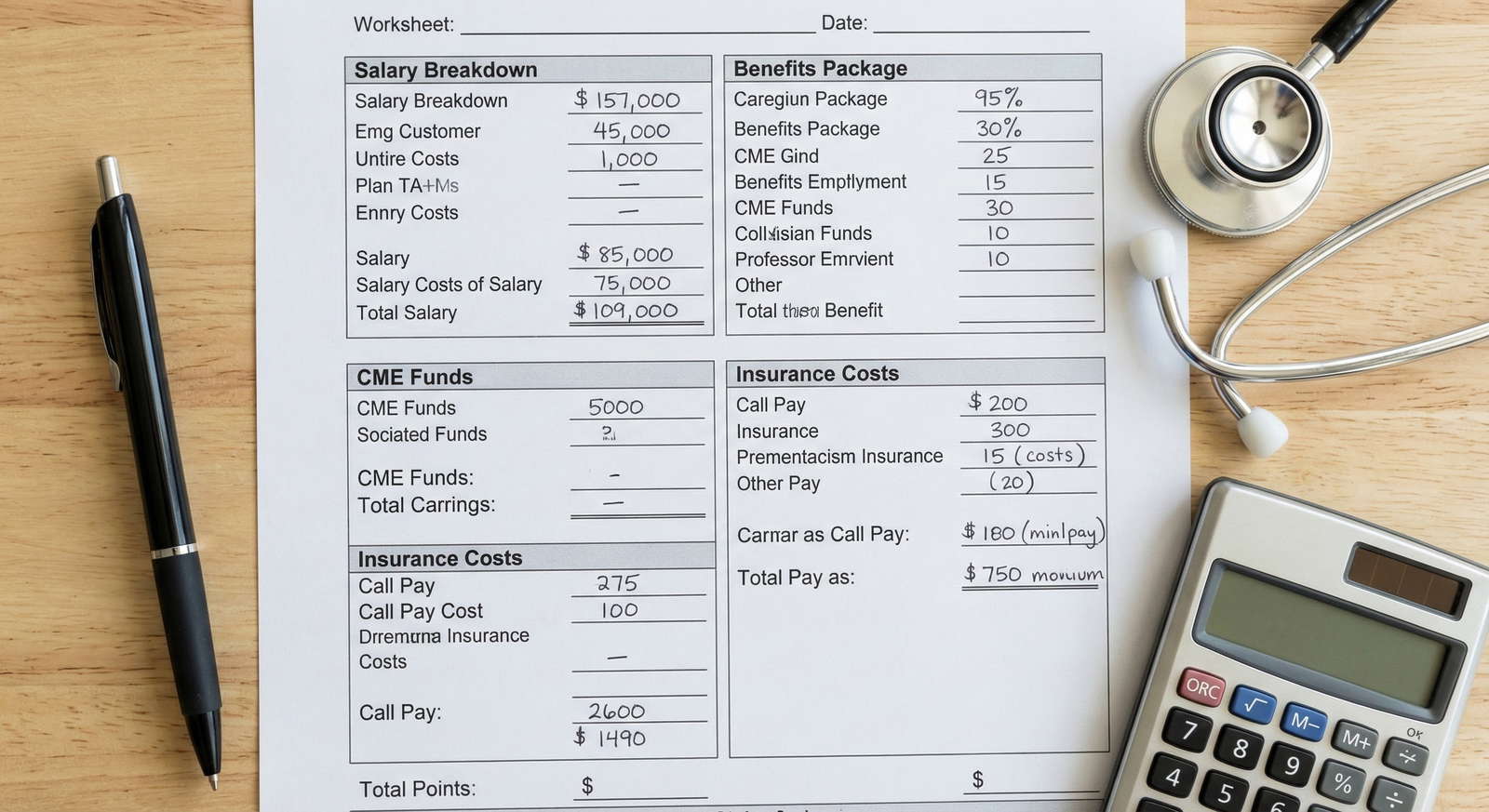
Build a benefits comparison spreadsheet to compare physician job offers, convert benefits into annual dollar values, reveal tail costs, pick the best offer.
Learn how residents lose $20-60k by missing sign-on bonus and relocation pay. Get negotiation strategies to maximize sign-on, relocation, and clawback terms.
Discover seasonal trends in surgical case volume-when elective cases peak and crash-and get actionable staffing and scheduling strategies.
Inside surgical programs: how ACGME minimums shape case logs, evaluations, and fellowship prospects, what program directors really consider beyond the numbers.
Discover realistic surgical case volume targets and training strategies, learn why case mix, responsibility, and deliberate practice matter for true competence.
Prevent credibility damage: fix common surgical case log mistakes. Log daily, record roles accurately, classify procedures right, and meet ACGME/board rules.
Quarter-by-quarter guide for surgical interns to build a core case base: track cases, increase operative volume, and gain operative confidence by PGY-2.
Learn how program directors evaluate surgical case logs beyond totals, spot red flags, avoid inflation, and shape a log that wins fellowship attention today.
Boost physician email response rates: proven subject lines, sender tactics, concise asks, and timing to lift cold outreach from 1-5% to 20-40%.
How and when to cold email attendings you've never met, concise templates, timing, and targeting tips for medical students to get replies.
Networking email templates for medical students, residents, and physicians, cold outreach, intros, and follow-ups that get replies.
Learn when to accept patient, staff, or colleague social media requests, protect professional boundaries, confidentiality, and medicolegal risk.
Build a referral network from scratch for your new private practice: practical steps to attract referring providers, streamline referrals, and fill your schedule.
Data-driven look at how alumni networks by med school tier affect residency interviews and match success - practical tactics to improve your application.
ADHD in residency: practical task-management systems to externalize memory, survive interruptions, and integrate with EMR, clear strategies to stay organized.
USMLE accommodation approval rates by condition and documentation. See which diagnoses and evidence increase approval odds and how to strengthen your request.
Get USMLE accommodations approved on the first attempt with a step-by-step, evidence-based plan, timelines, evaluation requirements, and documentation checklist.
MCAT accommodations timeline: month-by-month checklist to gather documentation, secure evaluations, submit requests, and boost approval before test day.
Learn exactly what neuropsych reports must include for board exam accommodations (USMLE, COMLEX, specialty boards), clear requirements, checklist, plus examples.
Avoid common MCAT accommodation errors. Learn to document functional deficits, update evaluations, and match requests to AAMC standards for approval.
Avoid ACGME status mistakes when evaluating new residency programs. Learn to check accreditation status, board eligibility, timelines, and ask key questions.
What serious residency applicants check in core faculty for new ACGME programs: staffing, protected FTE, on-site presence, and teaching credibility.
Learn how ACGME initial accreditation evaluates new residency programs, site visits, ADS applications, institutional requirements, and tips to pass.
Practical guidance for early-stage residency programs: design ACGME-compliant duty hours, call structures, and night-float systems for wellness and compliance.
Step-by-step 3-5 year roadmap to launch a new residency program: ACGME application, recruitment, accreditation, and first graduating class planning.
Learn why hospitals rush to open new residency programs, how GME funding and staffing drive residency training quality, and what applicants must watch for.
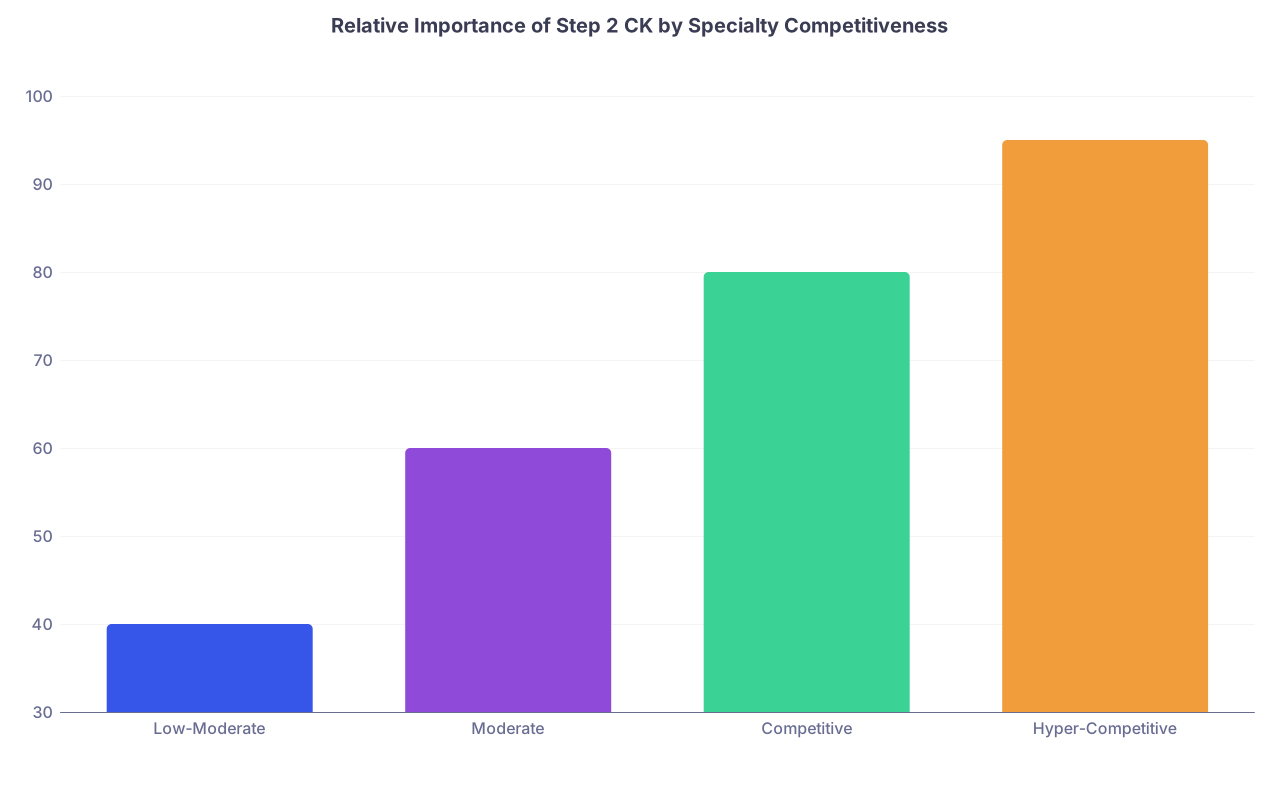
Explore emerging Step 2 CK score thresholds by specialty, learn realistic cutoffs, how programs filter applicants, and optimize your residency strategy.
Learn how Step 1 matters after pass/fail: what program directors value, why Step 2 CK and clinicals now matter, and how to strengthen your application.
Step 1 pass/fail didn't erase preclinical importance - PDs still use preclinical signals in residency screening. Learn what matters for Step 2, MSPE, clerkships.
Ignoring class rank in the Step 1 pass/fail era can cost residency options, learn why class rank, clerkship honors, and Step 2 CK still determine match success.
Learn how to explain a delayed Step 1 on your residency application: concise templates, placement tips (ERAS/MSPE/PS), and examples to control the narrative.
Deciding when to take Step 2 CK after a pass/fail Step 1? Learn smart timing, avoid burnout, and boost residency chances with actionable strategies.
Compare Step 2 CK regional score expectations, Northeast, South, Midwest, West, to shape residency strategy. Learn how scores affect interviews and matches.
Compare cost-of-living adjusted PGY-1 salaries across US regions to reveal true resident purchasing power and rank programs by real take-home value.
Explore how Level 1 trauma center volume varies by region and how penetrating vs blunt case mix shapes residency training and clinical experience.
Track residency interview invites from August-October by region. Understand normal timelines, spot warning signs, and know when to act to salvage your season.
Uncover the hidden prestige ladder among NYC, Boston, and Philly residencies and how program brand affects fellowship selection, hiring, and academic careers.
Debunk myths about 'malignant' Northeast residency programs, show data-driven reasons behind the reputation, and advise applicants how to evaluate program culture.